We got this one recently- one of the rare one Re notes. Note that this is relatively better condition than the previous ones we had come across while searching… and, it’s graded.
Category: Uncategorized
-
Currency Notes: French India One Rupee : 1945
Description:Year : 1945Issuing Authority:The note was issued by the Banque de l’Indochine, a French colonial bank established to manage currency and financial activities in French colonies.Region:This specific note is from Pondichéry (Pondicherry), a key French territory in India. The date “8 Septembre 1945” indicates the issuance or circulation period during the later part of French colonial rule.Denomination:The denomination is 1 Roupie (Rupee)#Currency #FrenchIndia #OneRupee -
Stamps: Astrological Signs: Year 2011
Another exquisite set of stamps. Brought out by Department of Posts, Ahmedabad.
Astrological signs, complete with a set of 12 bookmarks, as well as a calendar.Occasion: Gujpex 2011( Gujarat Philatelic Exhibition).#Stamps #Philately #Gujpex -
Currency Notes: Euro Specimen Notes
BIRTH OF THE EURO AS A CUIRENCY
When the Euro as a currency first came out in the year 2002, there was a great deal of excitement.. to familiarize the public, the Euro specimen notes were produced.Many specimen notes have unique serial numbers or no serial numbers at all to differentiate them from real notes.In Dad’s collection: A dealer gave them to Dad, impressed by his collection of currency notes. And, impressive the collection is, indeed.#Euro #Specimennotes #amazing #currency -
Stamps: Miniature Sheets
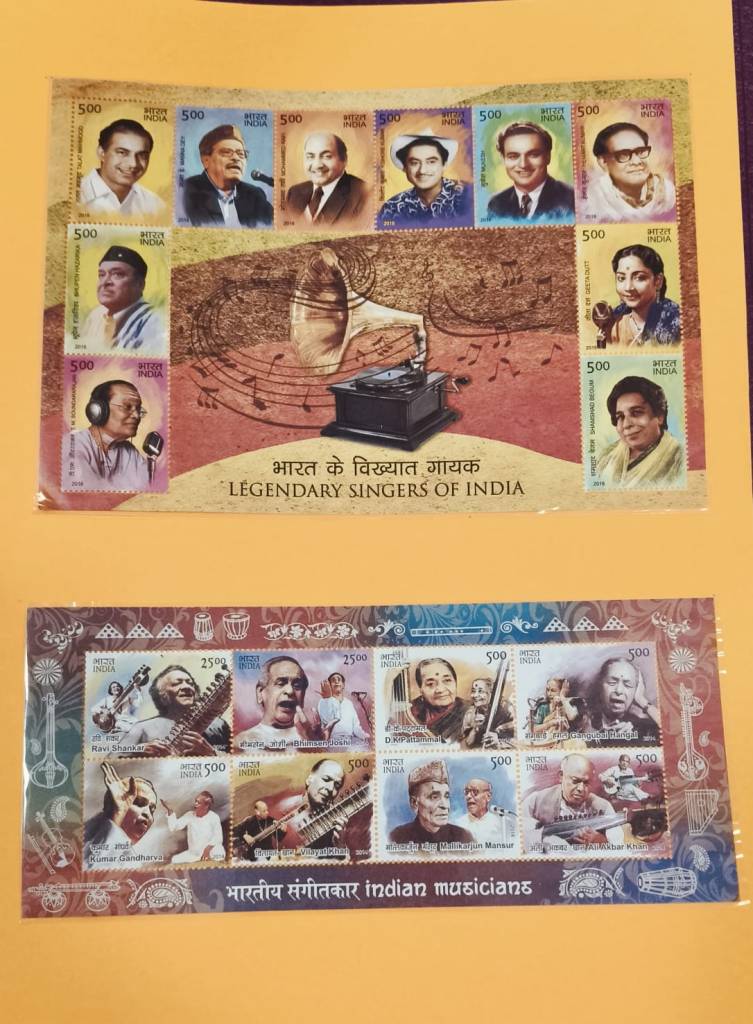
An absolutely exquisite miniature sheet…scenes from the Ramayana…I was just flabbergasted seeing many such thematic miniature Sheets in Dad’s collection…from Bollywood stars and singers to Indian Railways…our Post Office has done an excellent job bringing out these collectibles.
#Philately #miniaturesheets


-
The Kalakaua Coin: Hawaii: 1883
Coin:
Kalakaua I (I know, unusual name) King of HawaiiYear 1883.Finally we found this one (1/4 dollar ) some months back.Known officially as the Hawaiian Silver Dollar, originally issued in denominations of 1 dollar, 50 cents, 25 cents, and 10 cents.History: The coin was issued under the reign of King David Kalākaua, as part of Hawaii’s brief effort to establish its own currency system.The production was limited, and the coins were primarily minted for circulation within the Hawaiian Kingdom.Approximately 500,000 coins of the silver dollar denomination were minted in 1883, but many were melted down after Hawaii’s annexation, adding to their rarity.The series was discontinued after Hawaii’s annexation by the United States in 1898, making these coins a valuable collector’s item today. -
A LARIN COIN
Featured : A Larin Coin
What is a Larin Coin?The Larin was a type of silver currency shaped like a long, bent, or twisted piece of metal, resembling a fishhook or a strip of wire.This distinctive shape was practical for carrying and served as a convenient form of currency in regions engaged in maritime trade.The Larin coins of Bijapur were primarily used during the 16th and 17th centuries when the Sultanate was a key player in trade across the Indian Ocean, dealing with merchants from Persia, Arabia, and East Africa.Design FeaturesMaterial: Typically made of high-quality silver.Shape: A curved, elongated strip of metal, often twisted or shaped into a loop or hook.Inscriptions: The coins often bore inscriptions in Persian, the court language of the Adil Shahi dynasty, and sometimes featured the name of the ruler or religious invocations.Weight: The weight and value of Larin coins varied, often depending on regional trade standards. -
Introduction
Absolutely Amazing – this hobby of collecting currency notes, coins, stamps, telephone cards, matchbox labels, brooke bond cards and albums. Here’s hoping you all enjoy it – Dad started this hobby in the ’60s, and it’s absolutely amazing, the way the collection is, today.
To start, here’s a Notgeld(The term “Notgeld” translates to “emergency money” in German).
History: Notgeld was most commonly issued during World War I, the hyperinflation period in Germany in the 1920s, and in other times of crisis when government-issued currency couldn’t meet demand.
It was used primarily in Germany, Austria, and some neighbouring countries.
Materials:
Unlike traditional currency, Notgeld was made from a variety of materials, including paper, cardboard, leather, aluminum, zinc, porcelain, and even silk.
The material often depended on local resources available at the time.
Interesting? More on this coming up soon.
Pic description: German notgeld issued in Strelitz depicting a ‘wealthy looking fat man’.