Tag: history

  • Stamps: Hermitage Museum

    This is a truly beautiful and historically rich part of Dad’s award-winning philatelic collection. These USSR stamps from the 1980s showcase masterpieces from the Hermitage Museum, meticulously documented with his clear and careful handwriting.

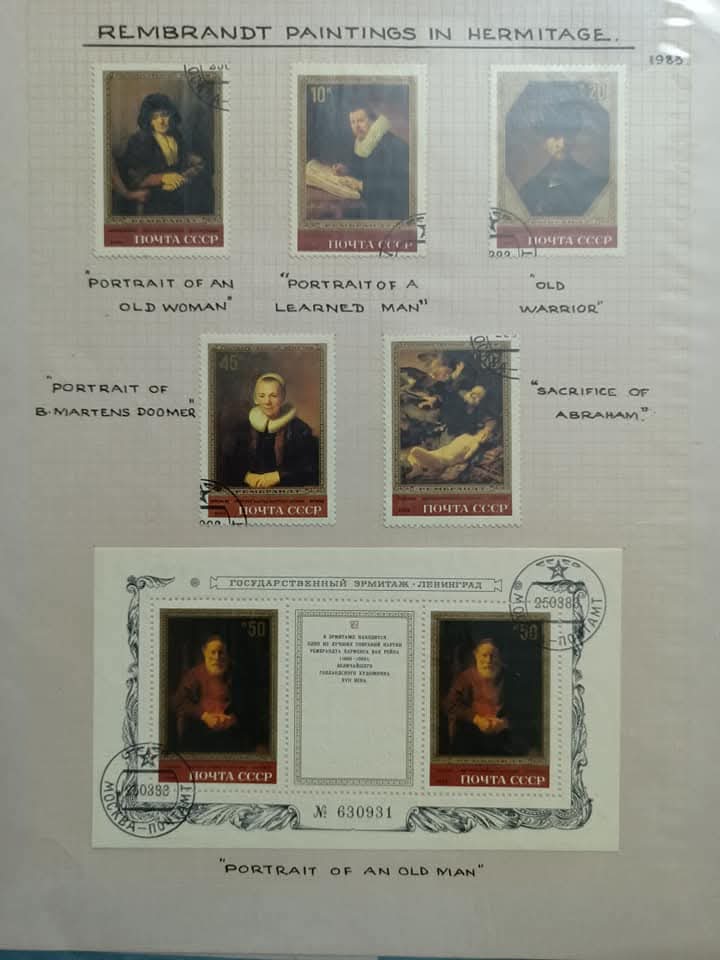
    1. Rembrandt Paintings in Hermitage (1983)

    This page honors Rembrandt van Rijn, with USSR stamps featuring some of his most expressive works from the Hermitage Museum, including:

    • Portrait of an Old Woman
    • Portrait of a Learned Man
    • Old Warrior
    • Portrait of B. Martens Doomer
    • Sacrifice of Abraham
    • A souvenir sheet: Portrait of an Old Man

    These stamps reflect the USSR’s dedication to celebrating classical European art, and Rembrandt’s works are a highlight of the Hermitage collection.


    🖼 2. Spanish Paintings in Hermitage (1985)

    Celebrating Spanish masters:

    • Still Life by Antonio Pereda
    • Knife Grinder by Puga
    • The Youth of the Virgin by Francisco de Zurbarán
    • Ascension of Mary by Bartolomé Esteban Murillo
    • Portrait of Count Olivarez by Diego Velázquez
    • Souvenir sheet: Portrait of Doña Antonia Zárate by Francisco Goya

    Goya’s portrait is especially notable — elegantly framed in a mini-sheet format.


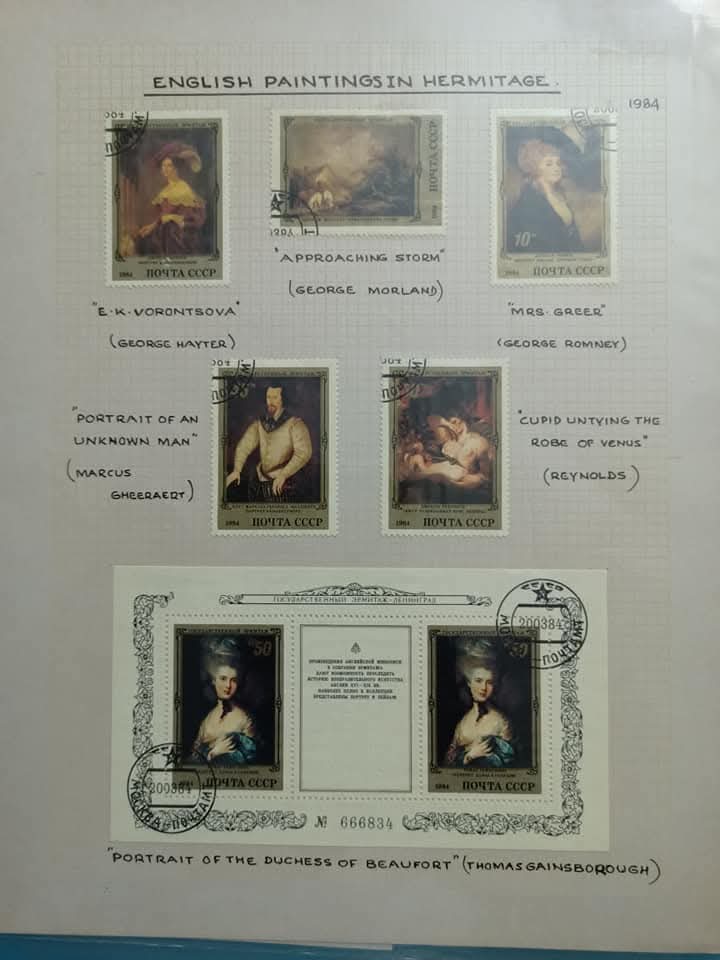
    🖼 3. English Paintings in Hermitage (1984)

    Focusing on English portraiture and romanticism:

    • E.K. Vorontsova by George Hayter
    • Approaching Storm by George Morland
    • Mrs. Greer by George Romney
    • Portrait of an Unknown Man by Marcus Gheeraerts
    • Cupid Untying the Robe of Venus by Joshua Reynolds
    • Souvenir sheet: Portrait of the Duchess of Beaufort by Thomas Gainsborough

    This page beautifully blends portraiture and romantic themes popular in British art of the 18th–19th centuries.


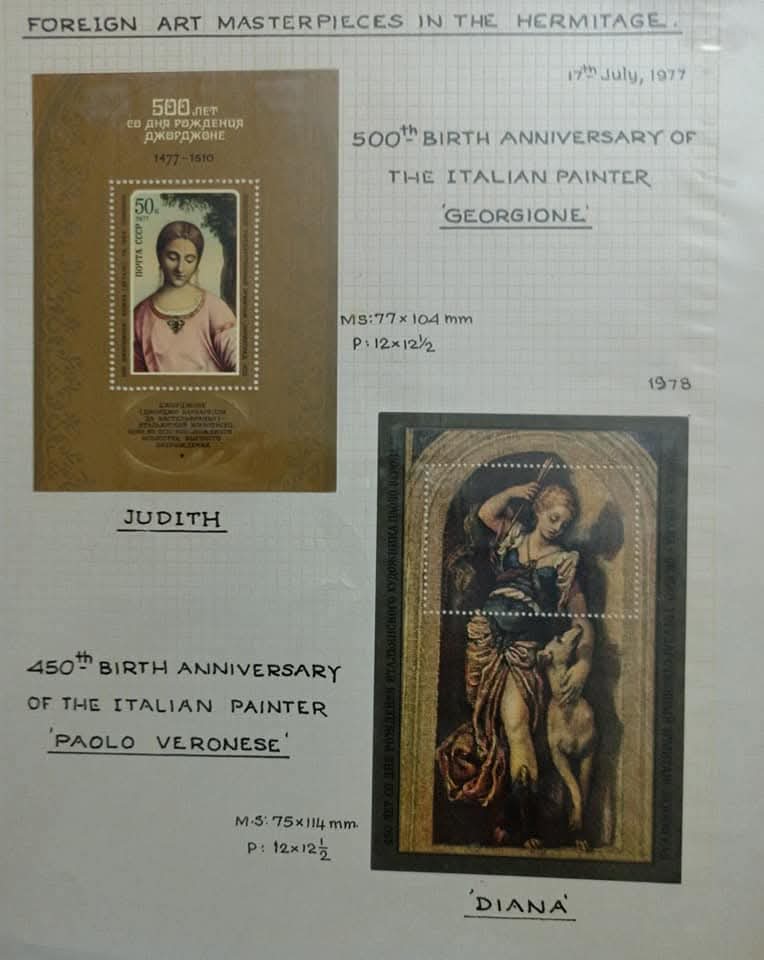
    🖼 4. Foreign Art Masterpieces (1977–1978)

    A special thematic page:

    • Judith by Giorgione – Issued for his 500th birth anniversary (1977)
    • Diana by Paolo Veronese – 450th birth anniversary (1978)

    These souvenir sheets stand out for their golden frames and commemorative importance.


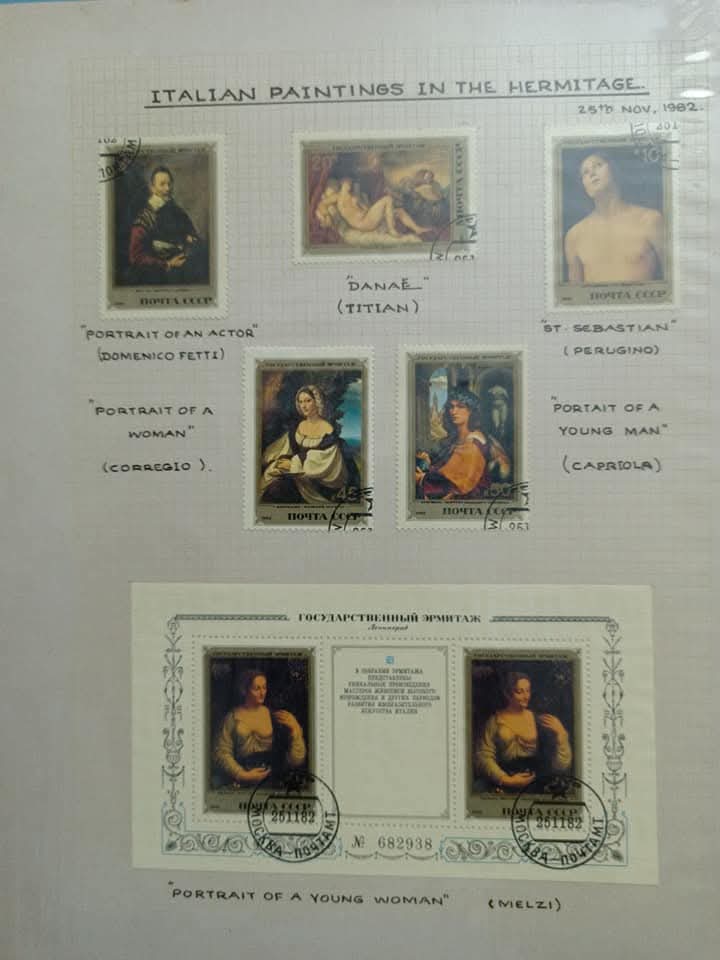
    🖼 5. Italian Paintings in Hermitage (1982)

    Featuring a powerful collection of Renaissance works:

    • Portrait of an ActorDomenico Fetti
    • DanaëTitian
    • St. SebastianPerugino
    • Portrait of a WomanCorreggio
    • Portrait of a Young ManCarpioni
    • Souvenir sheet: Portrait of a Young WomanFrancesco Melzi

    The Italian Renaissance influence is evident here, and this page showcases a wide range of moods from sacred to sensual.


    🔍 Highlights:

    • All stamps are СССР (USSR) issues, many with Hermitage Museum themes.
    • Each sheet includes precise dating, matching cancel marks, and handwritten annotations — showing Dad’sdedication to detail.
    • The souvenir sheets are especially rare and beautifully framed.
    • The structure reflects a philatelic exhibition format,aligned with international exhibit standards.
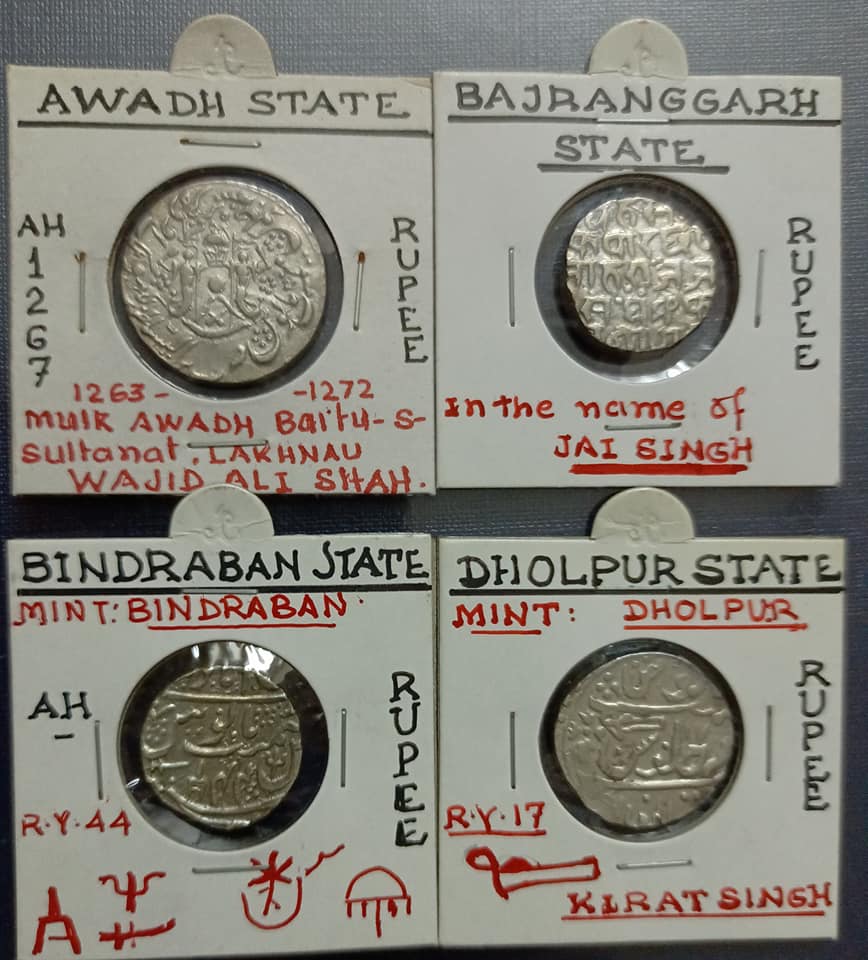
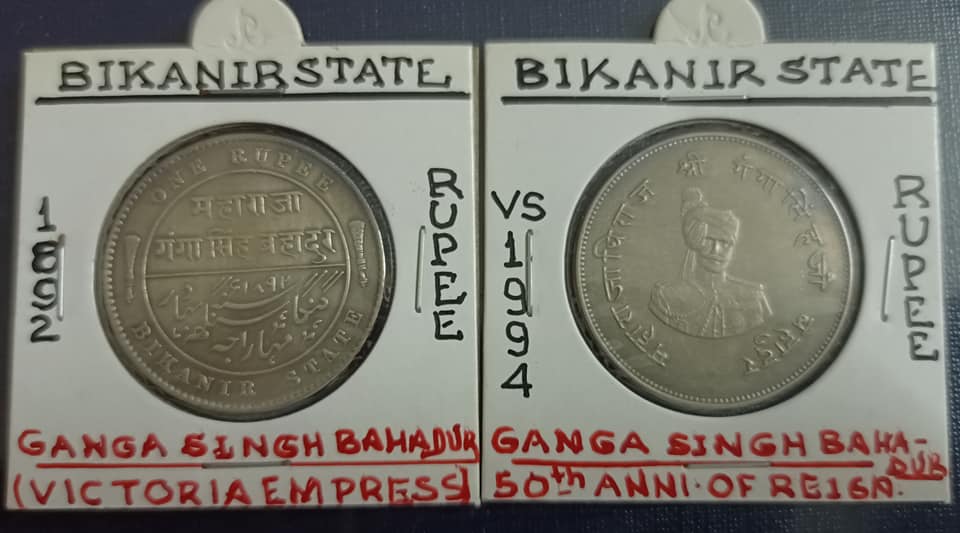
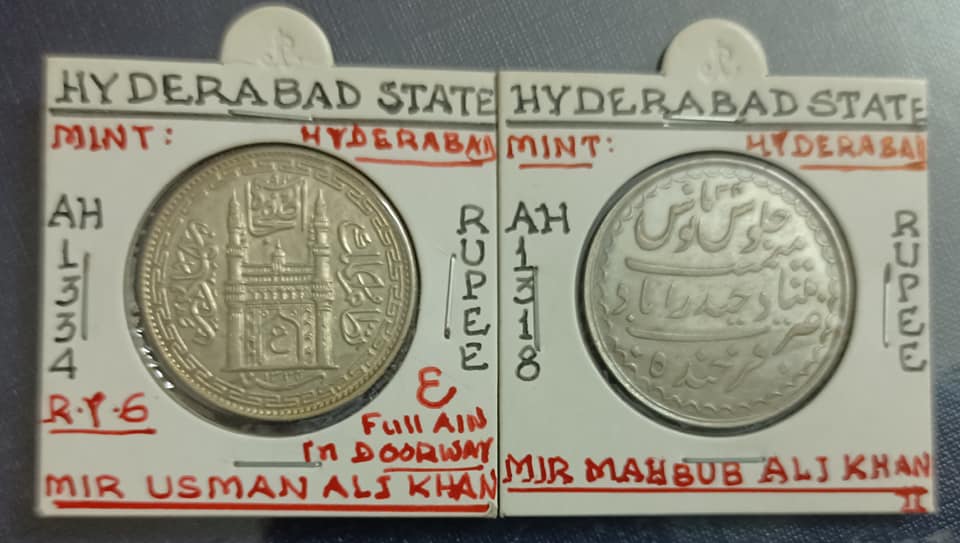
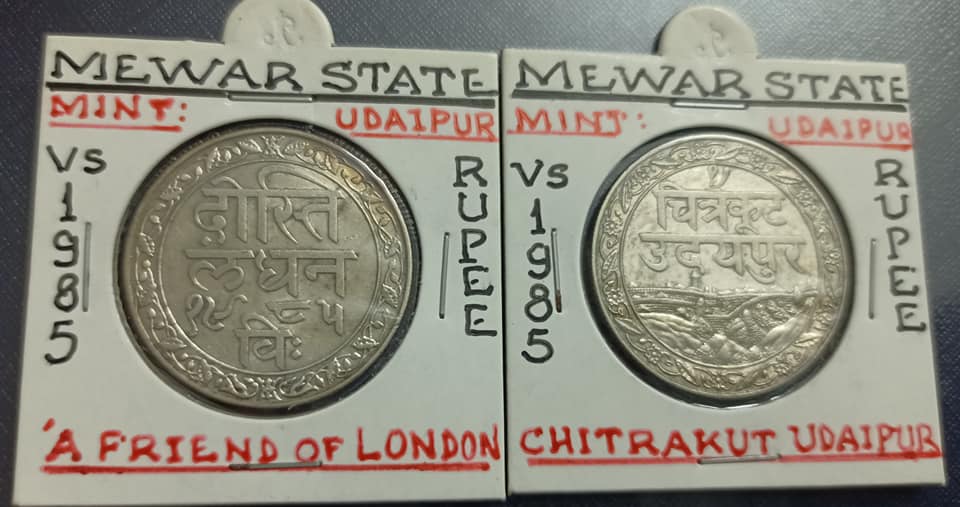
  • Old Coins: Princely States

    • Featured today: coins representing the rich history of Indian princely states before and during British rule.

    1. Awadh State Coin

    • Period: 1263-1272 (Islamic calendar, likely 1847-1855 AD)

    • Mint: Lucknow

    Ruler: Wajid Ali Shah (the last Nawab of Awadh)

    • Details: This coin was issued during the rule of Wajid Ali Shah, the last ruler of the Awadh kingdom before its annexation by the British East India Company in 1856.

    2. Bajranggarh State Coin

    • Issued in the name of Jai Singh

    • Details: Bajranggarh was a small princely state, and this coin was likely minted in a local or regional style.

    3. Bindraban State Coin

    • Mint: Bindraban (Vrindavan)

    • Islamic Year: AH (Anno Hegirae)

    • Ruler: Not specified

    • Details: Bindraban (modern-day Vrindavan) was a prominent religious and cultural hub during the Mughal and British periods.

    4. Dholpur State Coin

    • Mint: Dholpur

    • Reign Year: RY 17

    • Ruler: Kirat Singh

    • Details: Dholpur was a princely state in present-day Rajasthan, and this coin was likely issued during Kirat Singh’s rule.

    ________________________________________

    5. Bikaner State Coins

    • Coin 1 (1892)

    o Ruler: Ganga Singh Bahadur

    o Inscription: Mentions Victoria Empress

    o Details: This coin signifies the relationship between Indian princely states and British rule.

    • Coin 2 (VS 1994)

    o 50th Anniversary of Ganga Singh Bahadur’s reign

    o Details: This commemorative coin marks an important milestone in his rule.

    ________________________________________

    6. Hyderabad State Coins

    • Mint: Hyderabad

    • Coin 1:

    o Reign: Mir Usman Ali Khan (last Nizam of Hyderabad)

    o Distinct Feature: Depiction of Charminar on one side.

    • Coin 2:

    o Reign: Mir Mahbub Ali Khan

    o Details: Hyderabad was one of the most powerful and wealthy princely states under British India.

    ________________________________________

    7. Mewar State Coins

    • Mint: Udaipur

    • Coin 1 (VS 1985)

    o Inscription: “A Friend of London”

    o Details: This could indicate British influence in the region.

    • Coin 2:

    o Design: Chitrakut Udaipur (depicting a scenic view of Udaipur)

    o Details: Mewar, centered around Udaipur, was a historic Rajput kingdom known for its fierce resistance against Mughal and British rule.

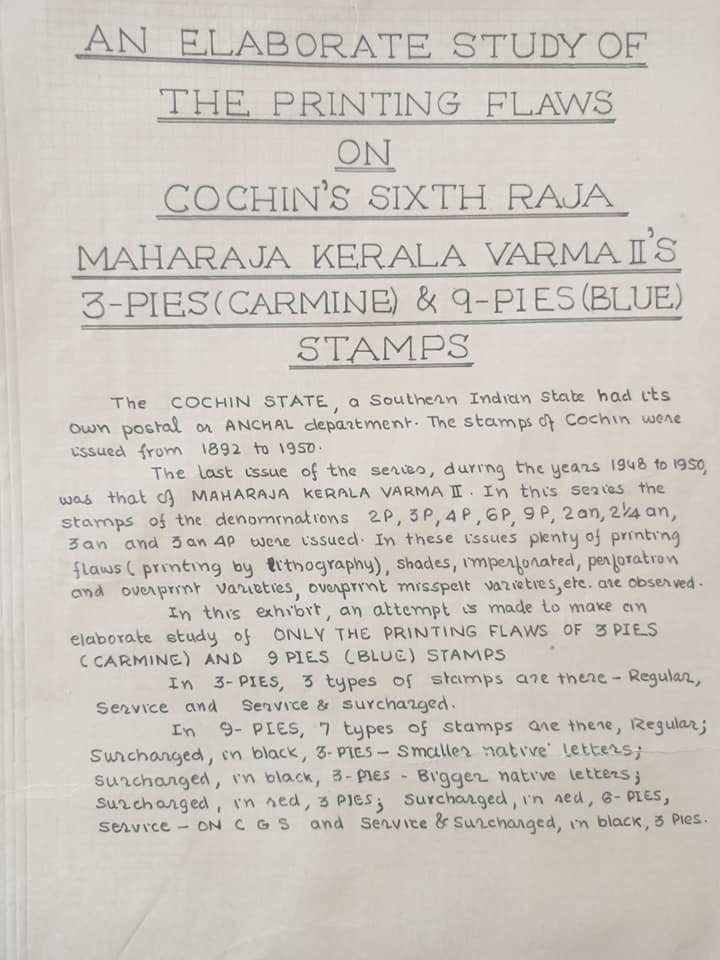
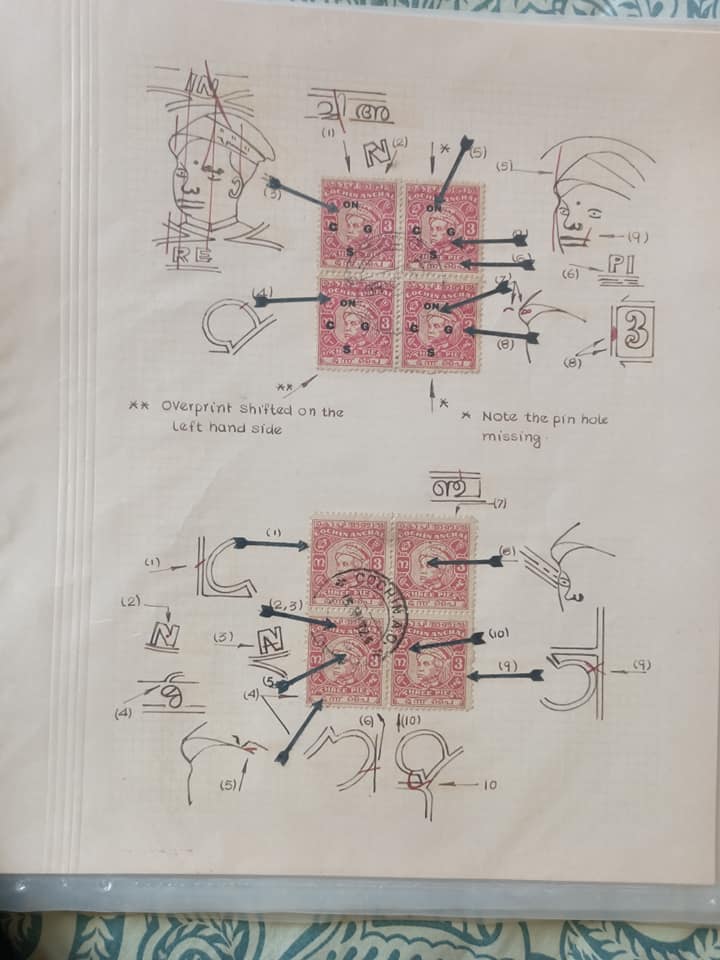
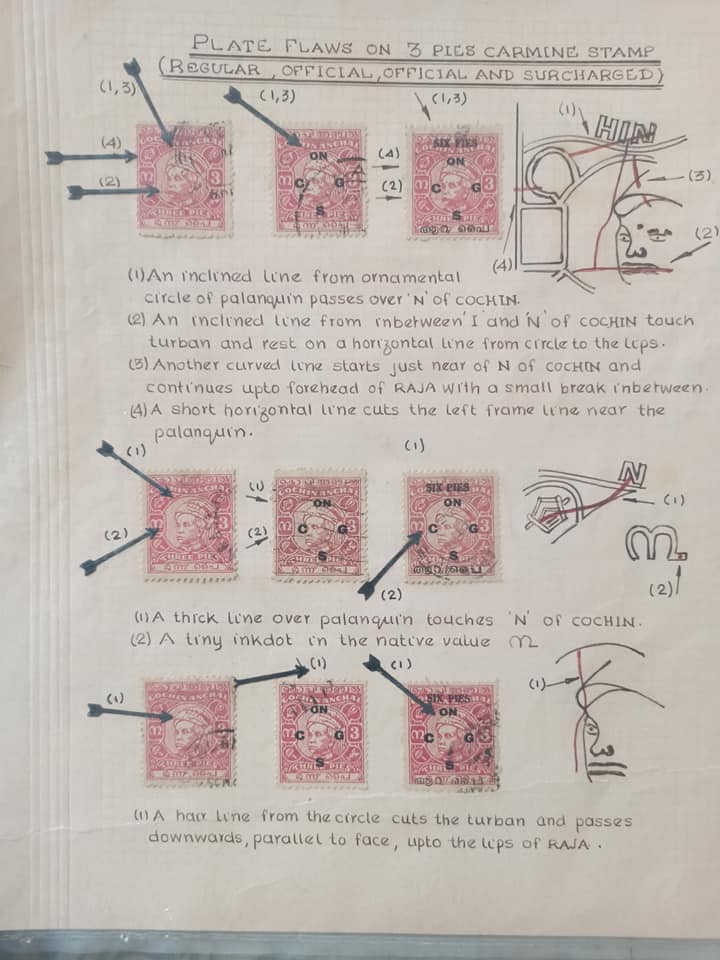
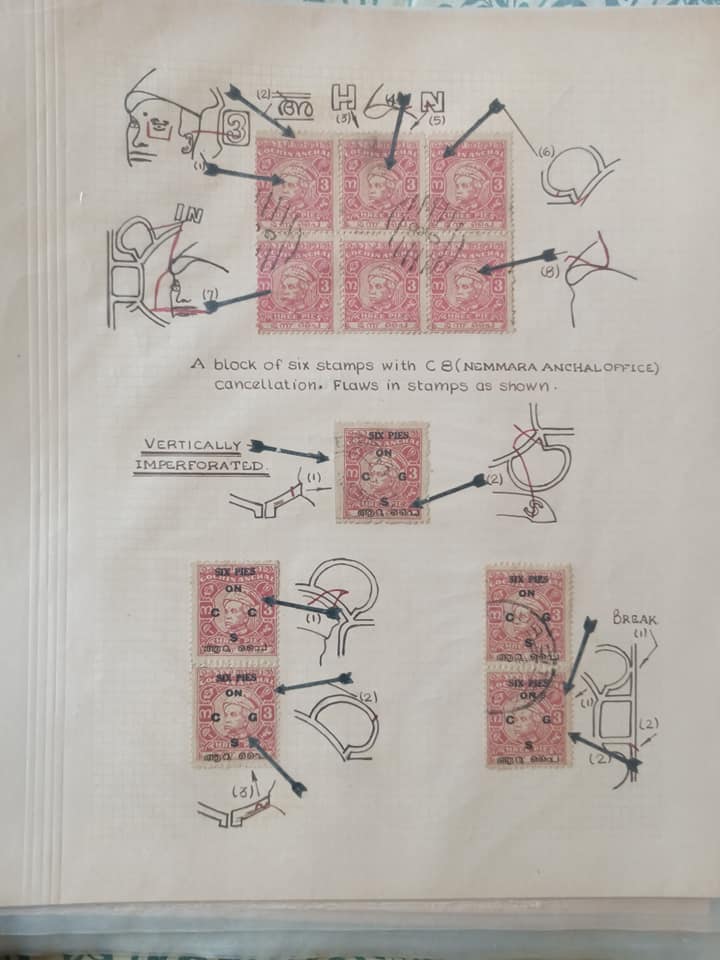
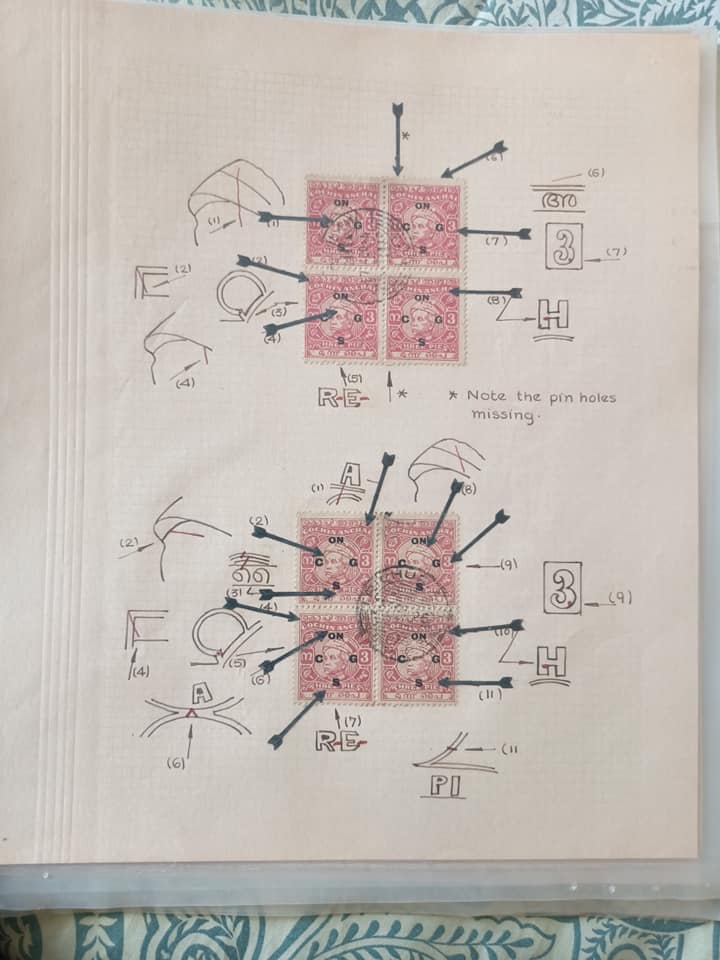
  • Stamps: Cochin: Multi Award Winning Collection

    Edited on 04 02 25:

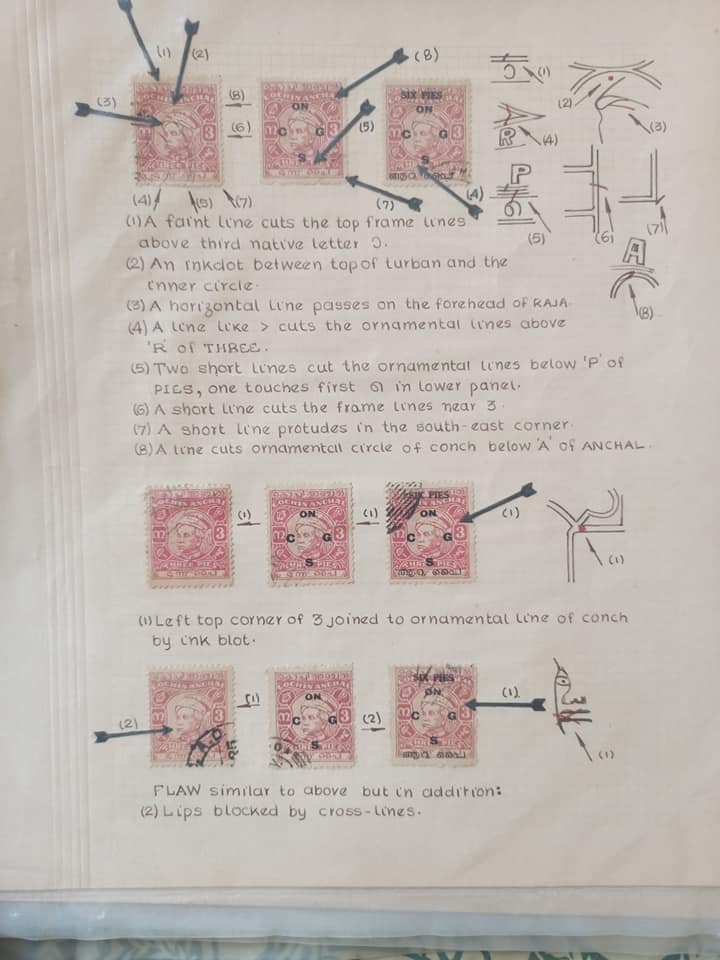
    Printing by the lithograph method, also known as stone printing, involved transferring the matter to be printed onto a stone (lithograph), inking it properly, and then printing. With repeated use, scratches would develop on the stone, and fine grains would come off, causing the ink to settle into these areas. This led to flaws such as lines and spots in the final print.

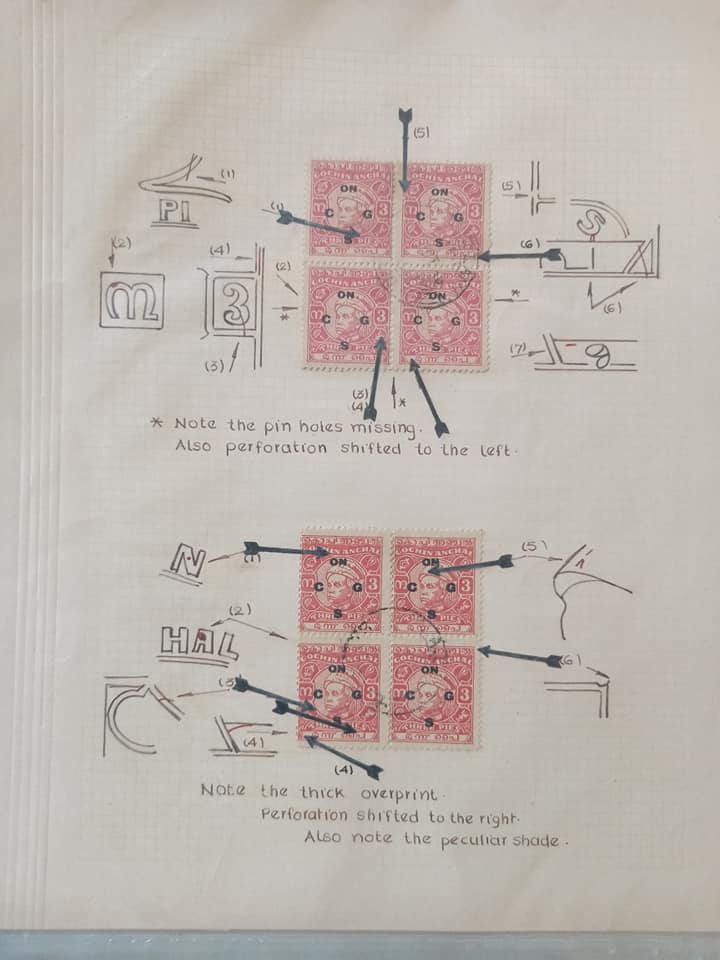
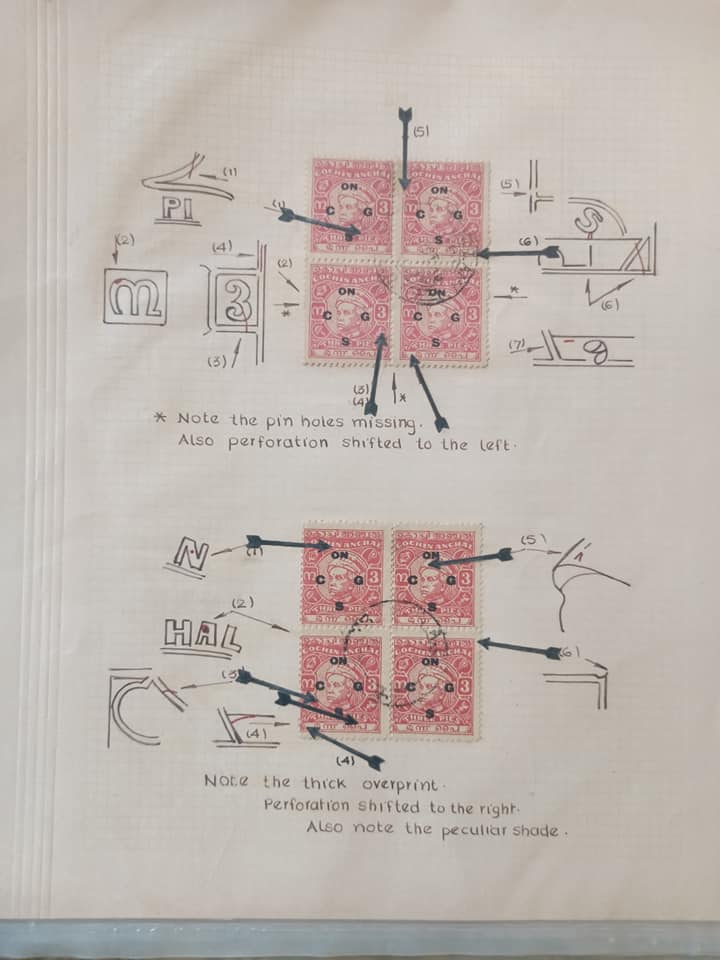
    Note: Entire handwriting is done by Dad, including the diagrams.

    An elaborate study of the printing flaws found on the 3-Pies Carmine & 9-Pies Blue stamps of Maharaja Kerala Varma II from Cochin State, a former princely state in India. These stamps were issued between 1892 and 1950, with the last series featuring Maharaja Kerala Varma II in the years 1948-1950.

    Key Features of the Collection:
    Study of Printing Flaws

    The exhibit meticulously documents various printing defects in these stamps.
    It highlights plate flaws found in regular, official, and surcharged versions.
    Flaws include misalignment, ink spots, overprint shifts, broken lines, and missing perforations.

    Types of Stamps featured:

    3-Pies Carmine:
    Three variations: Regular, Service, and Service & Surcharged.
    9-Pies Blue:
    Seven variations:
    Regular
    Surcharged in black
    3-Pies with smaller native letters (surcharged in black)
    3-Pies with bigger native letters (surcharged in black)
    6-Pies surcharged in red
    3-Pies surcharged in red
    Service on C & G S, and Service & Surcharged in black (3-Pies)
    Illustrations of Printing Flaws

    The collection includes detailed diagrams pinpointing flaws on each stamp.
    The flaws are annotated with arrows and descriptions, showcasing errors in:
    Lettering
    Ornamental designs
    Turban and facial features of the Maharaja
    Frame and conch design elements
    Specific Printing Flaws Identified

    Ink misalignment & smudging
    Overprint shifts to the left or right
    Missing or extra lines in the Maharaja’s turban
    Breaks in ornamental lines
    Errors in native script letters
    Variations in perforations and pinholes
    Smaller or bigger font discrepancies in overprints
    Historical & Philatelic Importance
    This study is valuable for philatelists and stamp collectors interested in Indian princely states’ postal history. Cochin was among the few states that had its own postal system, known as the Anchal Department, making these stamps historically significant.

  • Telephone Card: Russian

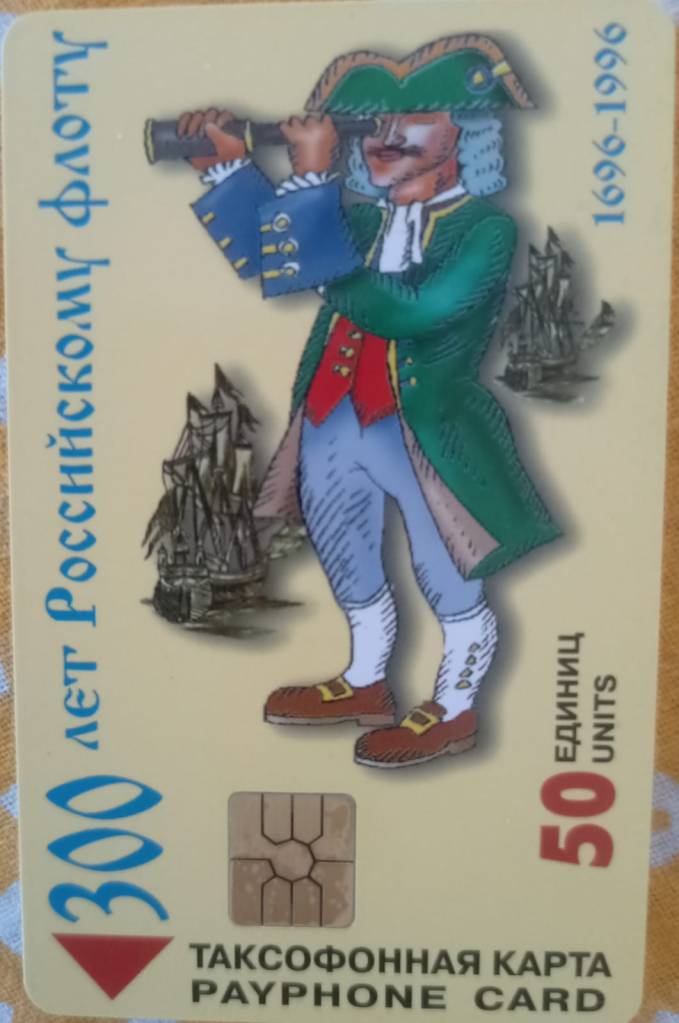
    This is a Russian payphone card issued to commemorate the 300th anniversary of the Russian Navy (1696-1996).

    Details of the Card:

    Theme: Celebrates 300 years of the Russian Navy (Военно-Морской Флот России), which was officially founded in 1696 under Peter the Great.

    Design: Features a historical illustration of a naval officer (possibly inspired by Peter the Great himself) using a spyglass, with sailing ships in the background.

    Denomination: 50 units, which likely indicates the amount of call credit available when the card was in use.

    Language: The text is in Russian and English:

    “300 лет Российскому Флоту” = “300 Years of the Russian Navy”

    “ТАКСОФОННАЯ КАРТА” = “Payphone Card”

    Technology: The card has a chip embedded, which was commonly used in payphone cards during the 1990s.

    Historical Context:

    This card was likely issued in 1996, marking the tricentennial of the founding of the Russian Navy. The Navy was officially established by Tsar Peter the Great as part of his extensive military reforms to modernize Russia. The illustration on the card reflects this era, showing an 18th-century naval officer in a traditional European-style uniform.

    Collectible Value:

    Vintage Status: Since payphones are now mostly obsolete, these cards have become collectible items.

    Russian Navy Theme: Items related to Russian military history, especially from significant anniversaries, are popular among collectors.

    Rarity: The value depends on the condition and demand among collectors. If unused and in good condition, it could be valuable.

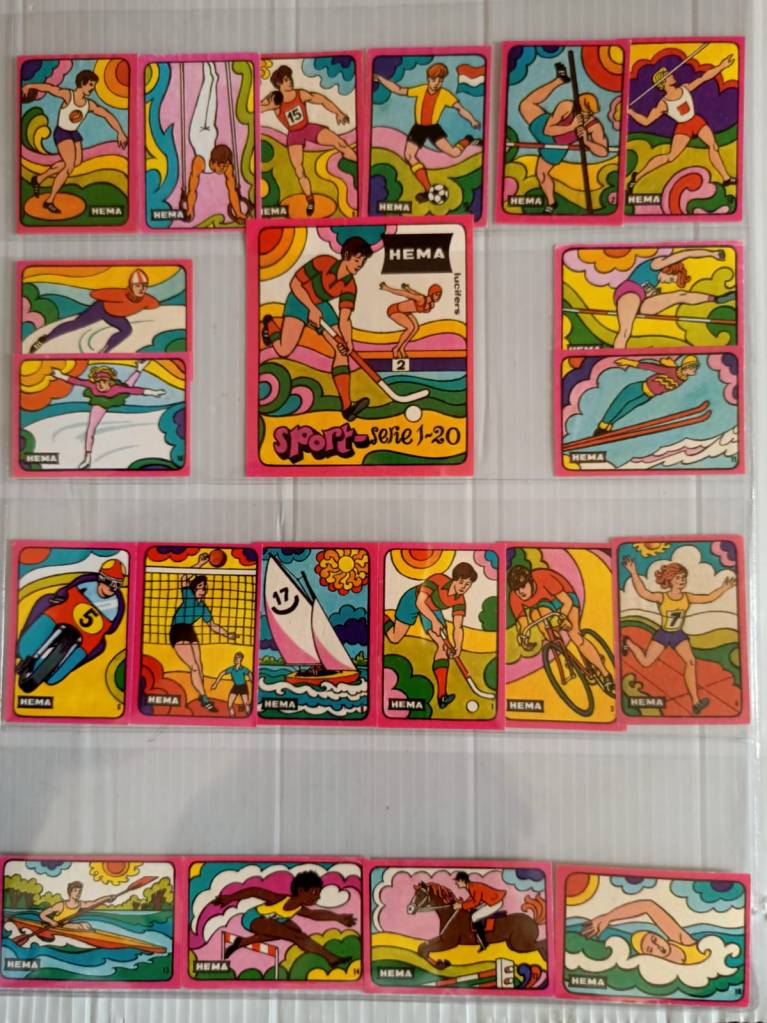
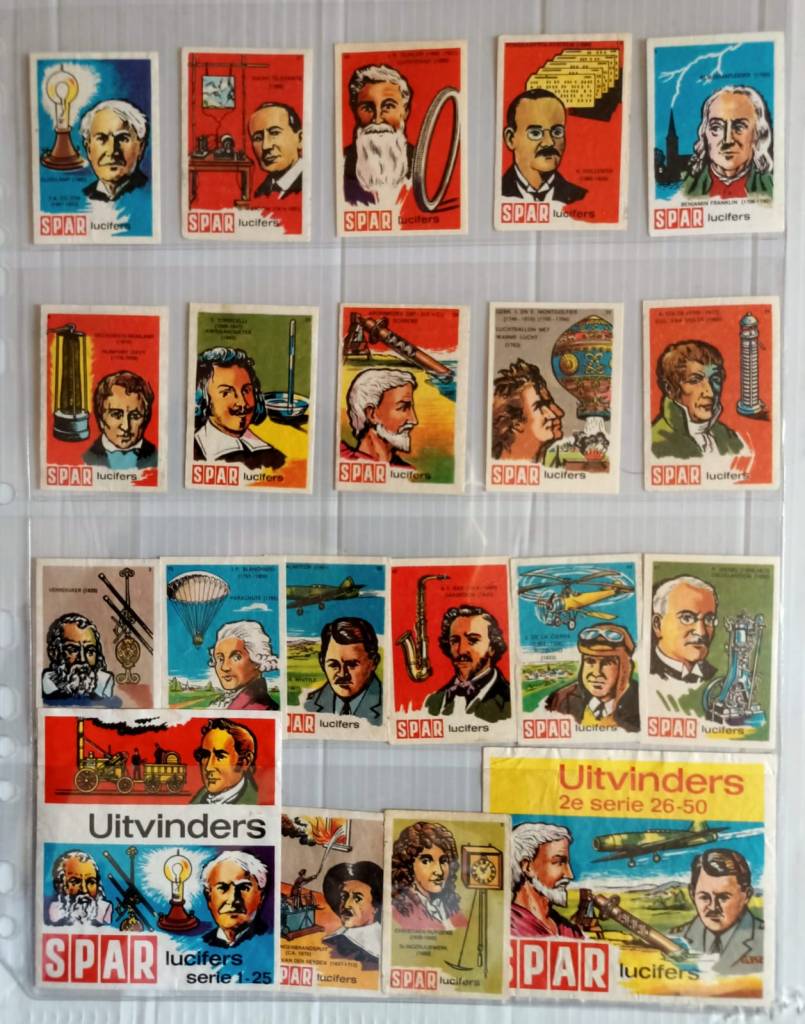
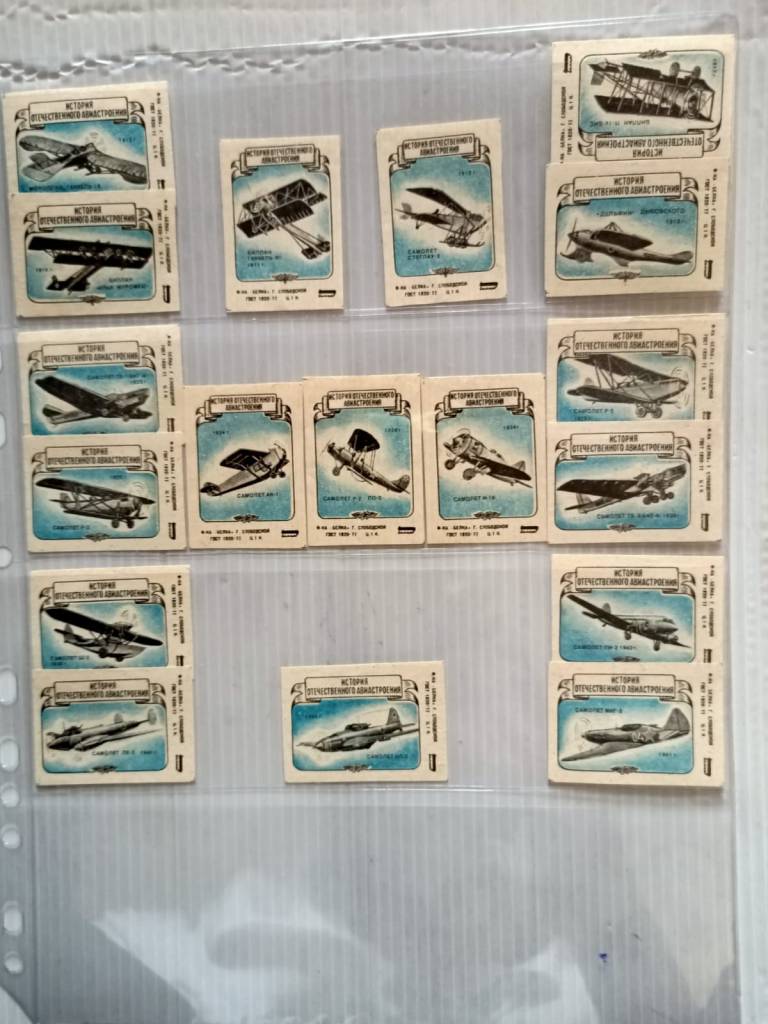
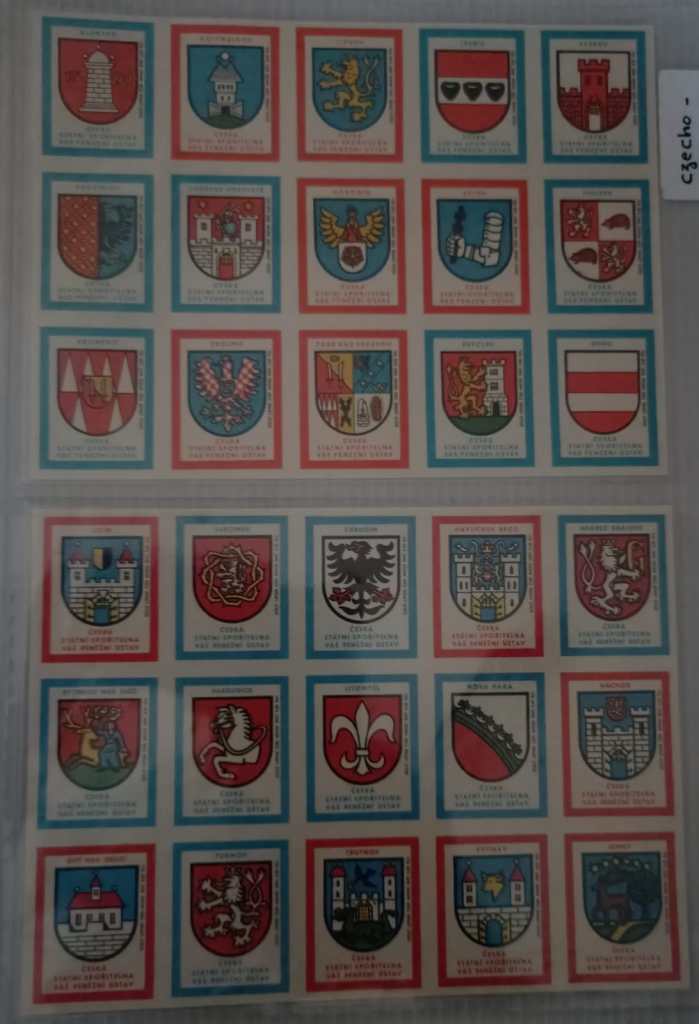
  • These images show collections of vintage matchbox labels from various themes, regions, and historical periods. Matchbox labels were popular collectibles during the 20th century and are a significant part of philumeny (the hobby of collecting match-related items). Here’s a breakdown of what is visible:

    1. Sports-Themed Labels (HEMA, Series 1-20):

    • These colorful labels depict various sports, such as hockey, swimming, skiing, and cycling.
    • Likely produced by HEMA, a Dutch retail chain, as promotional or collectible items.
    • The vibrant design and cartoon-like illustrations indicate they might date from the 1970s or earlier.

    2. Inventors and Inventions (SPAR):

    • These labels feature portraits of famous inventors (e.g., Thomas Edison) and their inventions (e.g., light bulb, steam engine).
    • SPAR, a multinational grocery retailer, appears to have issued these labels.
    • They celebrate technological and scientific achievements, making them both educational and collectible.

    3. Aircraft History (Russian):

    • This set focuses on aviation history, likely from a Russian perspective, given the Cyrillic text.
    • The illustrations include early aviation designs and notable airplanes, with a focus on Soviet-era contributions.
    • These labels would appeal to enthusiasts of aviation history.

    4. Czechoslovakian Heraldry (Czech Coats of Arms):

    • These labels depict coats of arms from cities and regions in former Czechoslovakia.
    • Likely issued to promote national heritage and regional pride, possibly in the mid-20th century.
    • The text in Czech provides descriptions of the heraldic symbols.

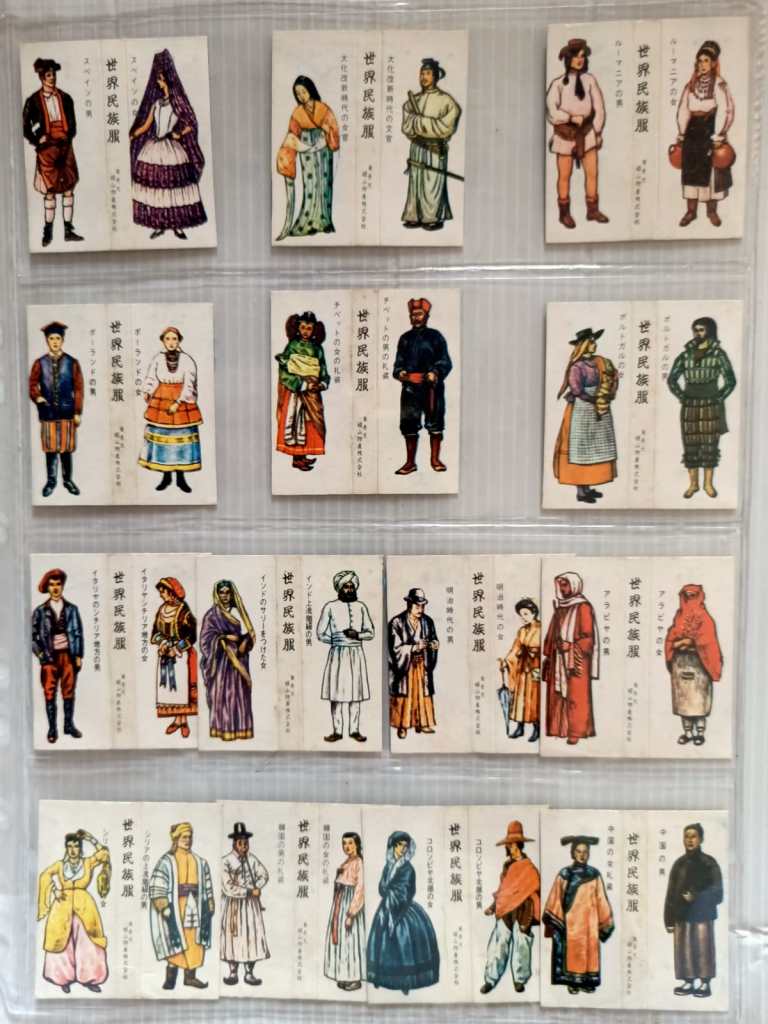
    5. Cultural Costumes (Japanese Text):

    • Labels show traditional costumes from different countries, with Japanese text suggesting these were made for the Japanese market.
    • They highlight the cultural diversity of the world through clothing.
    • These are likely educational, promoting international understanding.

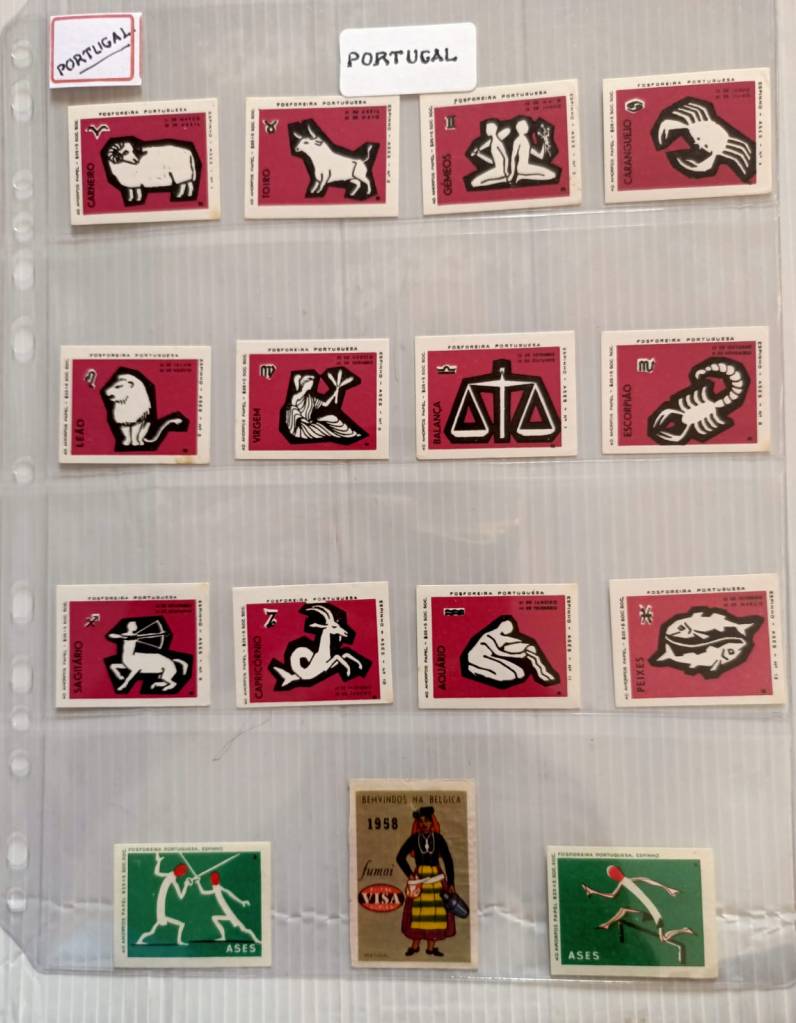
    6. Portuguese Zodiac Series:

    • Labels depicting zodiac signs (e.g., Leo, Gemini), possibly from Portugal.
    • Simple, artistic designs indicate they might be promotional items from a match manufacturer.
    • The additional labels include other promotional or thematic content.

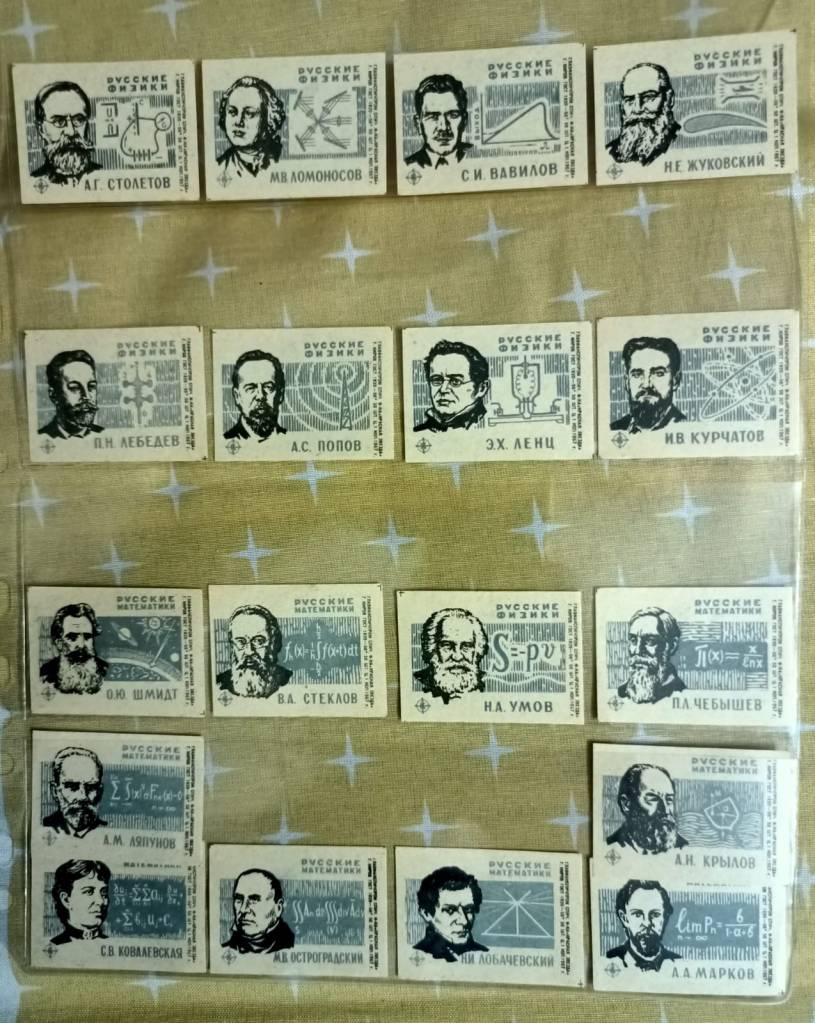
    7. Russian Scientists and Mathematicians:

    • Portraits of notable Russian scientists and mathematicians, with accompanying diagrams or formulas representing their contributions.
    • This set honors figures such as Mikhail Lomonosov (scientist) and Sofia Kovalevskaya (mathematician).
    • These likely originate from the Soviet era, reflecting a focus on scientific achievements.

    Historical and Collectible Value:

    • These labels are excellent examples of mid-20th-century advertising and cultural promotion.
    • They represent themes like sports, science, national pride, and global cultures.
    • Collectors value them for their historical significance, artistic merit, and rarity.
  • Currency Note: French Indochina 1 piastre

    This banknote is from French Indochina, specifically issued by the Institut d’Émission des États du Cambodge, du Laos et du Vietnam. It represents 1 piastre, the official currency of French Indochina before these countries gained independence.

    French Indochina was a federation of French colonial territories in Southeast Asia, including modern-day Vietnam, Laos, and Cambodia.

    The piastre was introduced in the late 19th century and remained in circulation until the dissolution of French Indochina in the mid-20th century.After the independence of these countries, new currencies were introduced: the riel in Cambodia, the kip in Laos, and the dong in Vietnam.

    Key details about the note:

    1. Design Elements: The note features tropical trees and foliage, reflecting the natural environment of the region.