Author: AmitL

  • Stamps /postmarks from Travancore

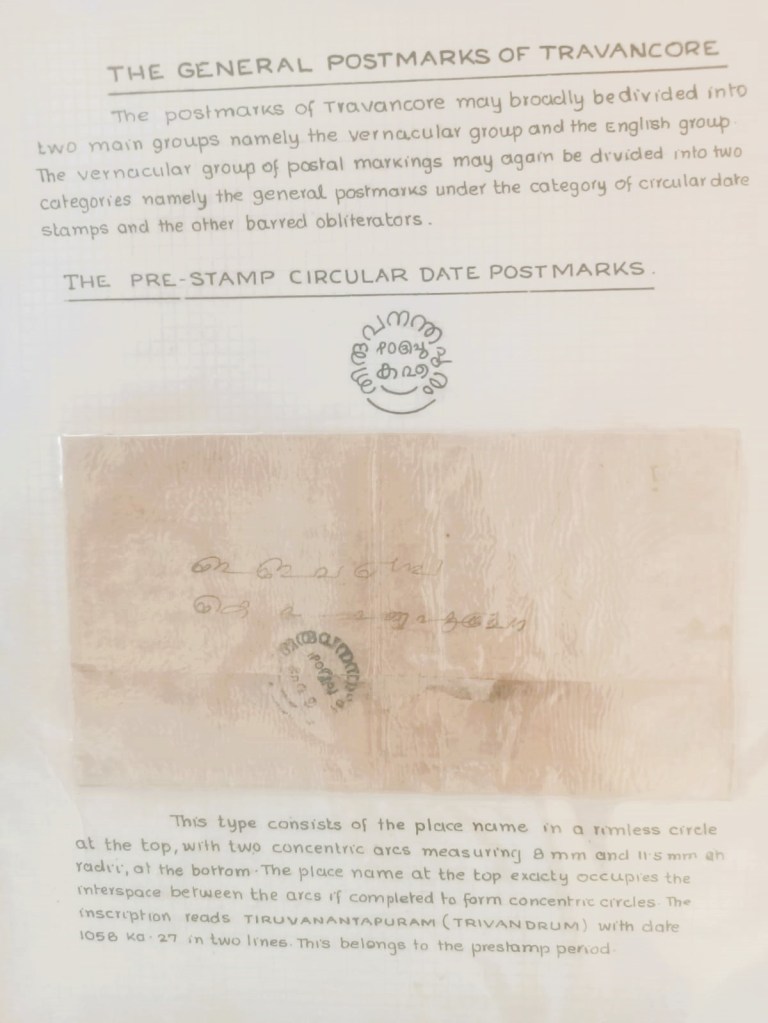
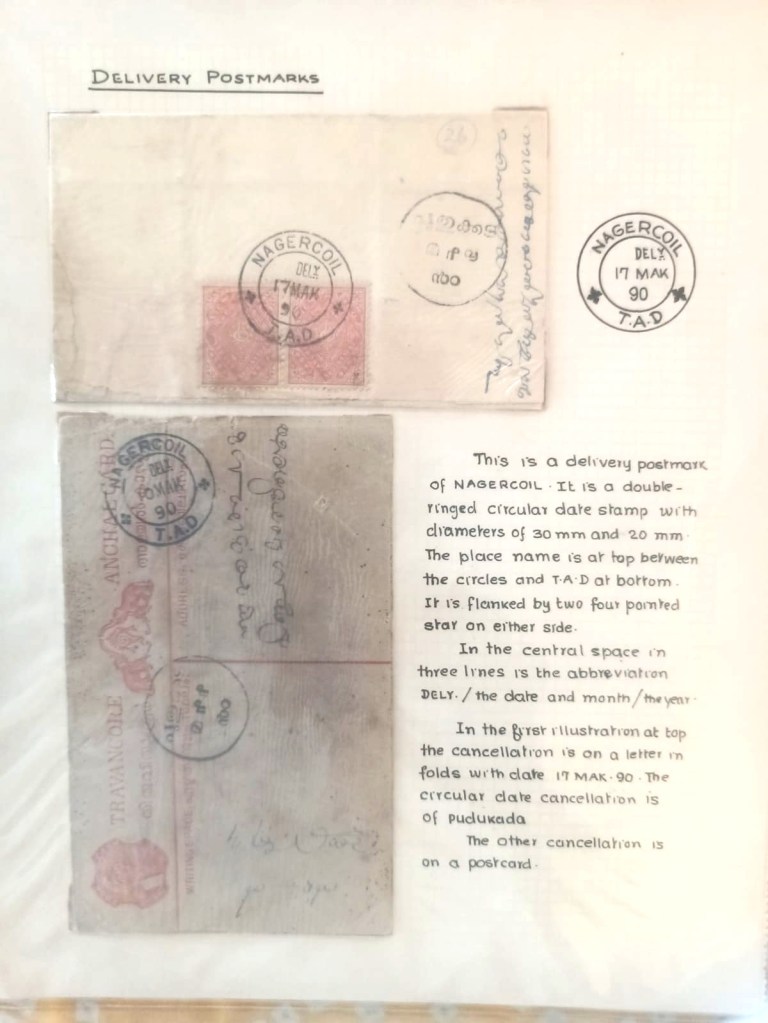
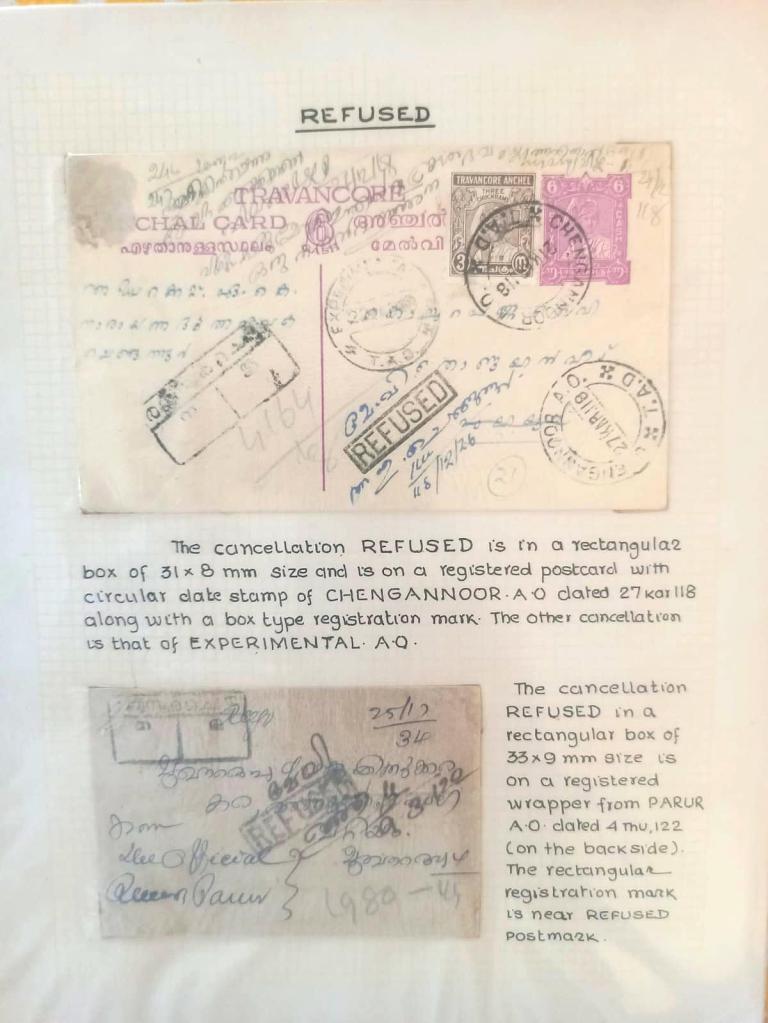
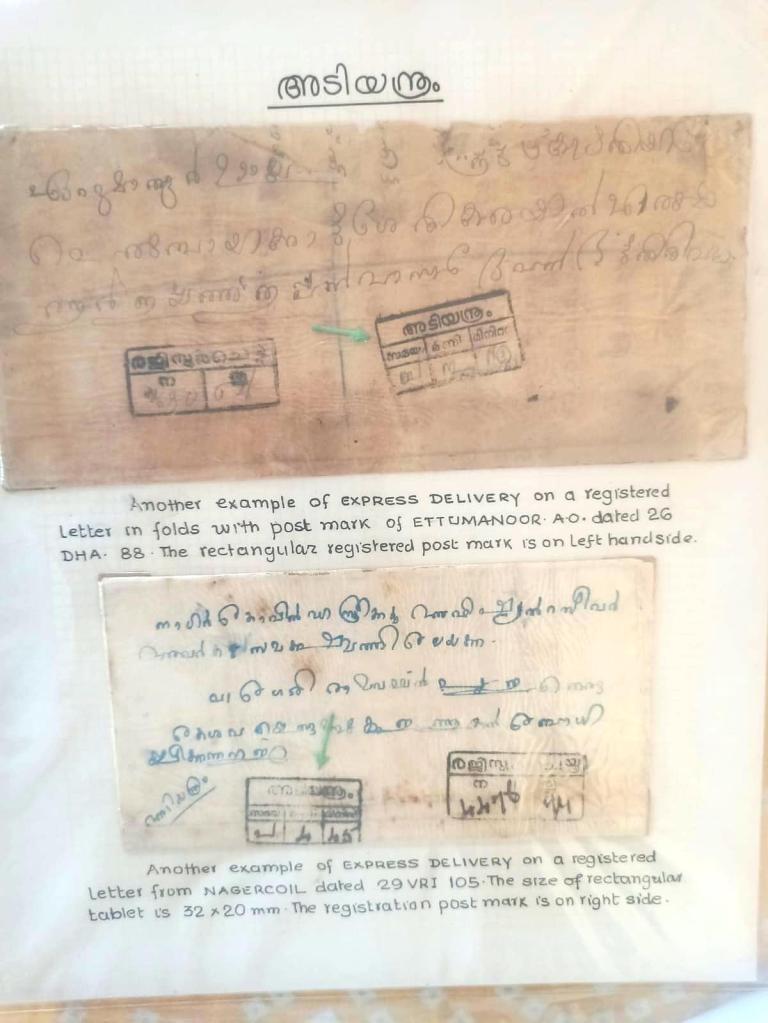
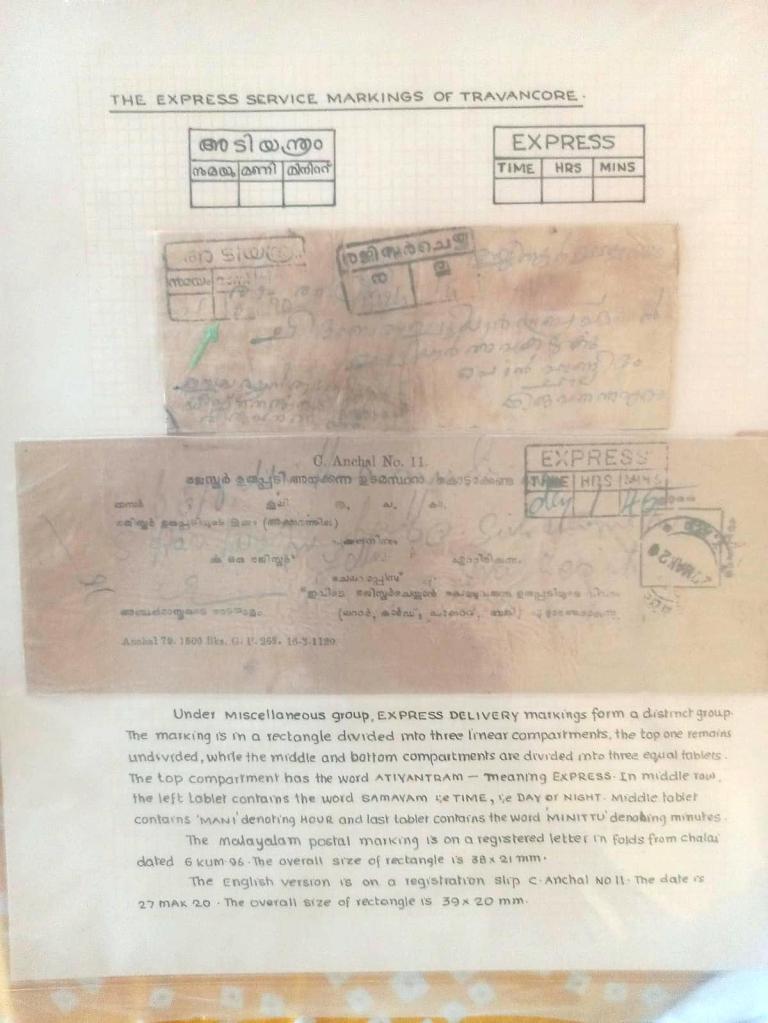
    Just five sheets from Dad’s #Travancore stamps/covers collection. Each sheet is handwritten/drawn by him, when explaining the postmarks.

    A fascinating aspect of Travancore’s postal history, highlighting different types of postmarks and cancellations. Here’s an overview of these philatelic gems:

    The first page discusses the division of Travancore postmarks into vernacular and English groups.

    A key feature is the pre-stamp circular date postmark, typically found in a rimless circle with concentric arcs.

    The sample postmark from Thiruvananthapuram (Trivandrum) dates back to the pre-stamp period.

    Delivery Postmarks

    A postmark from Nagercoil features a double-ringed circular date stamp with “DELY.” (short for delivery).

    The date format is structured with abbreviations for the month and year.

    The postmark is flanked by four-pointed stars, which is a distinct design element.

    Refused Mail Cancellations

    A rectangular “REFUSED” cancellation appears on registered items.

    The example from Chengannur A.O. is dated 27 Kar 118 (Travancore Era).

    Another example from Parur A.O. is in a slightly larger rectangular format and dated 4th Thu 122.

    Express Delivery (അടിയന്തിരം – “Adiyanthiram”)

    Express service markings are prominently displayed.

    The first example is from Ettumanoor A.O., dated 26 DHA 88.

    Another example from Nagercoil, dated 29 VRI 105, shows a similar rectangular marking.

    Express Service Markings of Travancore

    This marking is divided into three sections, with “ATIYANTRAM” (Express) at the top.

    The middle sections contain words like “SAMAYAM” (Time), “MANI” (Hour), and “MINITTU” (Minutes).

    English versions of these markings are also seen on registration slips.
  • Currency notes:

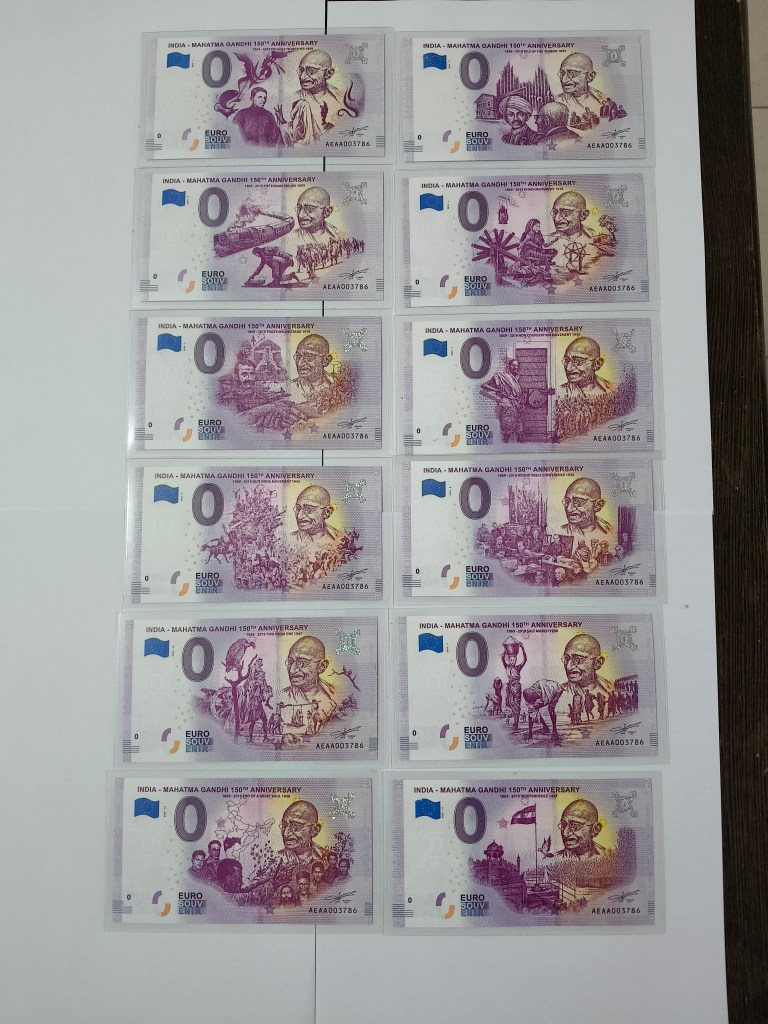
    Zero euro notes ..set of 12…each depicting an event from Mahatma Gandhi’s life.

    Another unique part: all notes end in 786.

    Only collector value, of course.

  • Coins: Dhar State, India

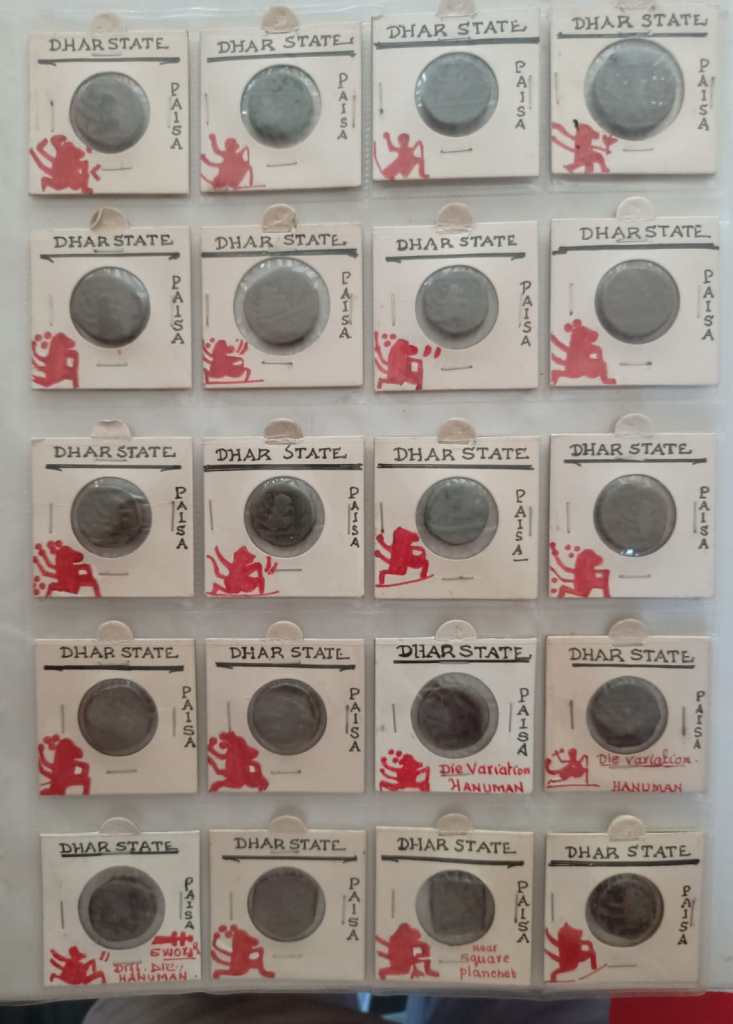
    A collection of Dhar State coins, specifically Paisa coins, from Dhar, a princely state in central India (now part of Madhya Pradesh).

    Historical Background of Dhar State Coins:

    • Dhar State was a princely state under British India, and it issued its own coinage before the introduction of the Indian rupee.
    • Coins from Dhar are known for their unique designs, often featuring Hindu mythological figures.
    • The collection particularly highlights coins with Hanuman depictions, which were significant in Dhar’s local culture.

    Details:

    • The coins are labeled “DHAR STATE PAISA”, indicating their denomination and origin.
    • Some coins are marked with “Hanuman”, suggesting they feature the image of the Hindu deity Lord Hanuman.
    • There are references to “Die Variation Hanuman”, which implies there are different versions of the same coin with slight differences in die design.
    • Some labels mention “Square Planchet”, meaning a few coins were struck on square-shaped metal blanks rather than the standard round shape.
    • The handwritten red Hanuman figure on the holders further suggests a thematic focus on the Hanuman imagery.

    Why Are These Coins Important?

    1. Cultural Significance – Dhar State coins featuring Hanuman reflect the regional religious influence and devotion to the deity.
    2. Numismatic Rarity – Variations in the dies and planchets (e.g., square coins) make them valuable to collectors.
    3. Historical Context – These coins were issued in a period when princely states had their own monetary systems before Indian unification.
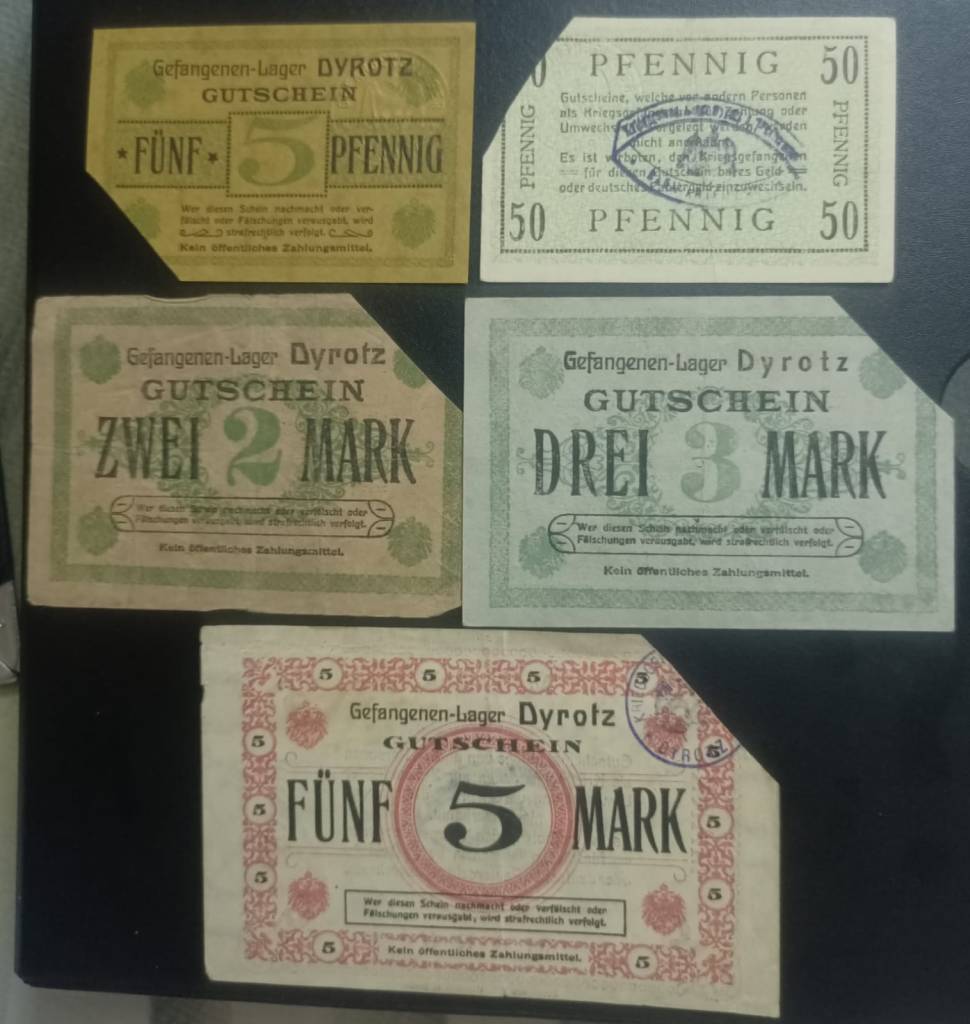
  • These are Notgeld (emergency money) issued for the Gefangenen-Lager Dyrotz, a prisoner-of-war (POW) camp in Germany. Notgeld was commonly issued during times of economic crisis, especially during and after World War I, when there were shortages of official currency.

    Key Features of These Notgelds:
    Issued by Gefangenen-Lager Dyrotz

    Dyrotz was a POW camp, likely in Germany, where these notes were used internally for transactions among prisoners.
    They were not public legal tender (as indicated on the notes: Kein öffentliches Zahlungsmittel).
    Denominations and Design

    The notes in the image include different values: 5 Pfennig, 50 Pfennig, 2 Mark, 3 Mark, and 5 Mark.
    Each note has decorative borders and the term Gutschein, which means “voucher” or “coupon”.
    Some have official stamps or markings, which could indicate validation for circulation within the camp.
    Security and Warning Text

    These notes carry a warning: Wer diesen Schein nachmacht oder verfälscht oder Fälschungen versuht, wird strafrechtlich verfolgt.
    Meaning: “Whoever forges or falsifies this note or attempts counterfeiting will be prosecuted.”
    This suggests they were carefully controlled within the camp system.


    Historical Context:

    During WWI and WWII, many POW camps issued their own Notgeld to control economic activities within the camp, preventing prisoners from using official currency.
    These types of notes were often exchanged for goods in camp canteens but had no value outside the camp.
    Collectibility & Value:
    These POW camp Notgelds are rare and highly collectible, especially if they are in good condition and have clear stamps or signatures.

  • Stamps: India Miniature Stamps Sheets

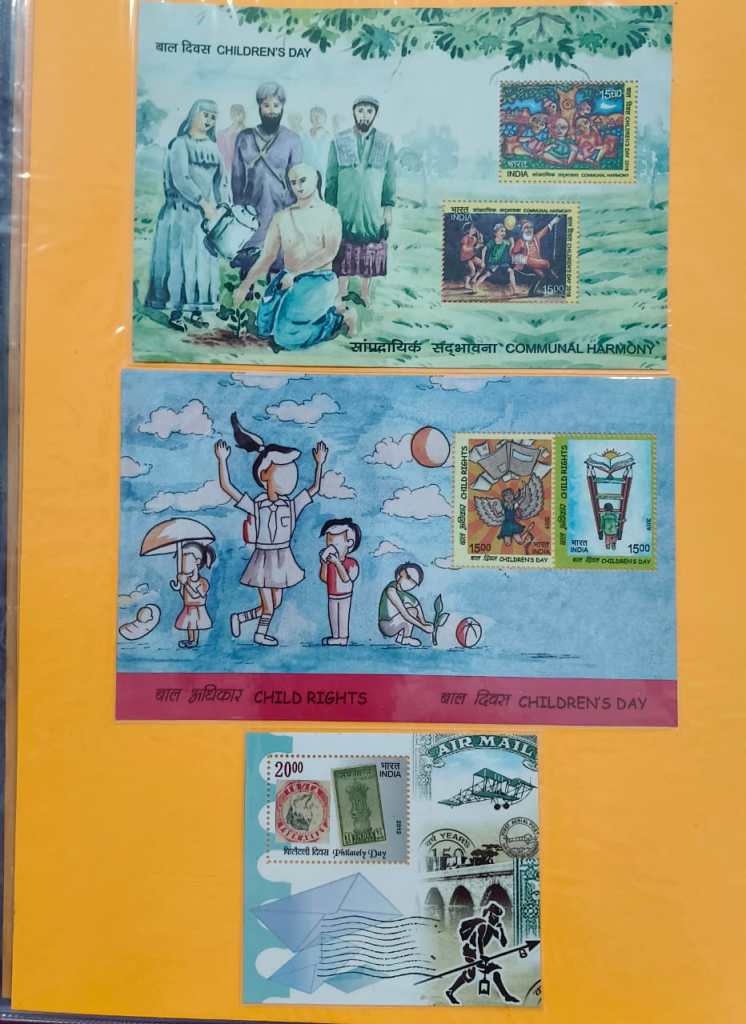
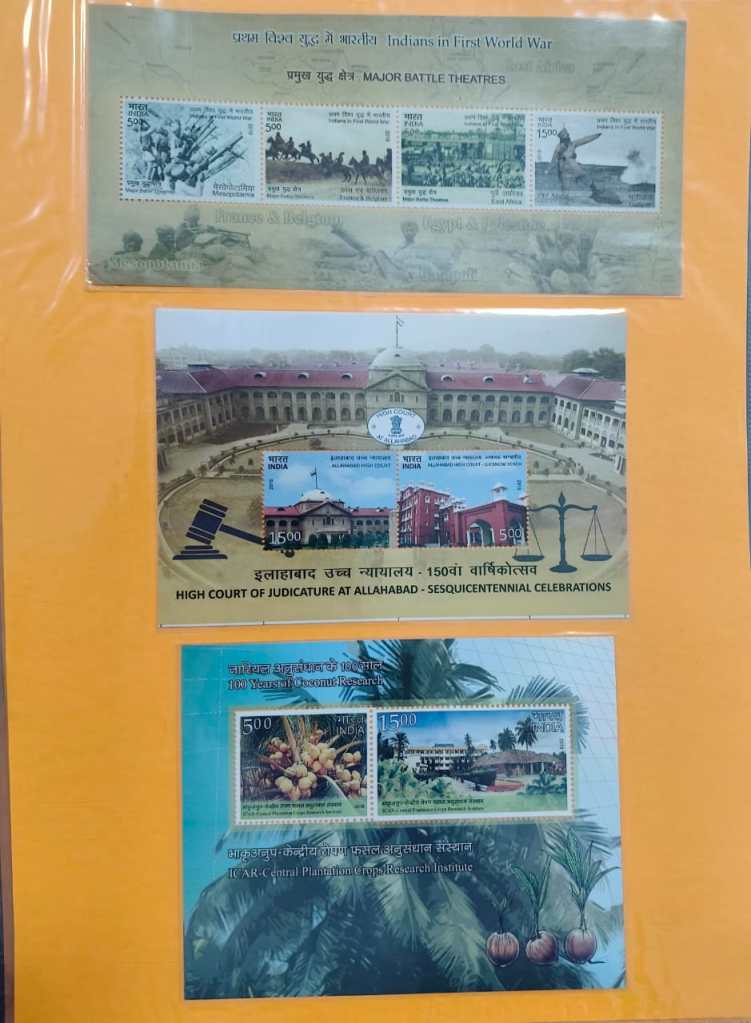
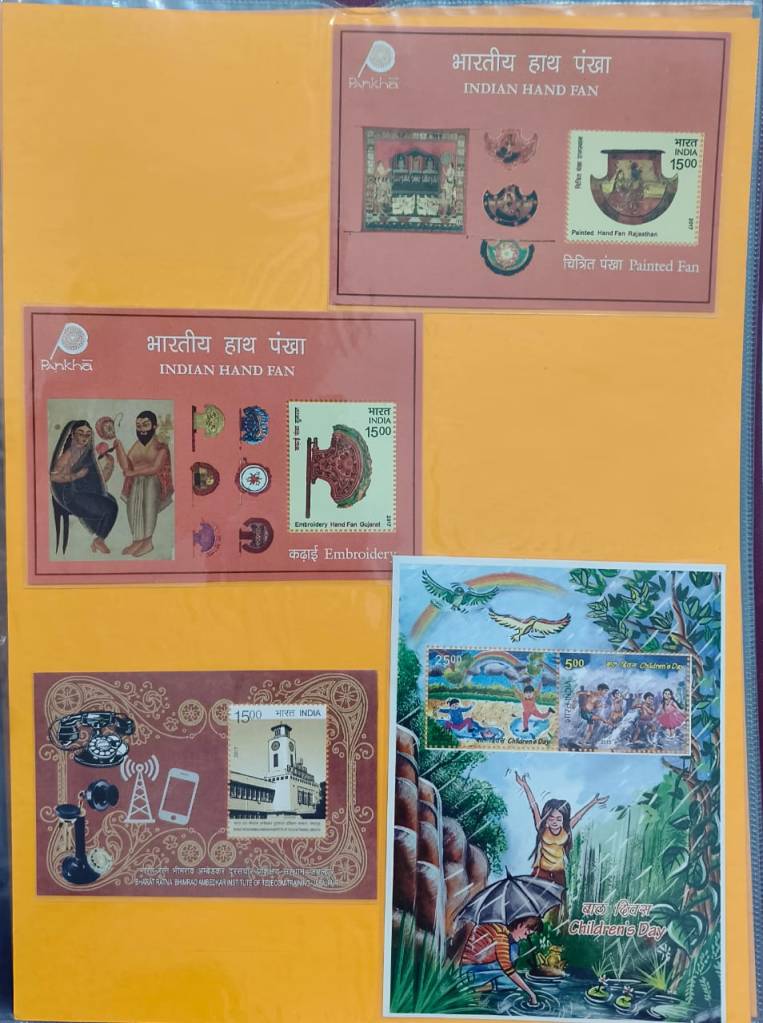
    These images showcase a collection of Indian miniature stamps, each featuring a unique theme. Here’s an overview of the stamps in your collection:

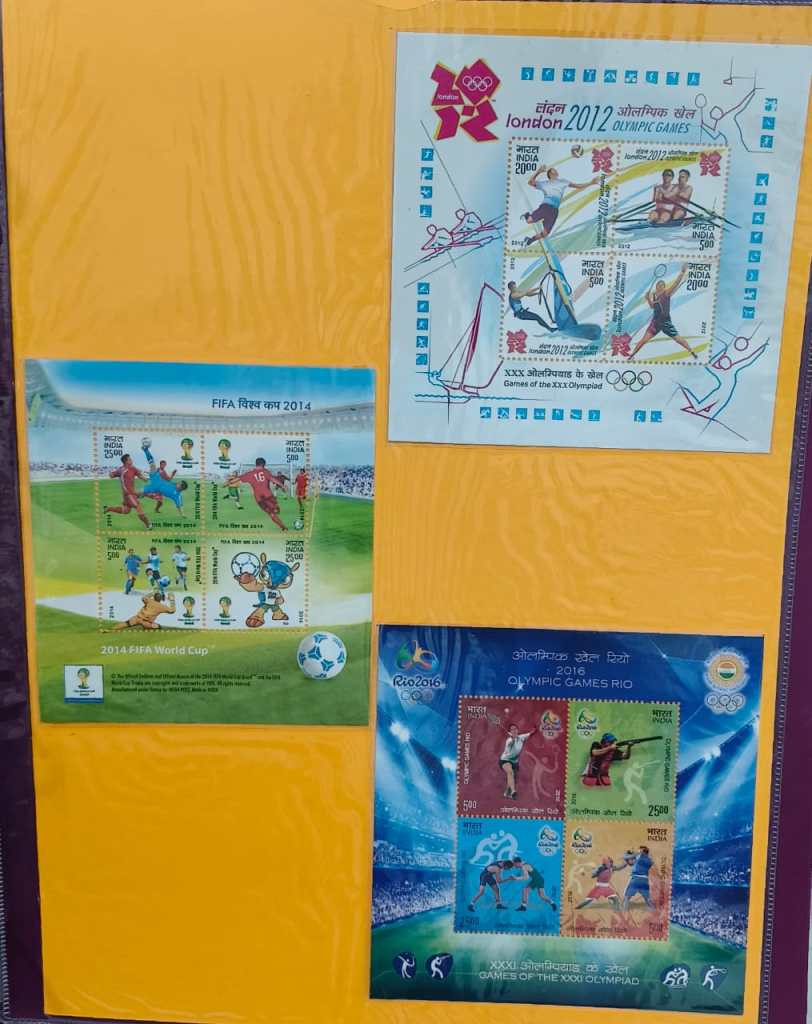
    1. Sports and Olympics Stamps (Image 1):
      • Stamps related to the 2012 London Olympics, 2016 Rio Olympics, and the 2014 FIFA World Cup.
      • These commemorate India’s participation and the global impact of these sporting events.
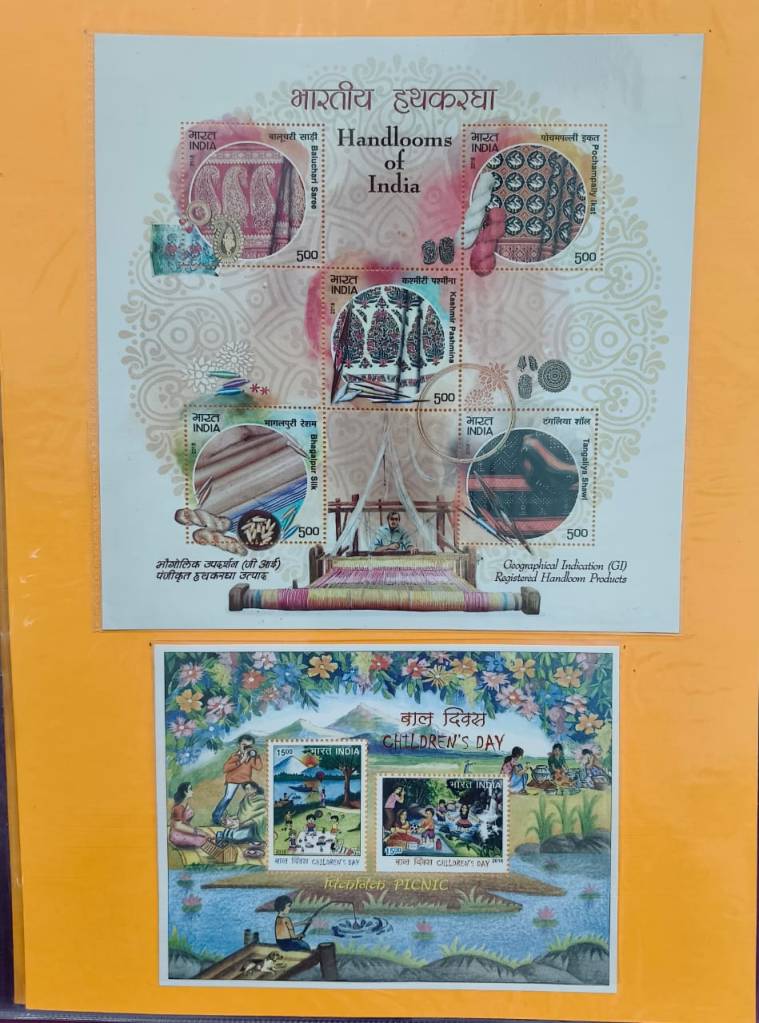
    2. Handlooms and Children’s Day Stamps (Image 2):
      • The Handlooms of India series showcases traditional Indian textiles and weaving techniques, highlighting India’s rich heritage in handloom production.
      • Children’s Day stamps feature colorful depictions of childhood themes, promoting awareness of children’s welfare and rights.
    3. Child Rights and Communal Harmony Stamps (Image 3):
      • Stamps themed on Children’s Day, Child Rights, and Communal Harmony, emphasizing India’s commitment to social values.
      • Some stamps depict historical figures and events promoting unity and inclusivity.
    4. Historical and Institutional Commemorations (Image 4):
      • Indians in the First World War, recognizing Indian soldiers’ contributions to major battlefronts.
      • Allahabad High Court Sesquicentennial Celebrations, marking 150 years of India’s judicial history.
      • 100 Years of Coconut Research, commemorating advancements in India’s agricultural research.
    5. Indian Cultural Heritage and Telecommunications (Image 5):
      • Stamps featuring Indian Hand Fans (Pankha), showcasing traditional hand-crafted fans.
      • Indian Telecommunications, highlighting the evolution of communication in India.
      • More Children’s Day stamps, emphasizing themes of joy, education, and nature.

    These stamps reflect India’s diverse cultural, historical, and social contributions while being a valuable collector’s item.

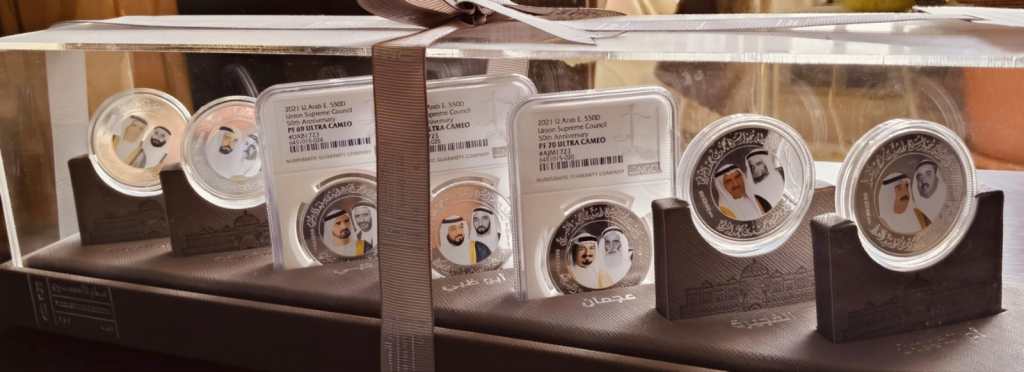
  • Coins: U.A.E. commemorative coins set

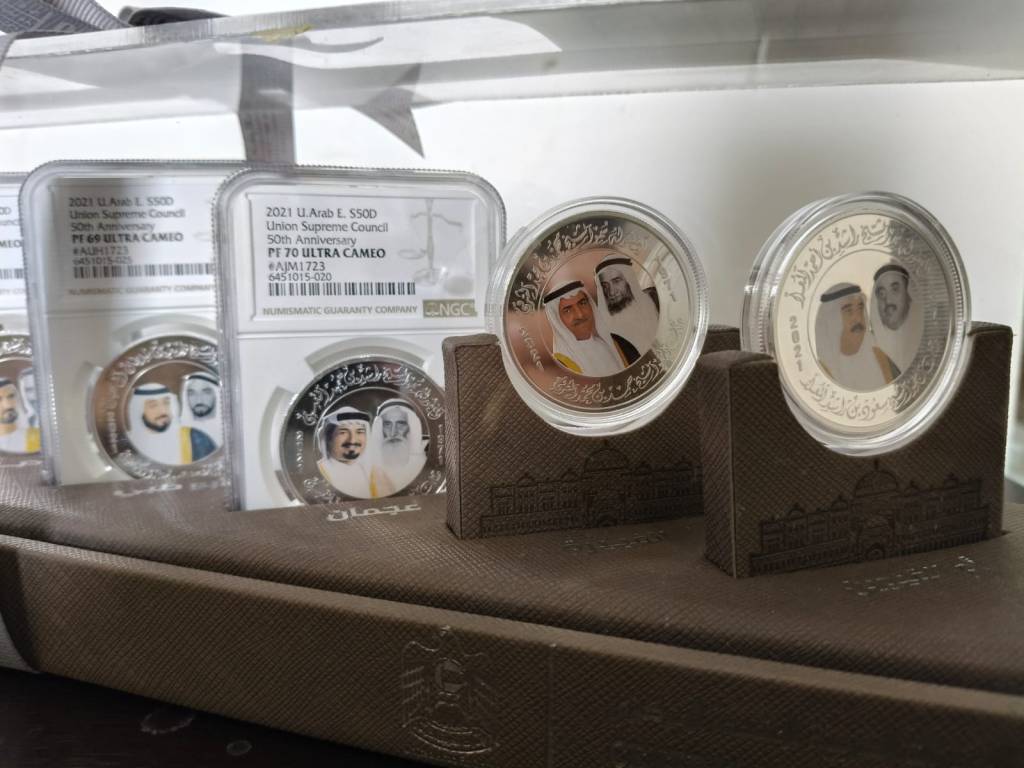
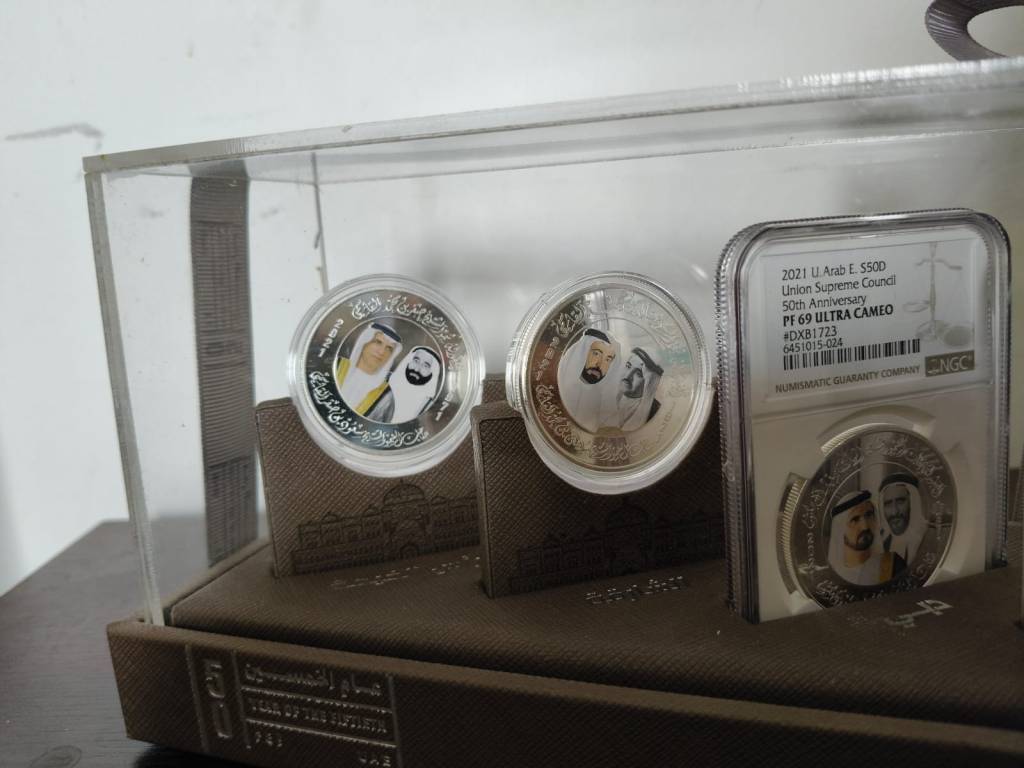
    ‘Pride of our U.A.E. coin collection’, I’d say.. a beautiful set, two with PF 69 grading, one with the highest, PF 70.

    This beautiful seven-coin silver set, in a super gift box, was released in 2021 to celebrate the nation’s 50th anniversary and pay tribute to the founding fathers. Each coin in this set features a black-and-white image of a founding father alongside a color image of a current member of the Supreme Council of the Union. Only 3,000 of these sets were made available to the public.

    Below: A closer look in two parts, at the seven coins, one for each Emirate, in the series.

  • Old Coins: Princely States

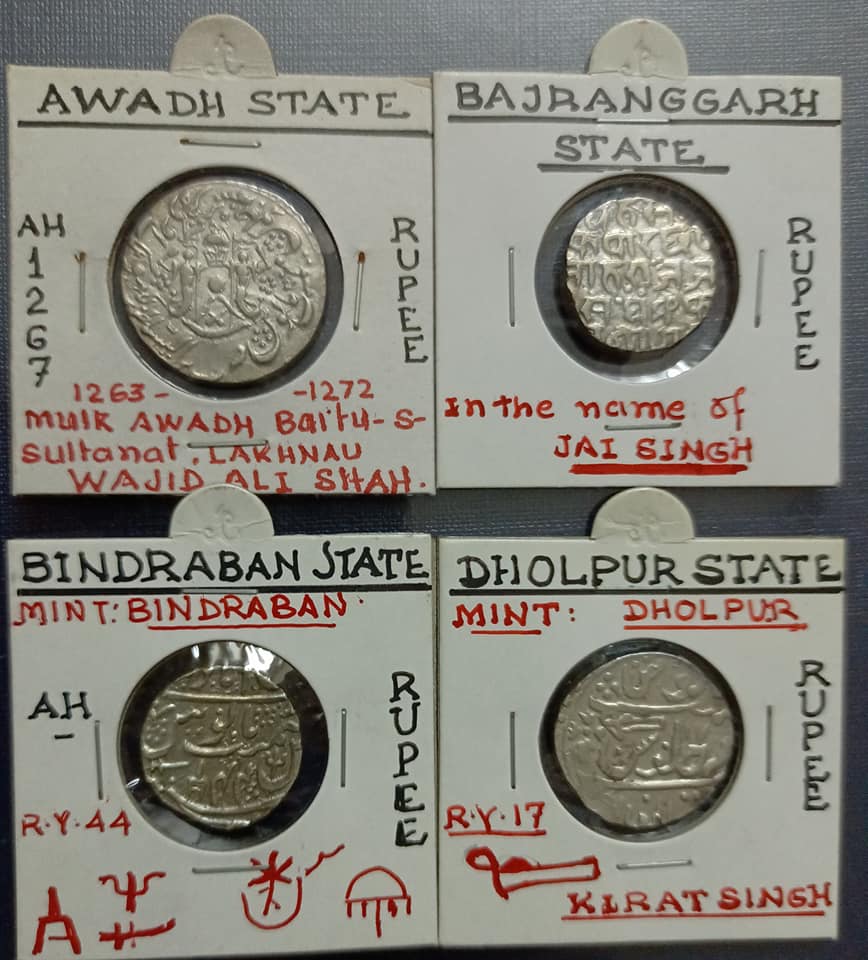
    • Featured today: coins representing the rich history of Indian princely states before and during British rule.

    1. Awadh State Coin

    • Period: 1263-1272 (Islamic calendar, likely 1847-1855 AD)

    • Mint: Lucknow

    Ruler: Wajid Ali Shah (the last Nawab of Awadh)

    • Details: This coin was issued during the rule of Wajid Ali Shah, the last ruler of the Awadh kingdom before its annexation by the British East India Company in 1856.

    2. Bajranggarh State Coin

    • Issued in the name of Jai Singh

    • Details: Bajranggarh was a small princely state, and this coin was likely minted in a local or regional style.

    3. Bindraban State Coin

    • Mint: Bindraban (Vrindavan)

    • Islamic Year: AH (Anno Hegirae)

    • Ruler: Not specified

    • Details: Bindraban (modern-day Vrindavan) was a prominent religious and cultural hub during the Mughal and British periods.

    4. Dholpur State Coin

    • Mint: Dholpur

    • Reign Year: RY 17

    • Ruler: Kirat Singh

    • Details: Dholpur was a princely state in present-day Rajasthan, and this coin was likely issued during Kirat Singh’s rule.

    ________________________________________

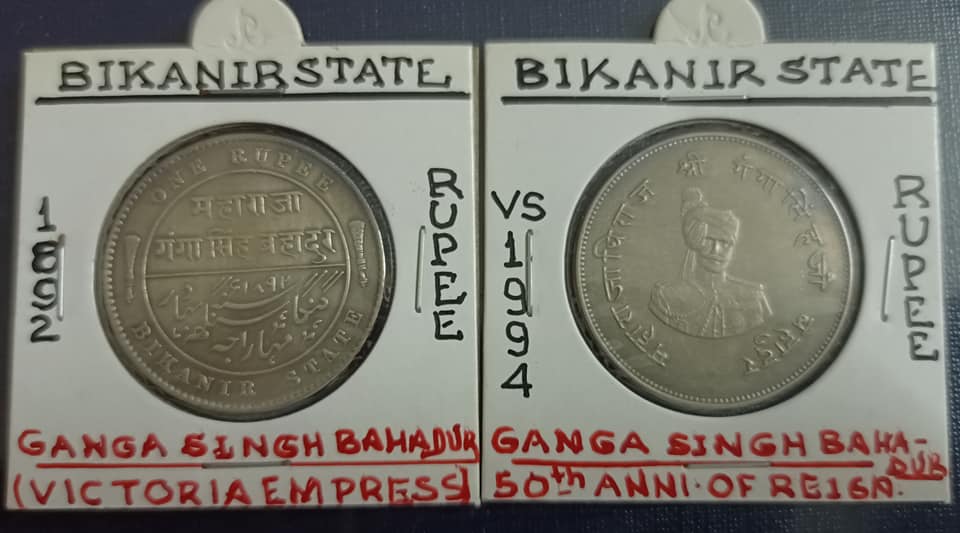
    5. Bikaner State Coins

    • Coin 1 (1892)

    o Ruler: Ganga Singh Bahadur

    o Inscription: Mentions Victoria Empress

    o Details: This coin signifies the relationship between Indian princely states and British rule.

    • Coin 2 (VS 1994)

    o 50th Anniversary of Ganga Singh Bahadur’s reign

    o Details: This commemorative coin marks an important milestone in his rule.

    ________________________________________

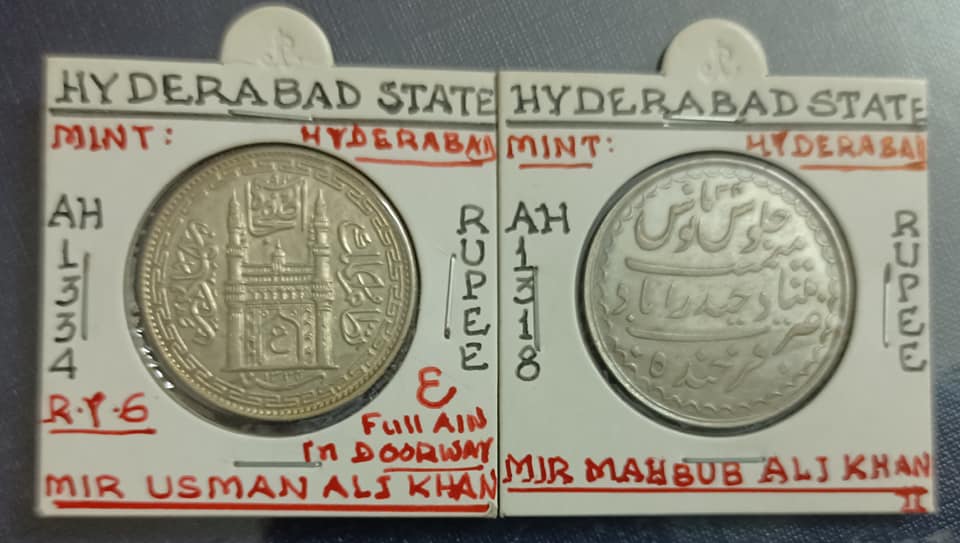
    6. Hyderabad State Coins

    • Mint: Hyderabad

    • Coin 1:

    o Reign: Mir Usman Ali Khan (last Nizam of Hyderabad)

    o Distinct Feature: Depiction of Charminar on one side.

    • Coin 2:

    o Reign: Mir Mahbub Ali Khan

    o Details: Hyderabad was one of the most powerful and wealthy princely states under British India.

    ________________________________________

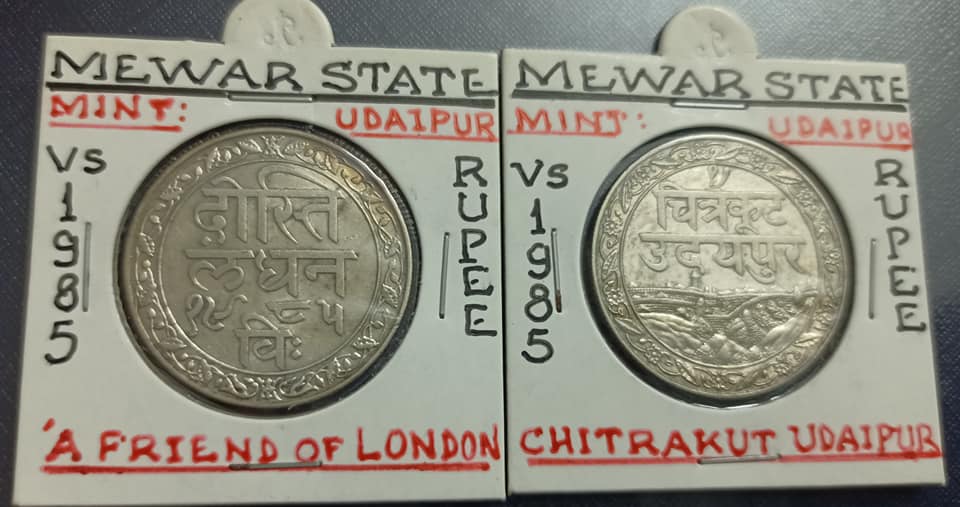
    7. Mewar State Coins

    • Mint: Udaipur

    • Coin 1 (VS 1985)

    o Inscription: “A Friend of London”

    o Details: This could indicate British influence in the region.

    • Coin 2:

    o Design: Chitrakut Udaipur (depicting a scenic view of Udaipur)

    o Details: Mewar, centered around Udaipur, was a historic Rajput kingdom known for its fierce resistance against Mughal and British rule.

  • Stamps: Cochin: Multi Award Winning Collection

    Edited on 04 02 25:

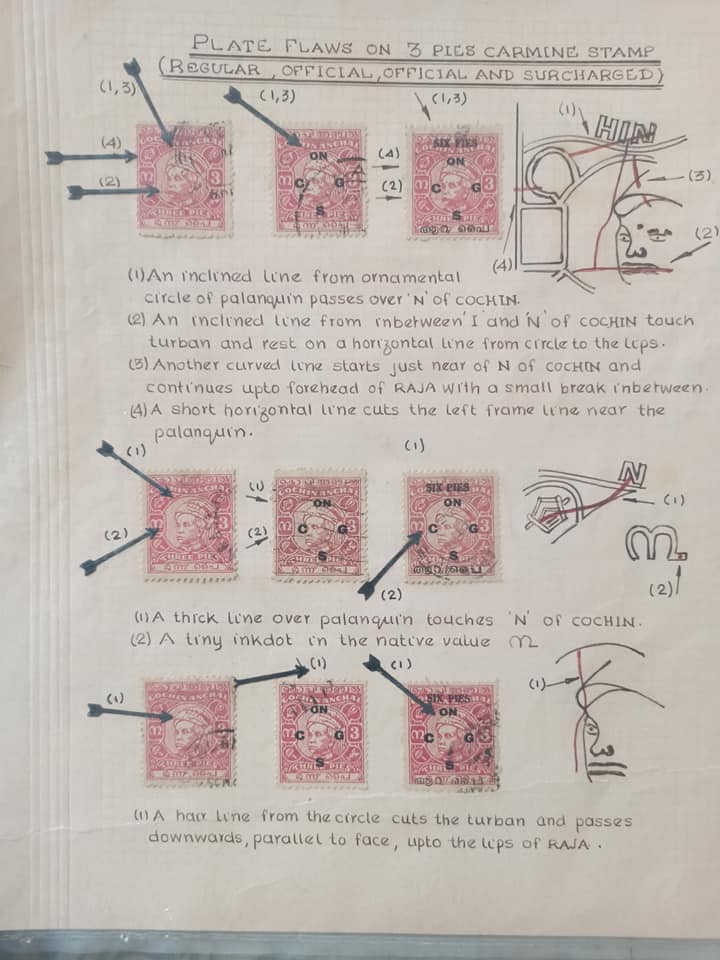
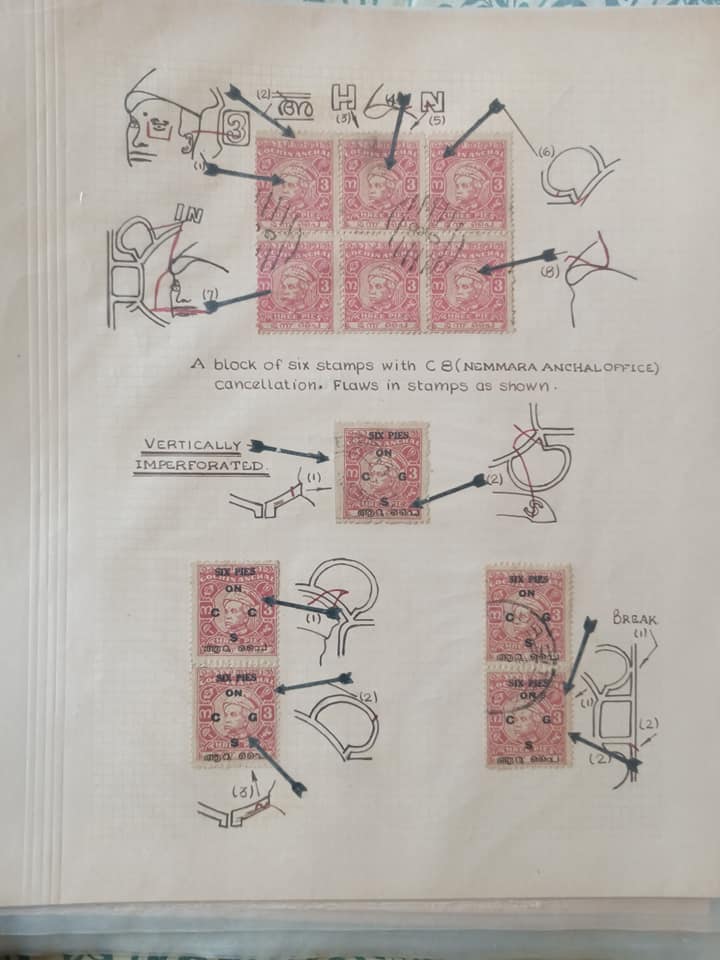
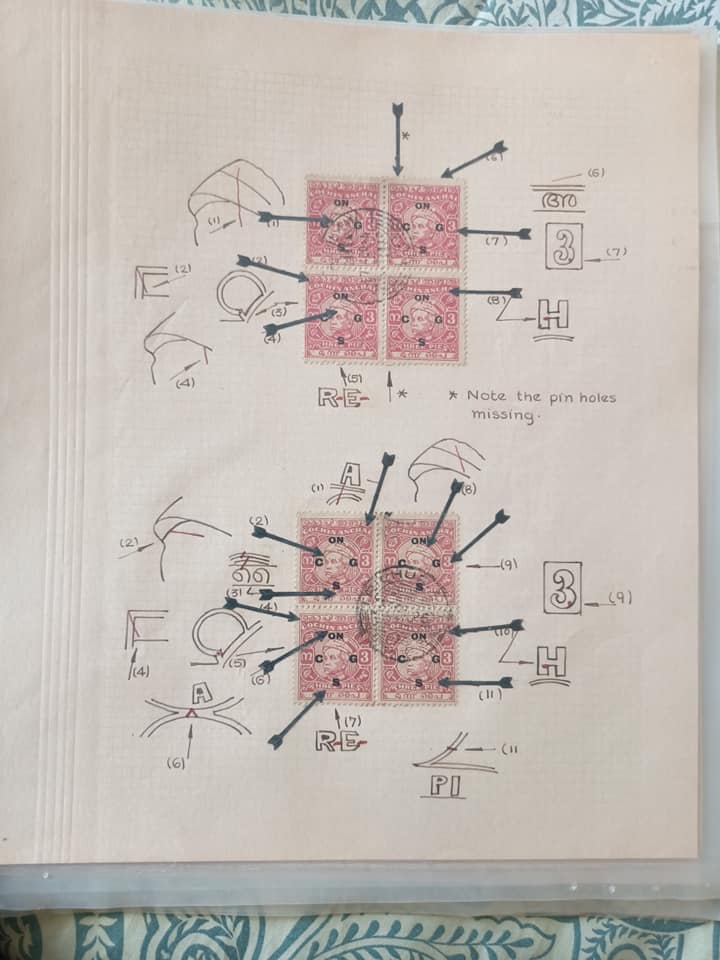
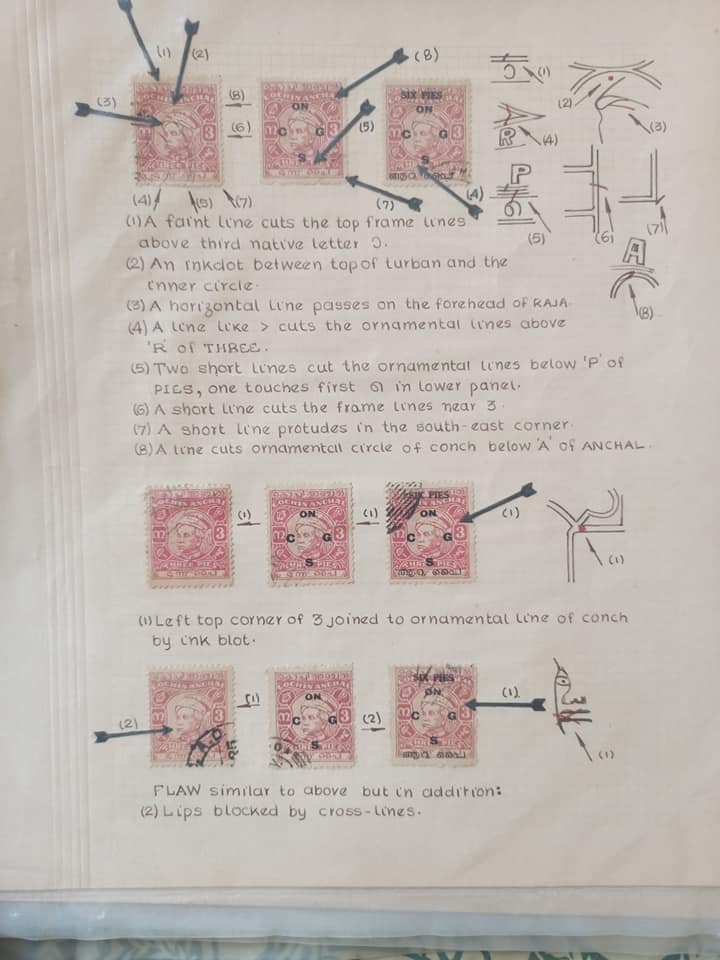
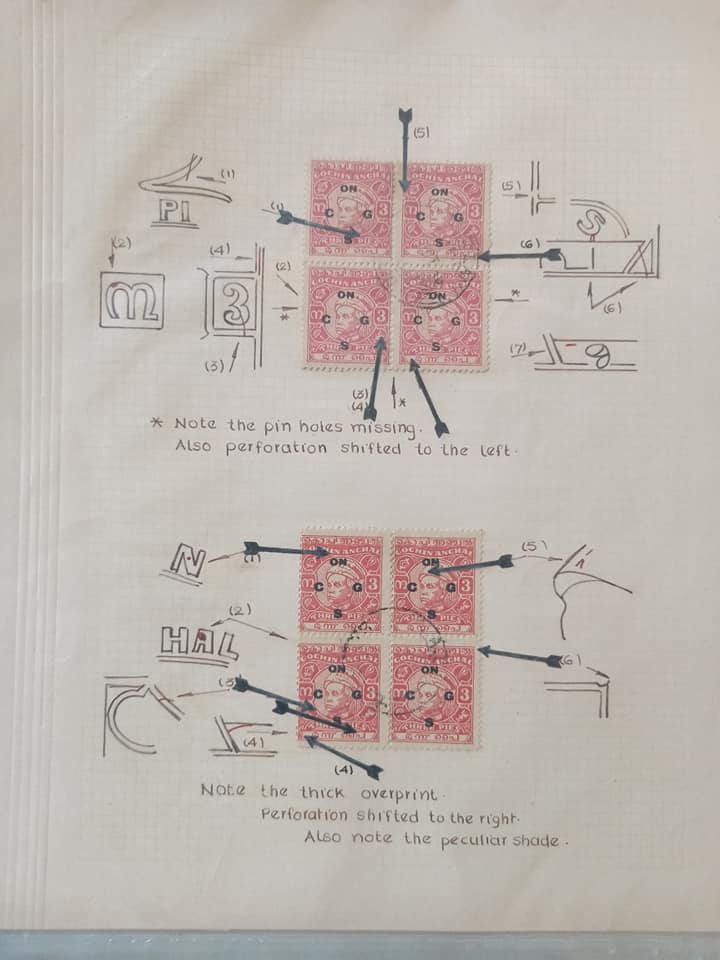
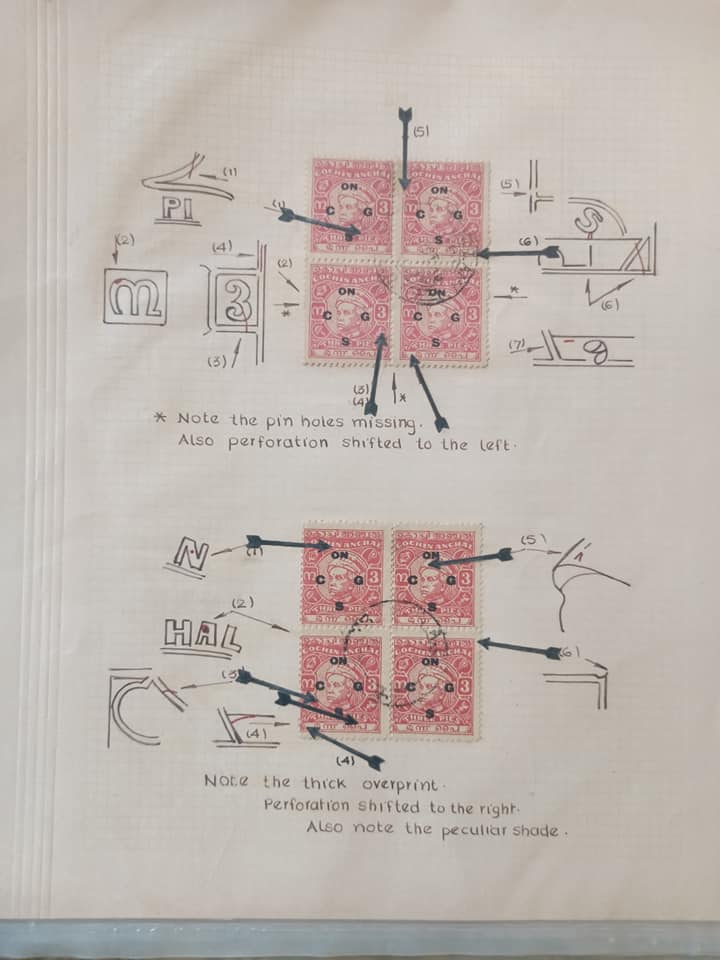
    Printing by the lithograph method, also known as stone printing, involved transferring the matter to be printed onto a stone (lithograph), inking it properly, and then printing. With repeated use, scratches would develop on the stone, and fine grains would come off, causing the ink to settle into these areas. This led to flaws such as lines and spots in the final print.

    Note: Entire handwriting is done by Dad, including the diagrams.

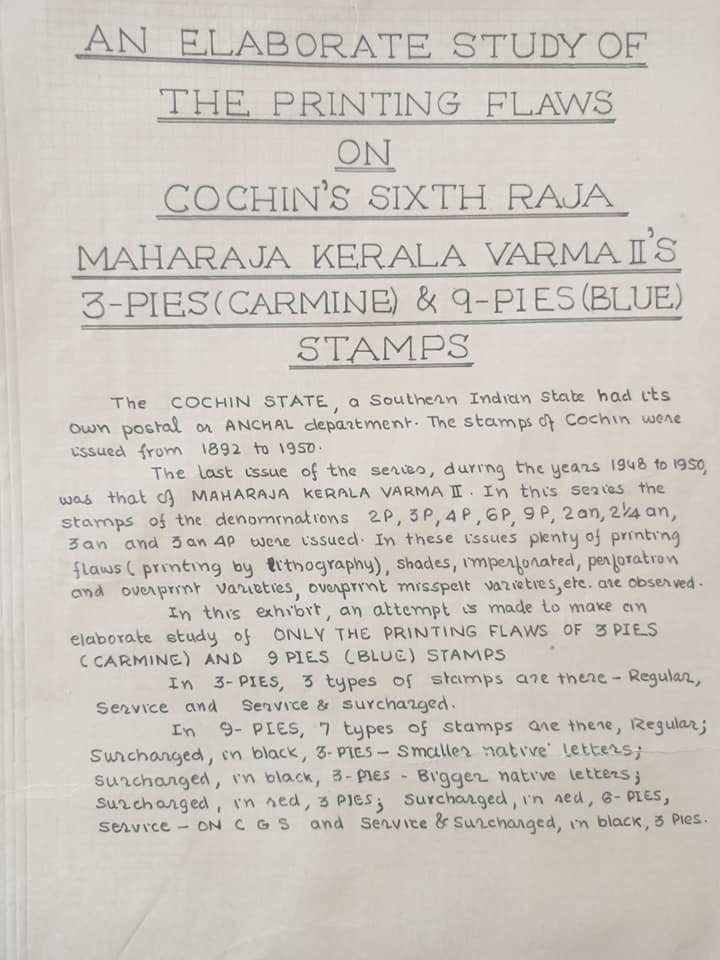
    An elaborate study of the printing flaws found on the 3-Pies Carmine & 9-Pies Blue stamps of Maharaja Kerala Varma II from Cochin State, a former princely state in India. These stamps were issued between 1892 and 1950, with the last series featuring Maharaja Kerala Varma II in the years 1948-1950.

    Key Features of the Collection:
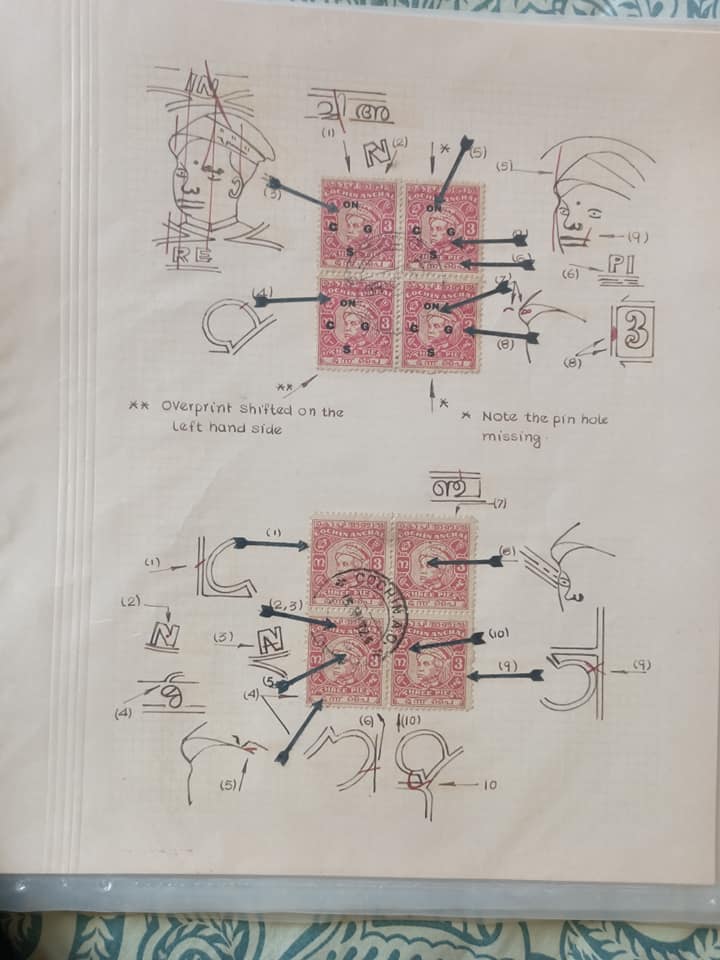
    Study of Printing Flaws

    The exhibit meticulously documents various printing defects in these stamps.
    It highlights plate flaws found in regular, official, and surcharged versions.
    Flaws include misalignment, ink spots, overprint shifts, broken lines, and missing perforations.

    Types of Stamps featured:

    3-Pies Carmine:
    Three variations: Regular, Service, and Service & Surcharged.
    9-Pies Blue:
    Seven variations:
    Regular
    Surcharged in black
    3-Pies with smaller native letters (surcharged in black)
    3-Pies with bigger native letters (surcharged in black)
    6-Pies surcharged in red
    3-Pies surcharged in red
    Service on C & G S, and Service & Surcharged in black (3-Pies)
    Illustrations of Printing Flaws

    The collection includes detailed diagrams pinpointing flaws on each stamp.
    The flaws are annotated with arrows and descriptions, showcasing errors in:
    Lettering
    Ornamental designs
    Turban and facial features of the Maharaja
    Frame and conch design elements
    Specific Printing Flaws Identified

    Ink misalignment & smudging
    Overprint shifts to the left or right
    Missing or extra lines in the Maharaja’s turban
    Breaks in ornamental lines
    Errors in native script letters
    Variations in perforations and pinholes
    Smaller or bigger font discrepancies in overprints
    Historical & Philatelic Importance
    This study is valuable for philatelists and stamp collectors interested in Indian princely states’ postal history. Cochin was among the few states that had its own postal system, known as the Anchal Department, making these stamps historically significant.

  • Telephone Card: Russian

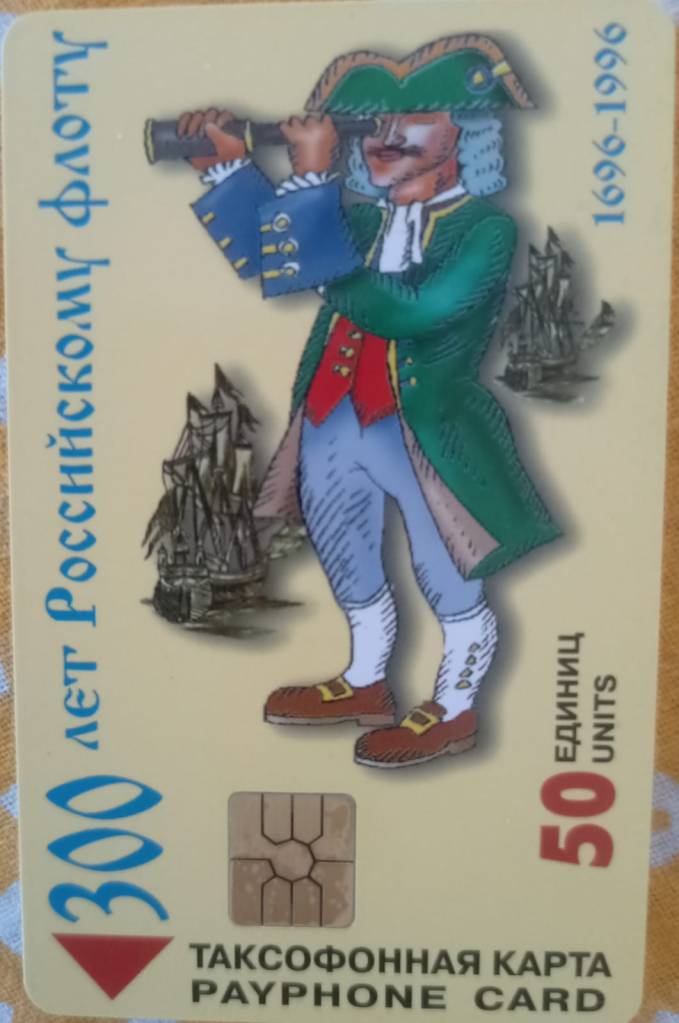
    This is a Russian payphone card issued to commemorate the 300th anniversary of the Russian Navy (1696-1996).

    Details of the Card:

    Theme: Celebrates 300 years of the Russian Navy (Военно-Морской Флот России), which was officially founded in 1696 under Peter the Great.

    Design: Features a historical illustration of a naval officer (possibly inspired by Peter the Great himself) using a spyglass, with sailing ships in the background.

    Denomination: 50 units, which likely indicates the amount of call credit available when the card was in use.

    Language: The text is in Russian and English:

    “300 лет Российскому Флоту” = “300 Years of the Russian Navy”

    “ТАКСОФОННАЯ КАРТА” = “Payphone Card”

    Technology: The card has a chip embedded, which was commonly used in payphone cards during the 1990s.

    Historical Context:

    This card was likely issued in 1996, marking the tricentennial of the founding of the Russian Navy. The Navy was officially established by Tsar Peter the Great as part of his extensive military reforms to modernize Russia. The illustration on the card reflects this era, showing an 18th-century naval officer in a traditional European-style uniform.

    Collectible Value:

    Vintage Status: Since payphones are now mostly obsolete, these cards have become collectible items.

    Russian Navy Theme: Items related to Russian military history, especially from significant anniversaries, are popular among collectors.

    Rarity: The value depends on the condition and demand among collectors. If unused and in good condition, it could be valuable.

  • Telephone Cards

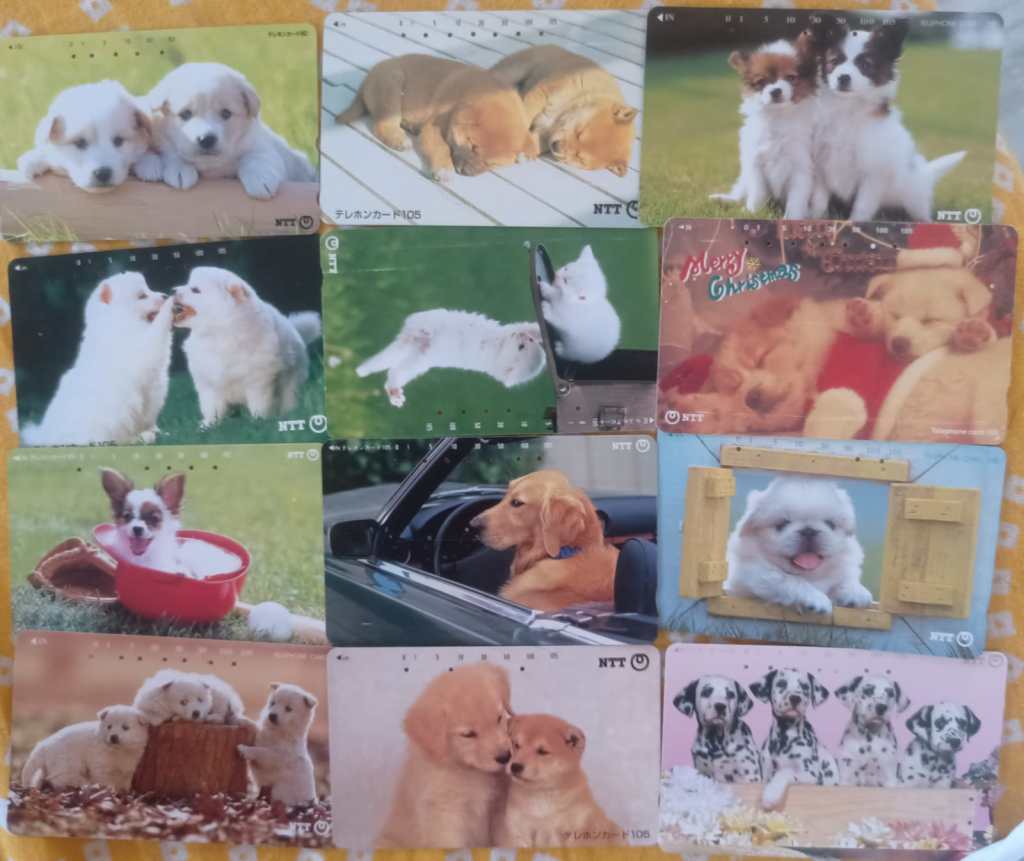
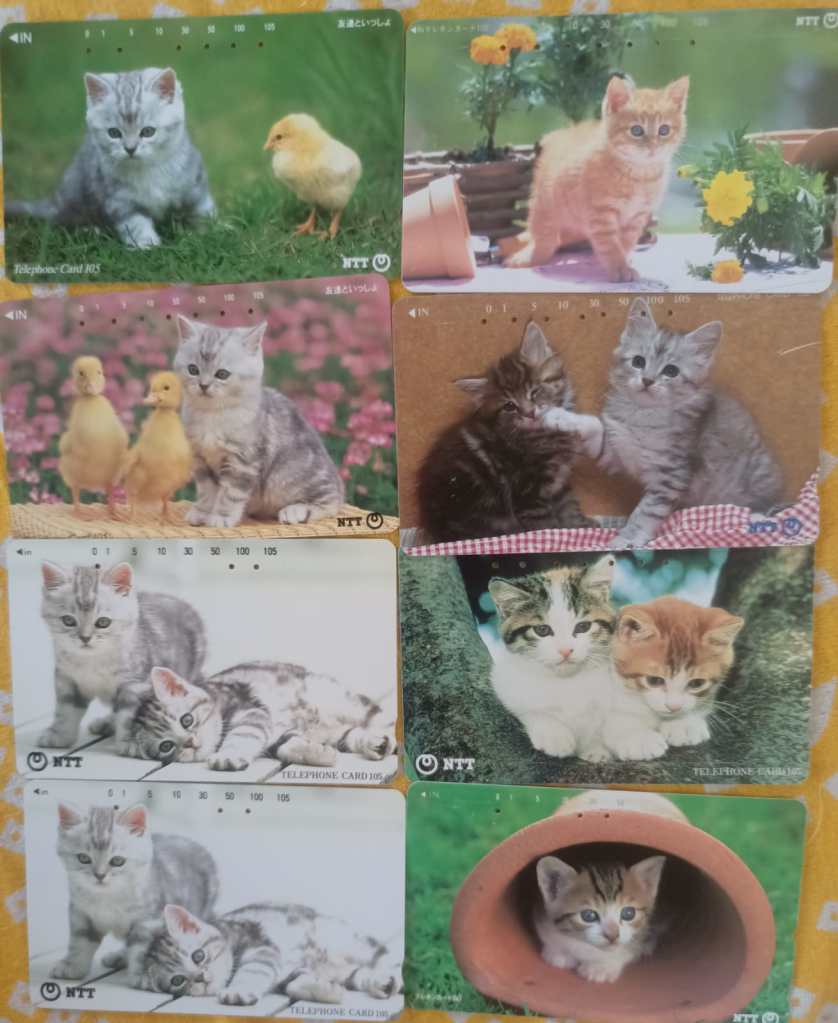
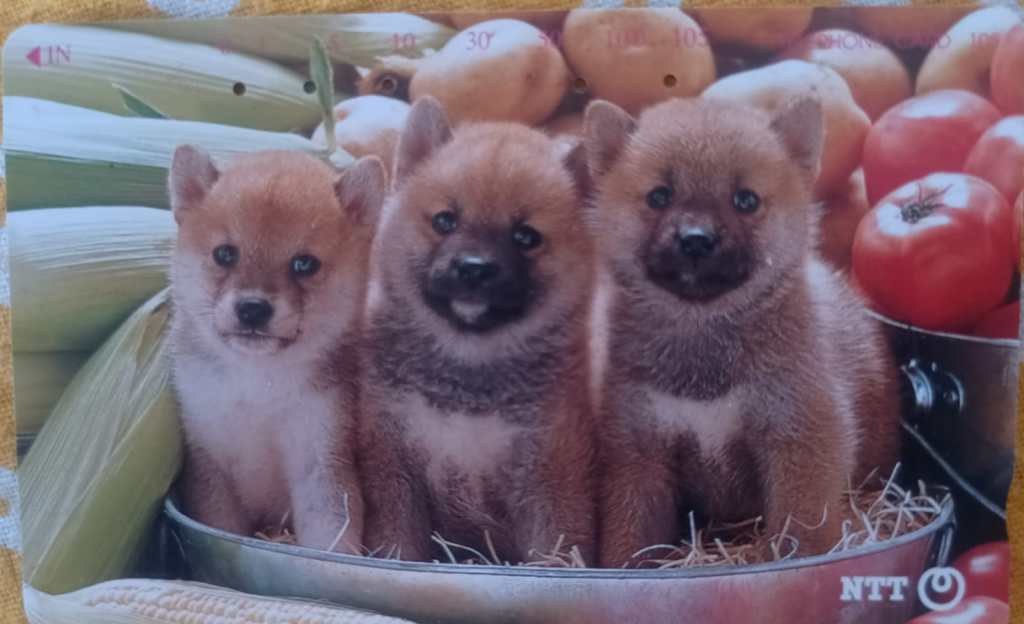
    Today: Featured: Vintage NTT (Nippon Telegraph and Telephone) telephone cards from Japan, featuring adorable puppies and kittens in various playful and heartwarming poses.

    About the Cards:

    NTT Telephone Cards: These prepaid phone cards were widely used in Japan before mobile phones became popular. They were inserted into public payphones for making calls without needing coins.

    Value & Usage: The numbers (e.g., 105, 50) printed on the cards indicate the prepaid value in yen or units of usage.

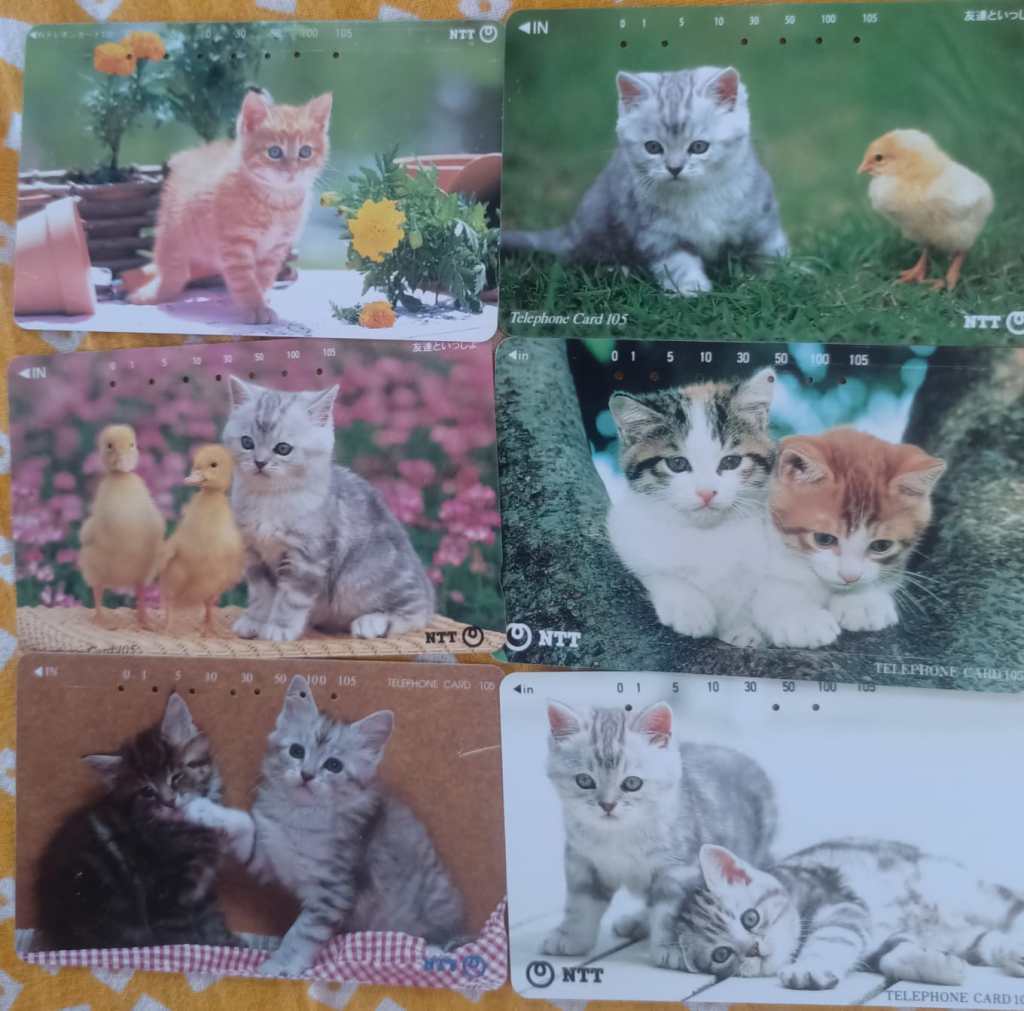
    Animal Theme: The photos showcases beautifully printed images of puppies and kittens, sometimes with other small animals like chicks. Some designs include seasonal themes, such as the “Merry Christmas” card.

    Collectibility: These NTT phone cards have become collectible items, especially for their nostalgic value and artistic designs. Some themed cards, especially limited editions or rare ones, can have value among collectors. Shiba Inu Puppies (First Image)

    Three fluffy Shiba Inu puppies sitting in a metal tub, surrounded by fresh vegetables like corn, potatoes, and tomatoes.

    This is likely a Japanese-themed card, as Shiba Inu is one of Japan’s most famous dog breeds.

    Kitten-Themed Cards (Second Image)

    Features multiple cute kittens interacting with chicks and flowers.

    The kittens appear to be American Shorthair or similar breeds.

    Some cards show kittens playfully wrestling, lying down together, or exploring their surroundings.

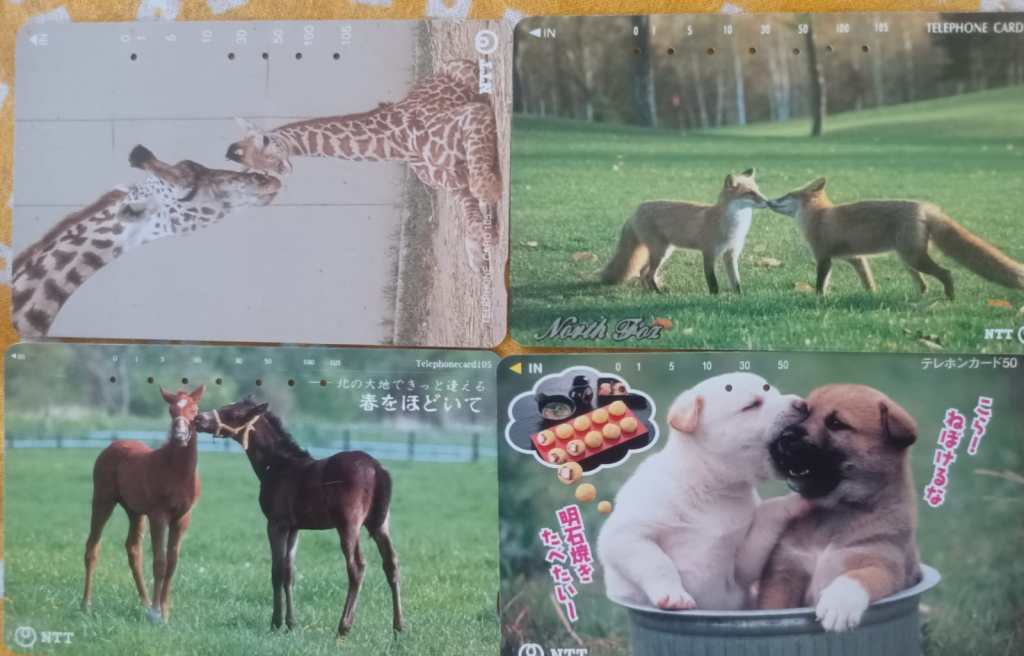
    Various Animals (Third Image)

    Giraffes: A mother giraffe is seen touching noses with her baby, a sweet and affectionate scene.

    Foxes (Labeled “North Fox”): Two red foxes are seen touching noses in a lush green field, suggesting a Japanese wildlife theme.

    Foals (Young Horses): Two young horses in a pasture, appearing to nuzzle each other.

    Puppies in a Tub (With Japanese Text): Two playful puppies in a bucket with Japanese captions, one playfully nibbling on the other.

    Takoyaki (Japanese Snack) Theme: One card humorously combines food (Takoyaki) with puppies, possibly as a promotional or novelty design.