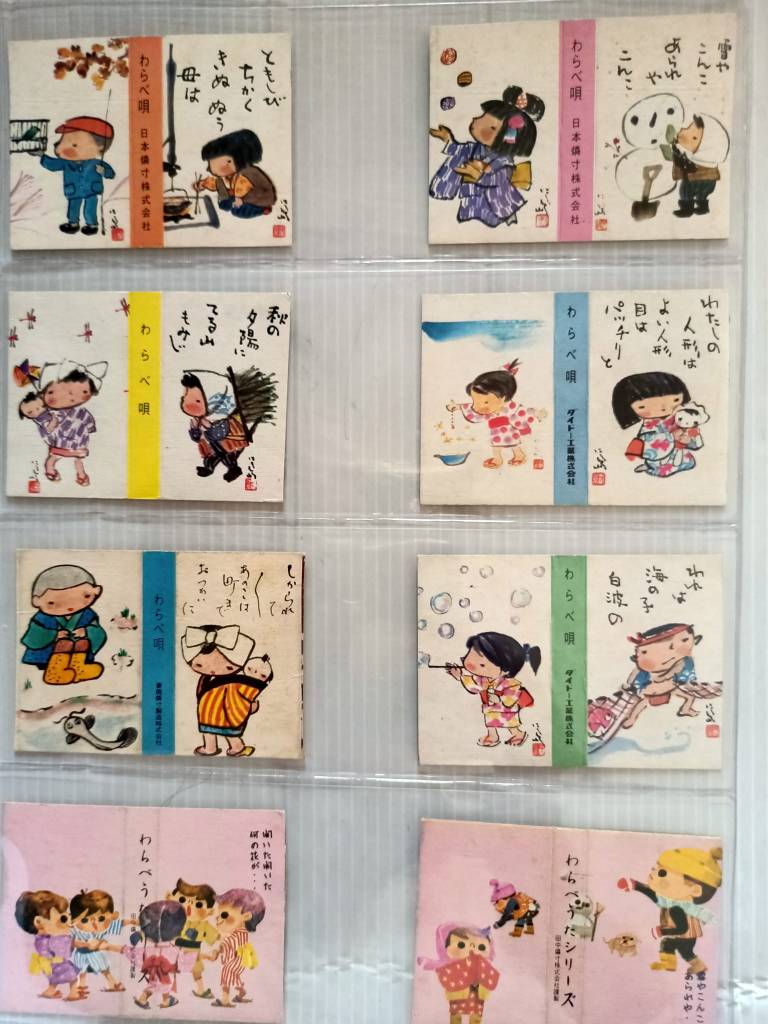
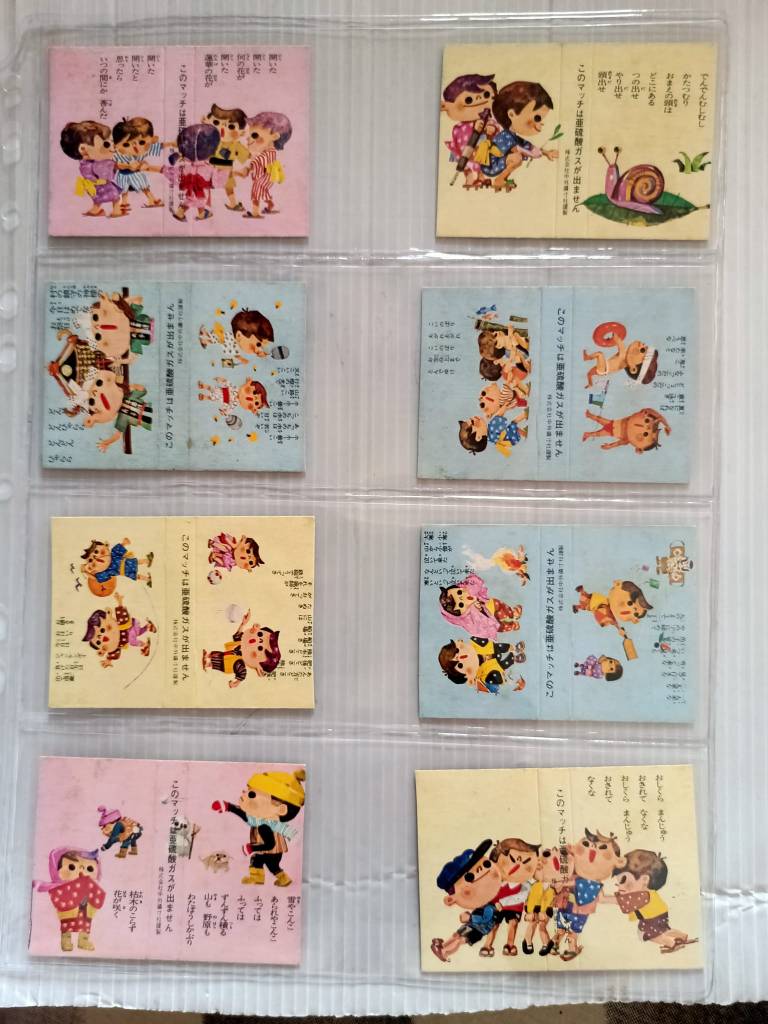
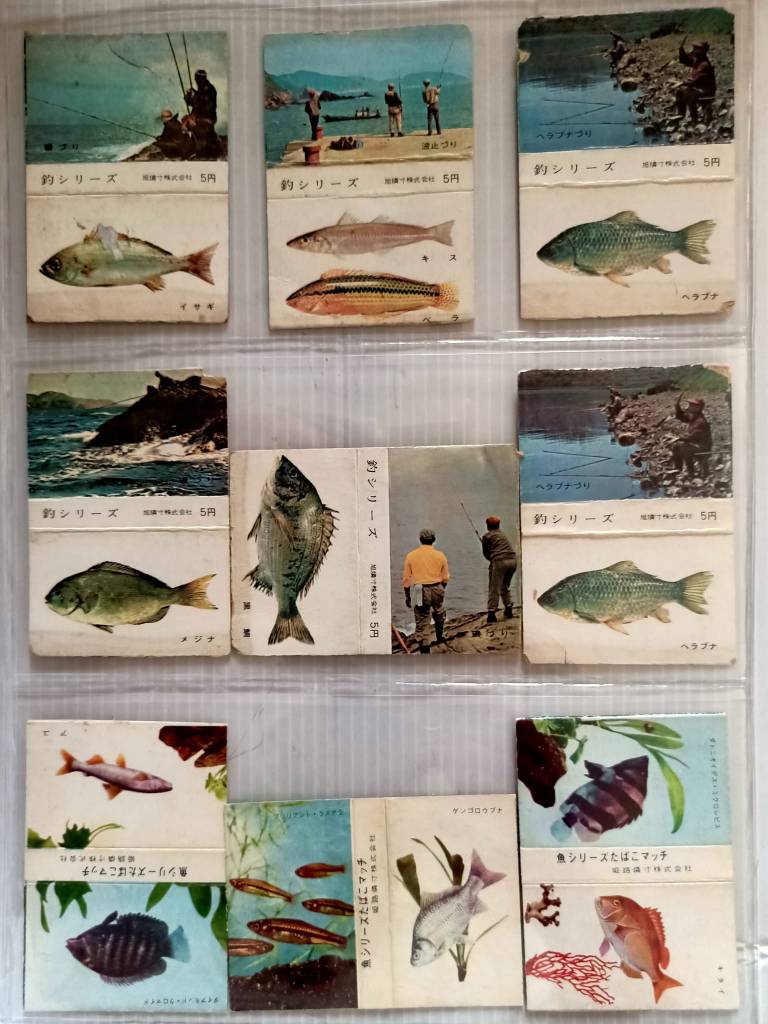
Matchbox labels: Japan:
1. Sheet 1 and 2: The “Warabe Uta” Series:
• “Warabe Uta” literally means children’s traditional songs or nursery ditties. These were printed with sweet illustrations of kids at play — jumping rope, catching fireflies, festival games, etc.
• The artwork is very 1950s–1960s Japan: round-faced kids, simple pastel backgrounds, and scenes of everyday innocence.
• These were produced by different match companies (like 日本燐寸, Nihon Rinsutsu Co., “Japan Match Co.”, and ダイアトー, Daiatō), each printing its own variations.
________________________________________
2. Sheet 3: Fishing Series
• Labels show fishermen at work (shore fishing, casting nets), alongside detailed images of fish species: イサキ (grunt fish), キス (whiting), ヘラブナ (crucian carp), メジナ (blackfish), etc.
• Each matchbox was sold for 5円 (5 yen) — a clue that these date to the mid-1960s to early 1970s, before the oil crisis pushed up printing costs.
• For collectors, the fish series is popular because it blends natural history illustrations with everyday life. In Japan, fishing was (and still is) a huge pastime, so these labels doubled as mini educational cards.
Till the next post, adieu.
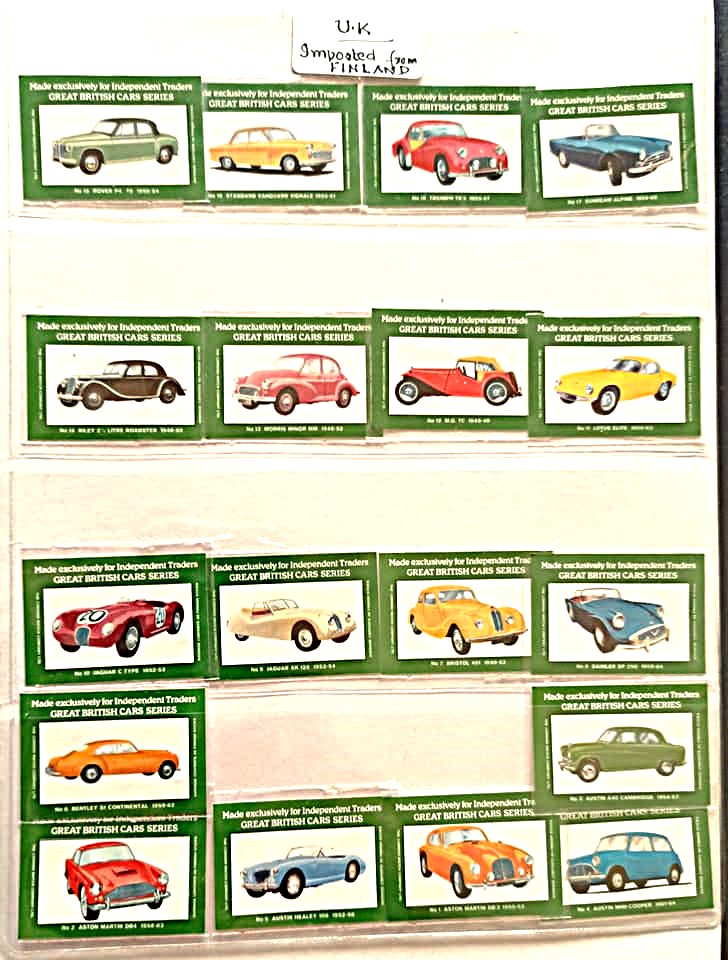
 Fun fact: These labels were never on actual matchboxes you’d light at home – they were made only for collectors. That’s why they survive so well in sets like this.

 ).
).


 Our Hobby Corner