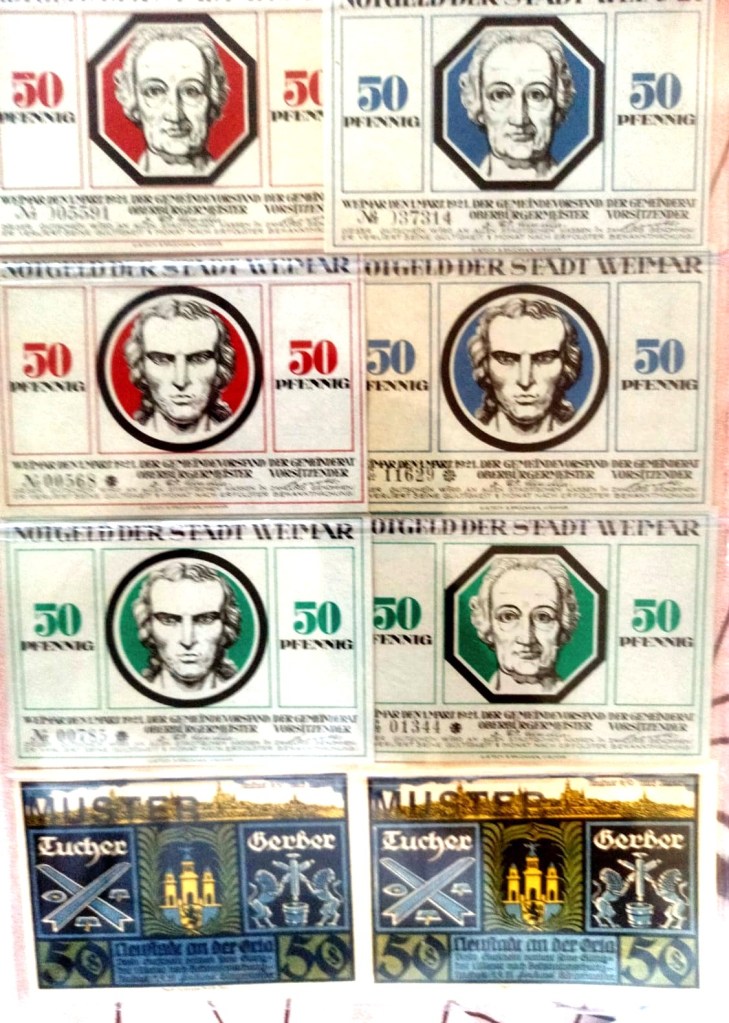
1st Image: Weimar Notgeld (Stadt Weimar – 50 Pfennig)
- Portraits of Goethe & Schiller – Cultural icons of Weimar. Each note has a colored border (red, blue, green) which likely denotes part of a thematic series.
- Each note is stamped and serialized, and marked “Notgeld der Stadt Weimar” (Emergency Money of the City of Weimar).
- Note the MUSTER — these are specimen notes.rarer than normal ones.
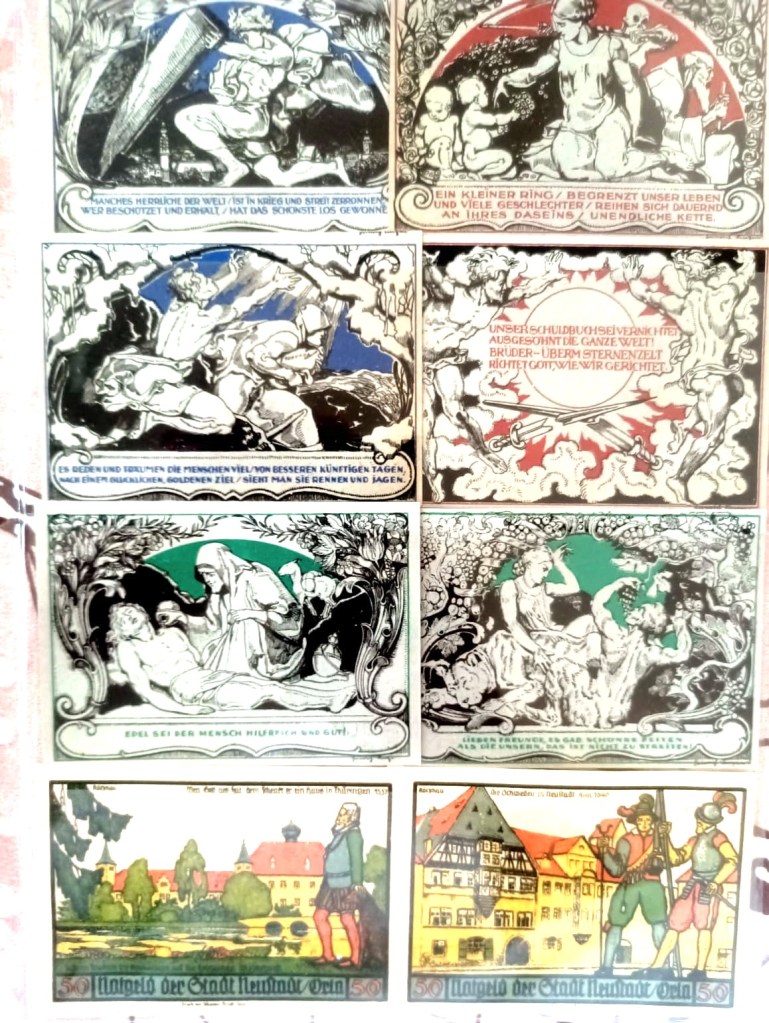
2nd Image: Storytelling Series with Classical Illustration
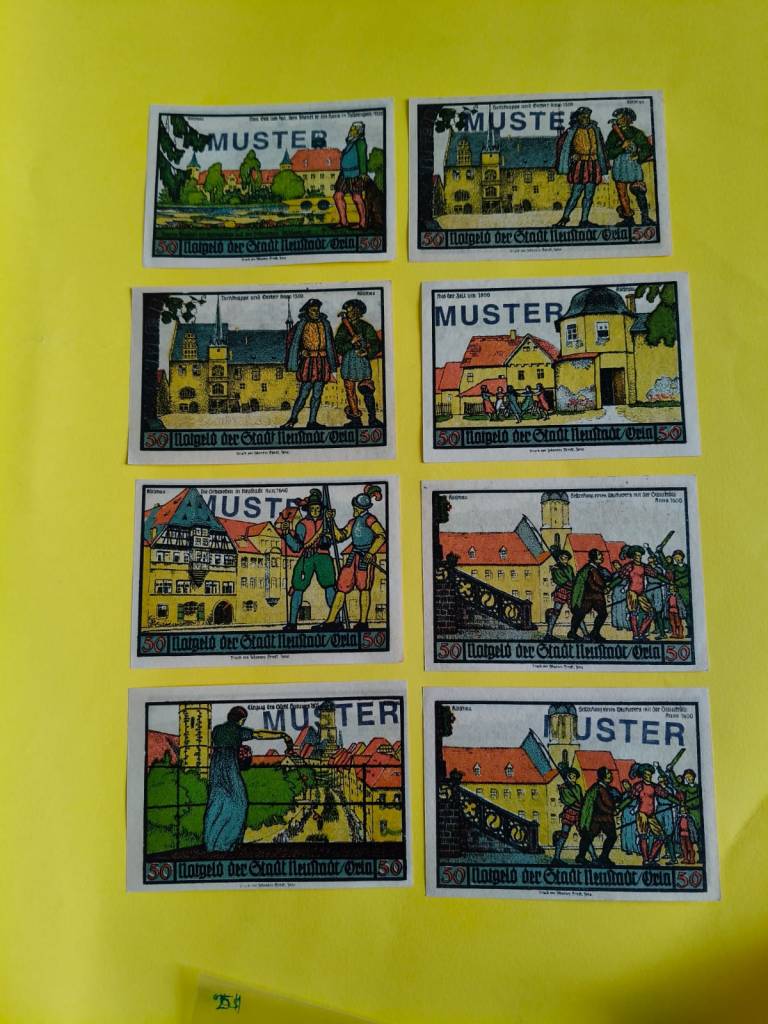
- Texts include deep philosophical lines: one mentions “Unendliche Kette” (endless chain), another references “Hilfreich und gut” (helpful and good).
- Bottom two are from Neustadt an der Orla again — town view themes, reflecting daily life or tales.
- Artistic style: Jugendstil (German Art Nouveau) meets Expressionism.
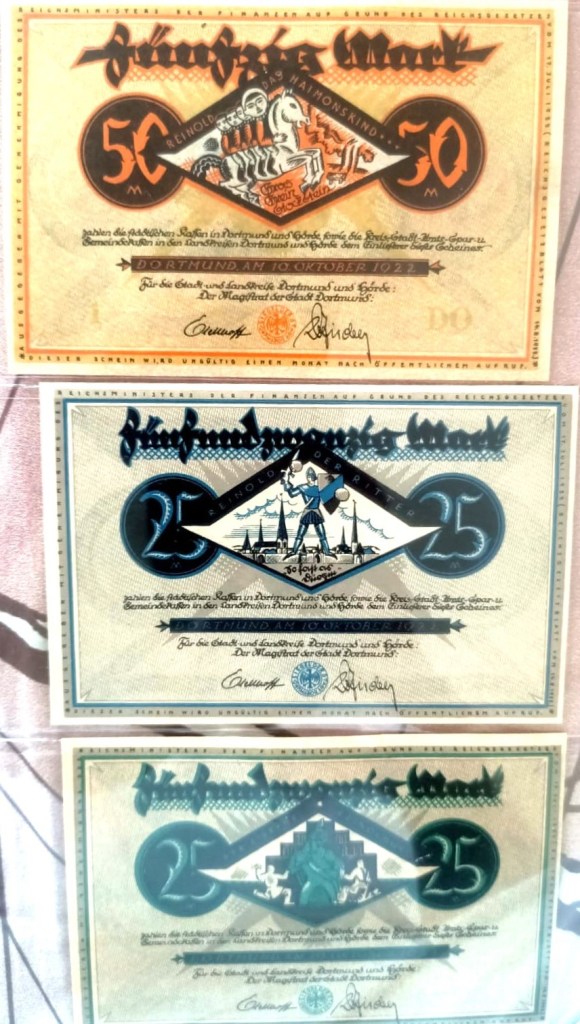
3rd Image: Dortmund Notgeld (1922)
- All from Dortmund, dated October 1922.
- Top: Reinhold & the “Wahnsinnskind” (child of madness!) —referencing turmoil.
- Middle: Silhouette of Dortmund’s skyline.
- Bottom: Classical/medieval motif with the town’s coat of arms.
- These carry strong satirical and local patriotic vibes, classic Dortmund sets.
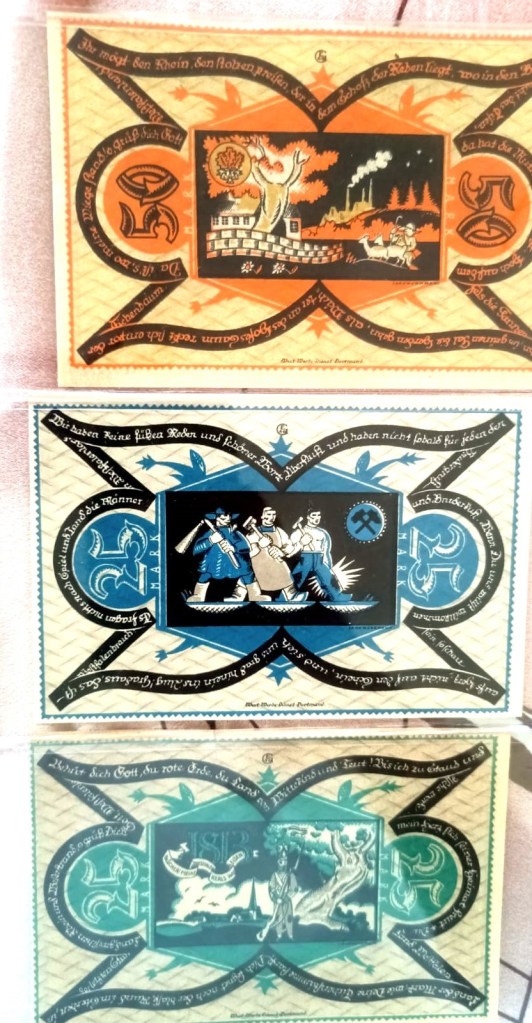
4th Image: More Dortmund (25/50 Marks)
- Same design style and diagonal text layout as previous, with vivid colors (orange, blue, green).
- Themes appear to show work, resistance, and perhaps even the Ruhr occupation
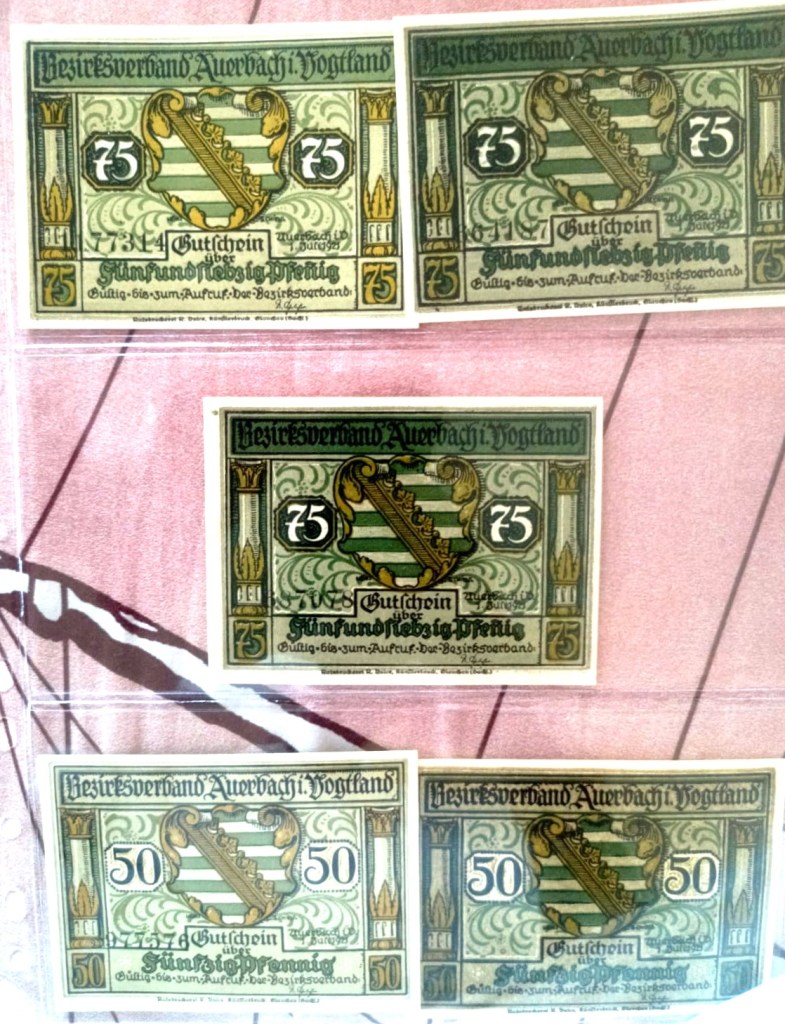
5th Image: Auerbach i. Vogtland – 75 and 50 Pfennig
- Another town-based issue: “Bezirksverband Auerbach i. Vogtland”.
- These are Gutscheine (vouchers) — technically not Notgeld, but similar purpose.
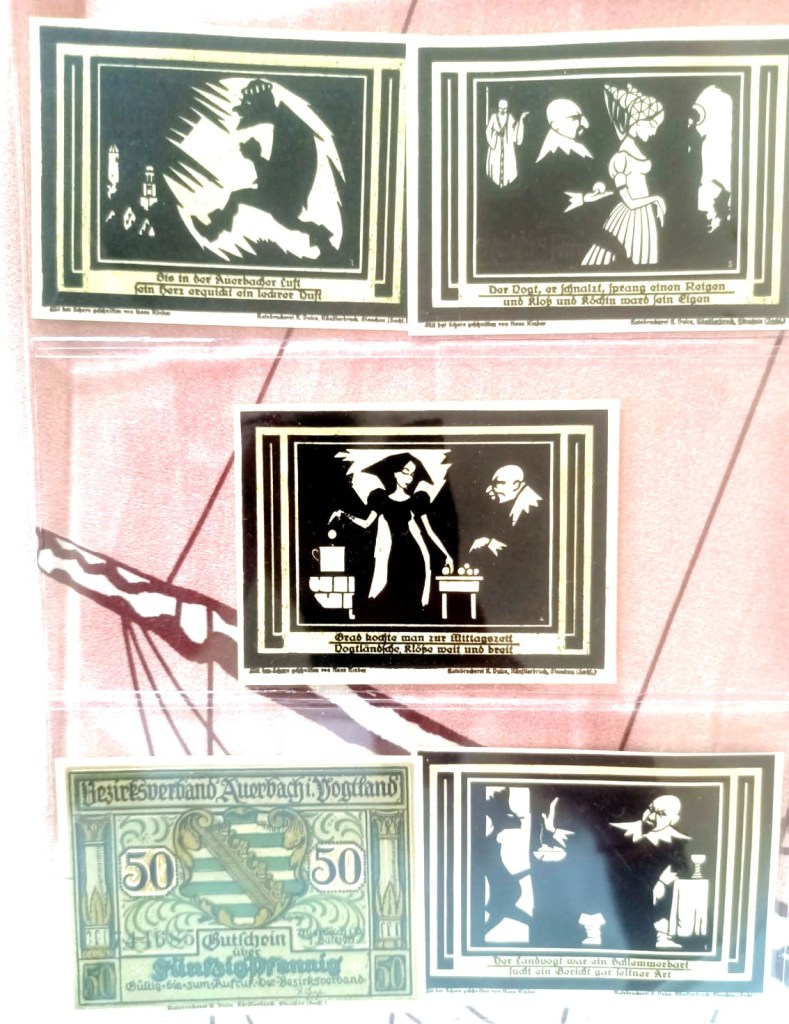
6th Image: Silhouette Series (possibly from Niesky or Leipzig region)
- Some comic, others a bit dramatic — one shows a judge, another a monstrous shadow!
- Themes of satire, morality, and daily life again — a kind of German Punch Magazine in pocket-size money form.




 Our Hobby Corner