Category: Uncategorized

  • Currency Note: Saar

    Featured: A note from a country that does not exist any more.

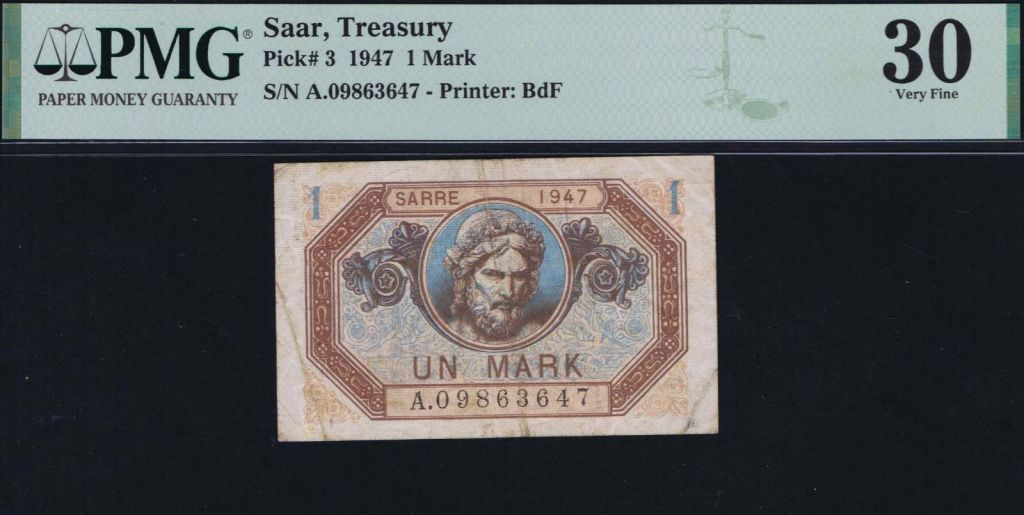
    A 1 Mark note from the Saar region, issued in 1947, as certified by PMG (Paper Money Guaranty). The following details are evident:

    Issuer: Saar Treasury
    The Saar region had a unique political status after World War II, being under French administration from 1947 until it rejoined West Germany in 1957. Special currency notes were issued during this period.

    Year: 1947
    This note was printed during the early years of Saar’s autonomy under French administration. However, the Saar mark notes were soon replaced following the integration of the Saar into the French currency area.

    Saar ceased to be a separate political entity in 1957 when it rejoined Germany. However, the region maintained some economic integration with France, such as the use of the French franc, until July 6, 1959—known as “Saar Economic Reunion Day.”

    A highly collectible note.

  • Brooke Bond Labels and Books

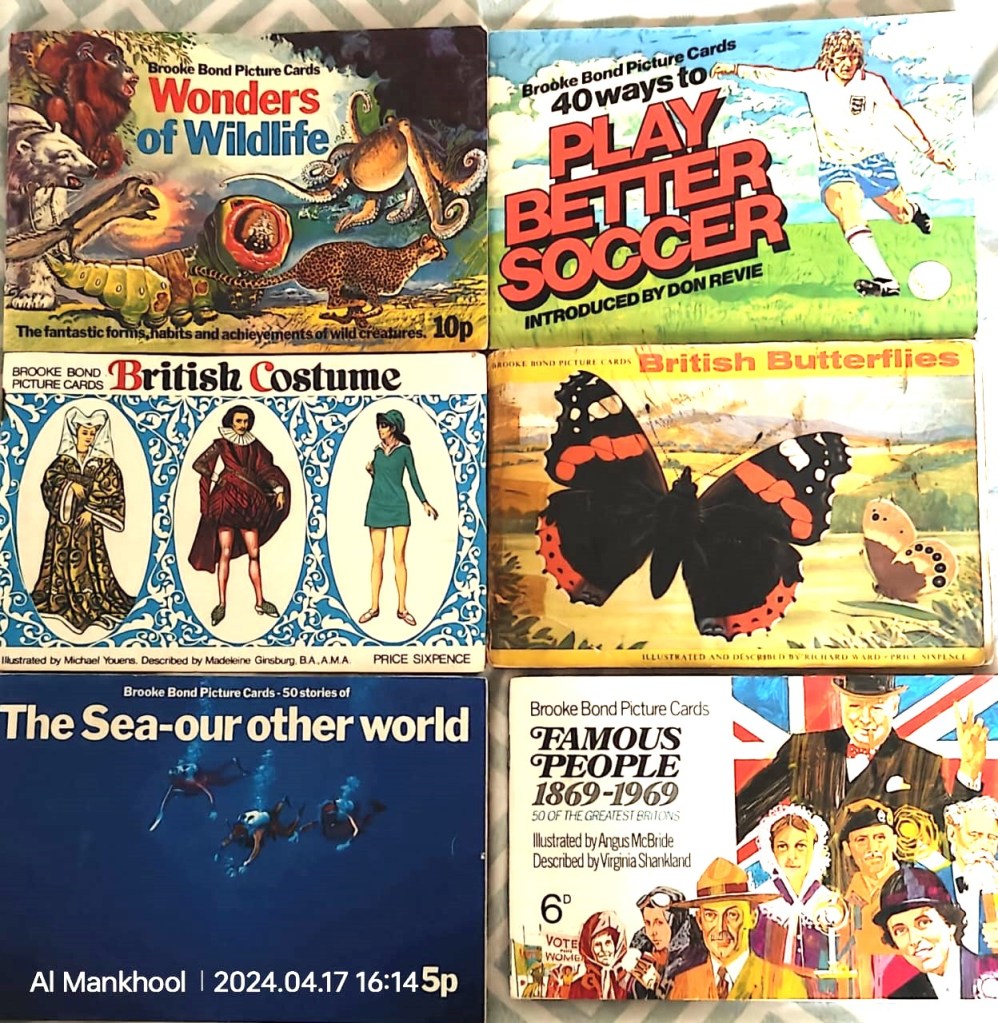
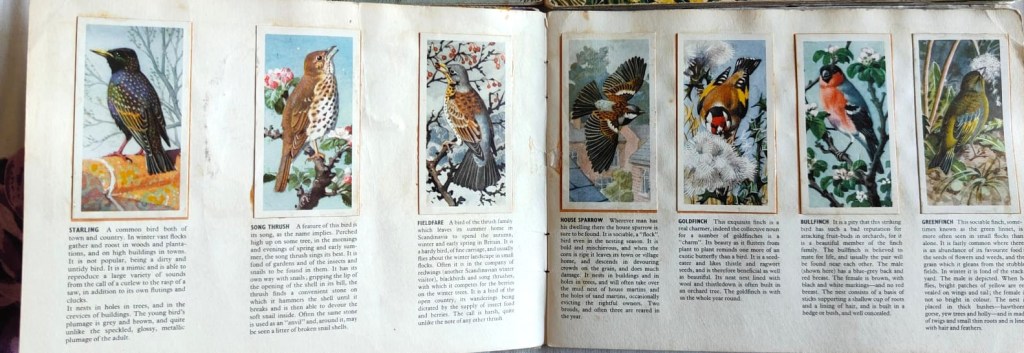
    Do you have a faint memory of these? I recall we used to have these even in India, in those days. Each book would have a space for the Brooke Bond card, and, a nice description of the related person/animal/thing.

    rooke Bond, originally a tea company, distributed collectible picture cards in their tea products starting in the 1950s. These albums were created to house the cards and educate collectors about various topics.

    These albums were both educational and collectible, combining colorful illustrations with informative descriptions. They were especially popular among children and families in the mid-20th century, fostering learning through a fun and engaging hobby.

    Now, they are eminently collectible, since Brooke Bond do not bring out these any more.

    What joy it must have been, to complete each book, in those days when there were no ebays or amazons.

  • Stamps: Miniature Sheet:Legendary singers and musicians

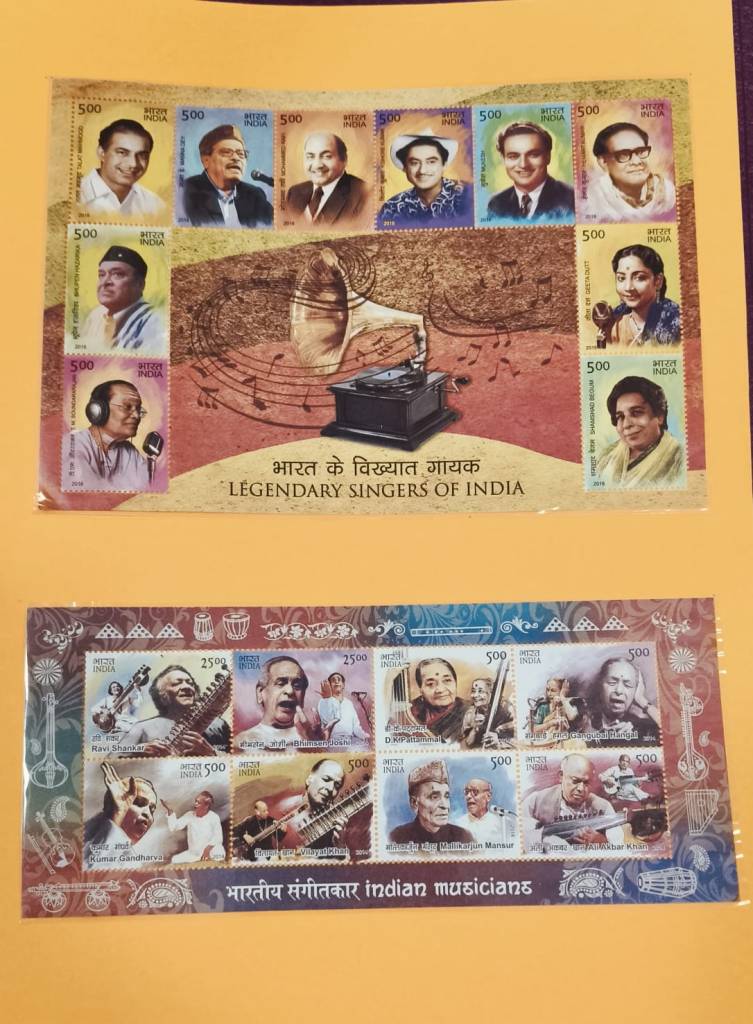
    ❤️ A beautiful miniature sheet of legendary Indian singers and musicians.

    The image shows two sheets of commemorative postage stamps from India:

    1. Legendary Singers of India:
      This sheet features prominent Indian playback singers who have significantly contributed to Indian music across various languages. The stamps honor iconic figures, including:

    Male singers like Kishore Kumar, Mohammad Rafi, Mukesh, Hemant Kumar, and Manna Dey.

    Female singers such as Lata Mangeshkar, Asha Bhosle, and Geeta Dutt.

    1. Indian Musicians:
      This sheet highlights eminent Indian classical musicians, both vocalists and instrumentalists, known for their mastery of various forms of classical music:

    Sitar maestro Ravi Shankar.

    Vocalists like Bhimsen Joshi, Kumar Gandharva, and Gangubai Hangal.

    Violinist Lalgudi Jayaraman.

    Sarod player Ali Akbar Khan.

  • Currency Note: Commemorative

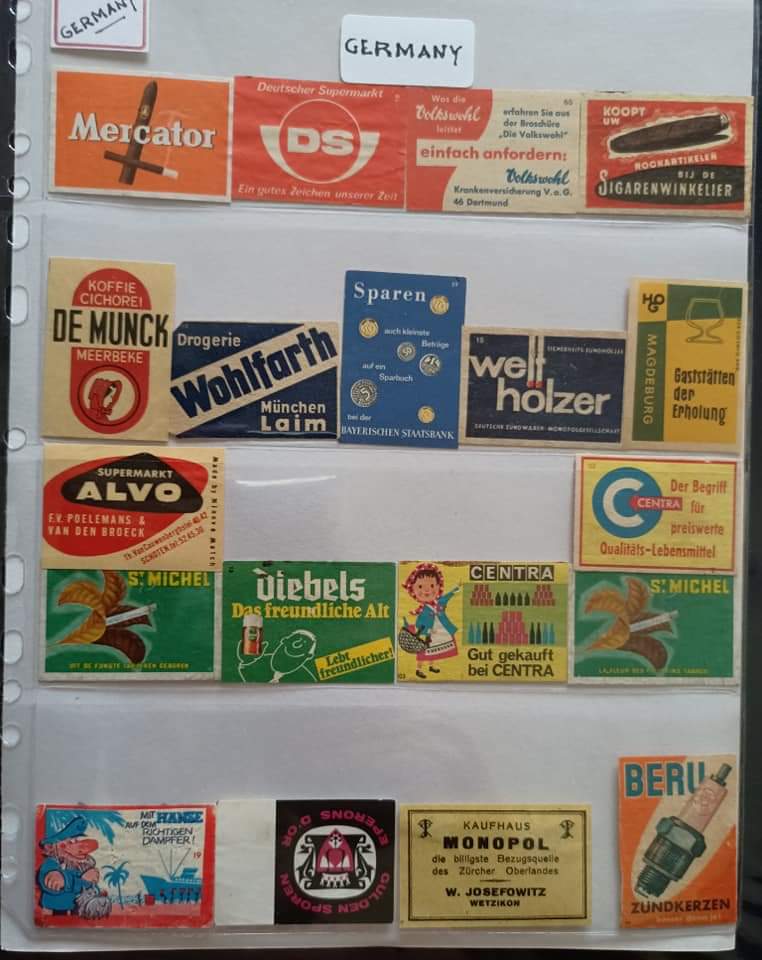
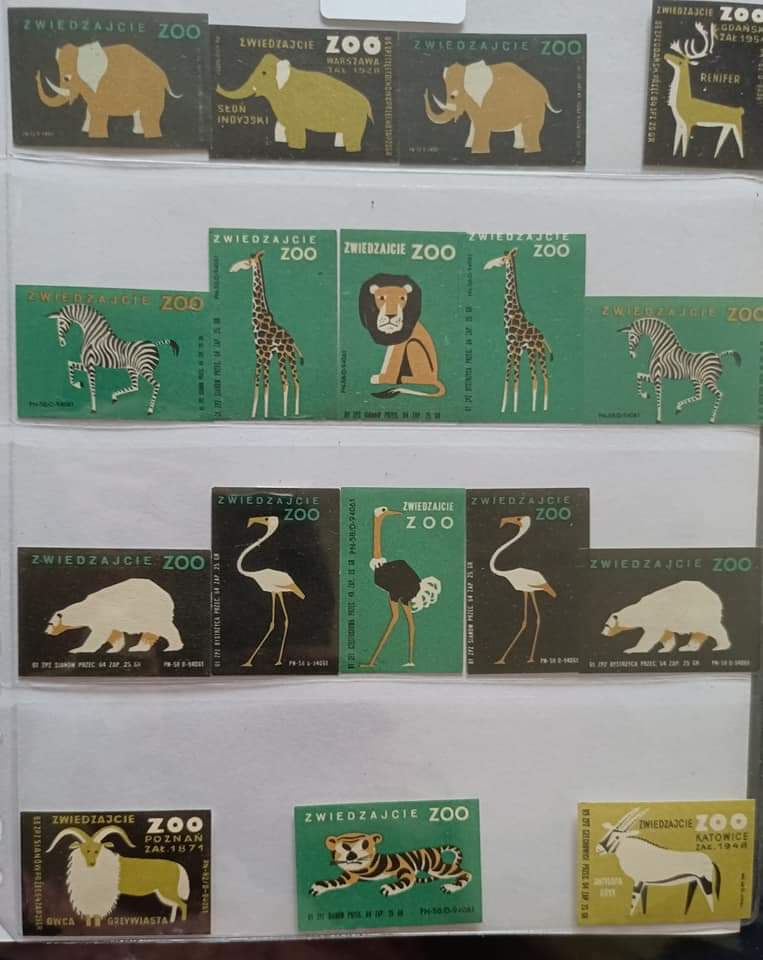
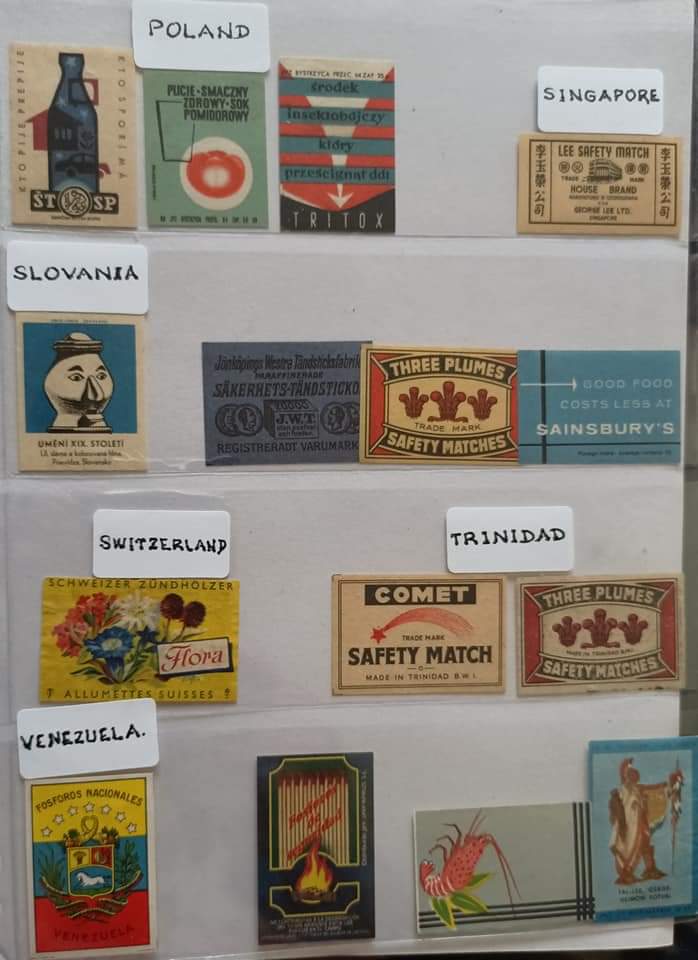
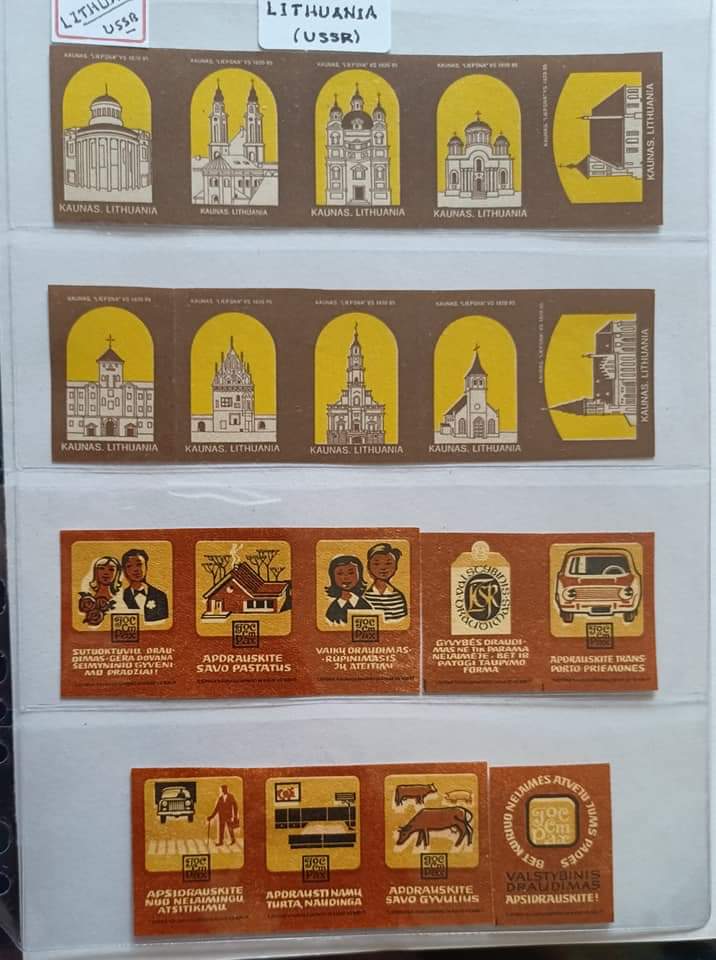
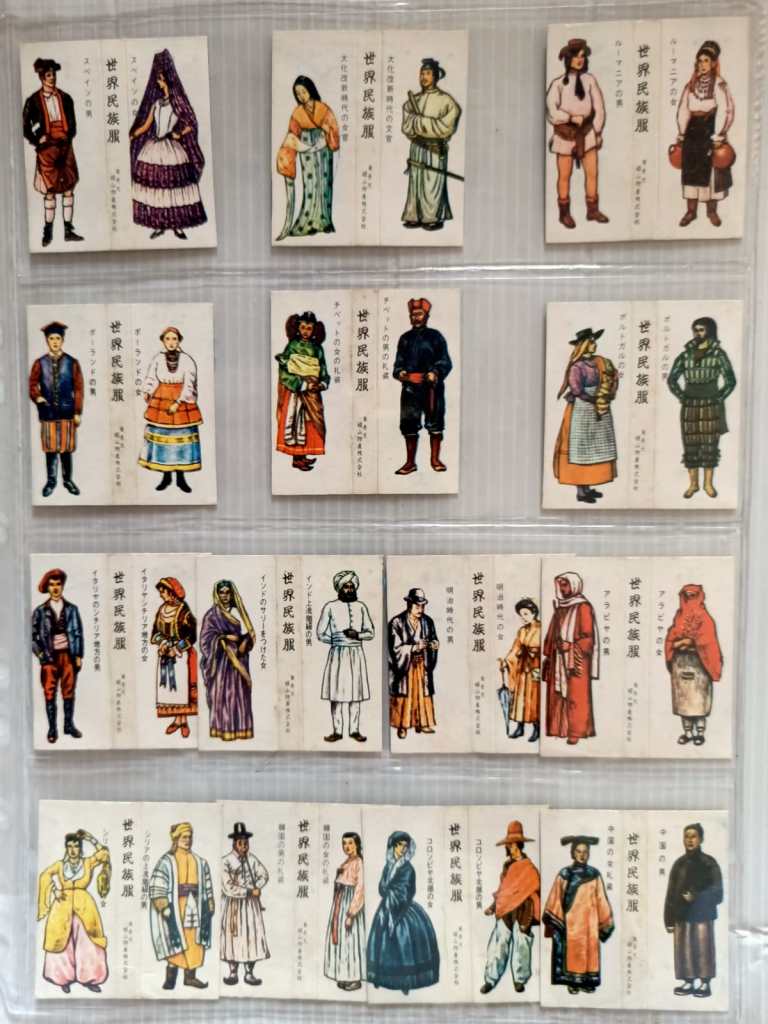
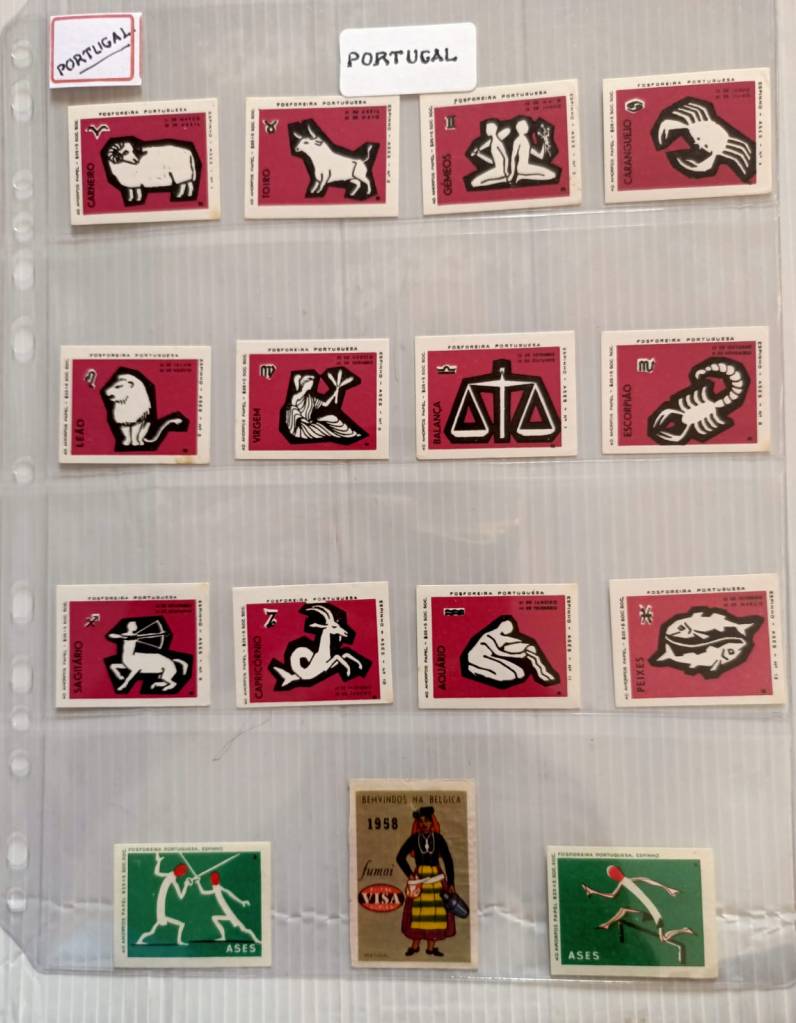
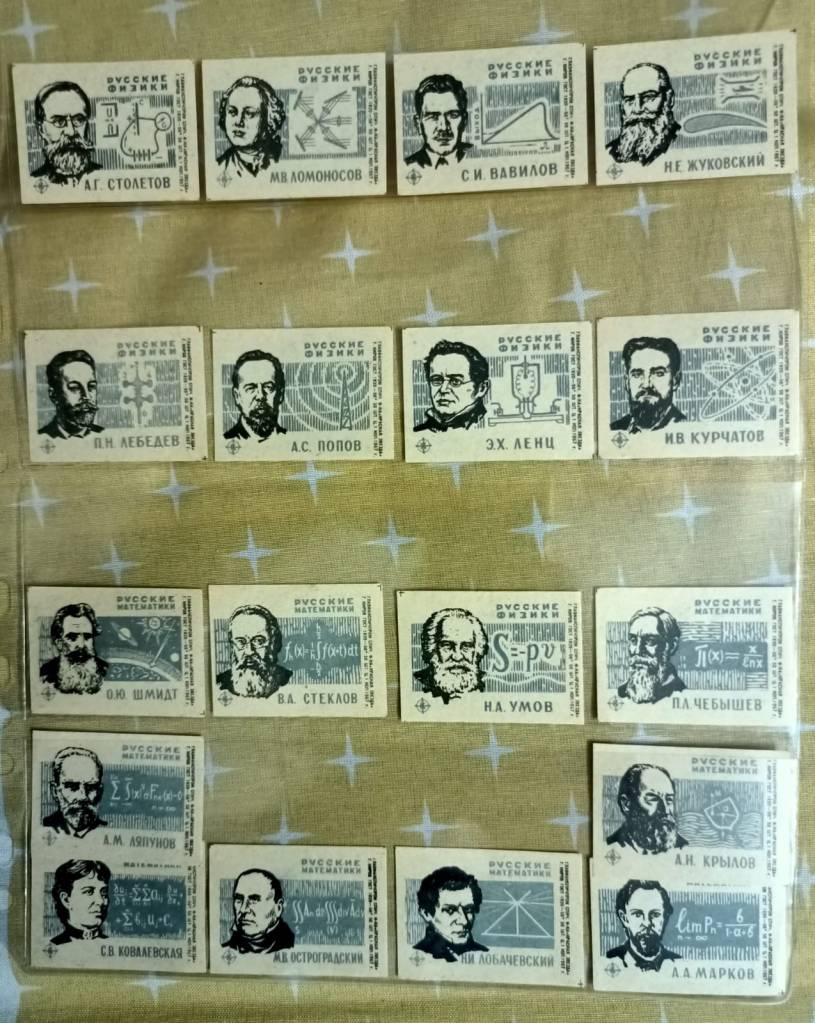
  • Matchboxes, not just labels

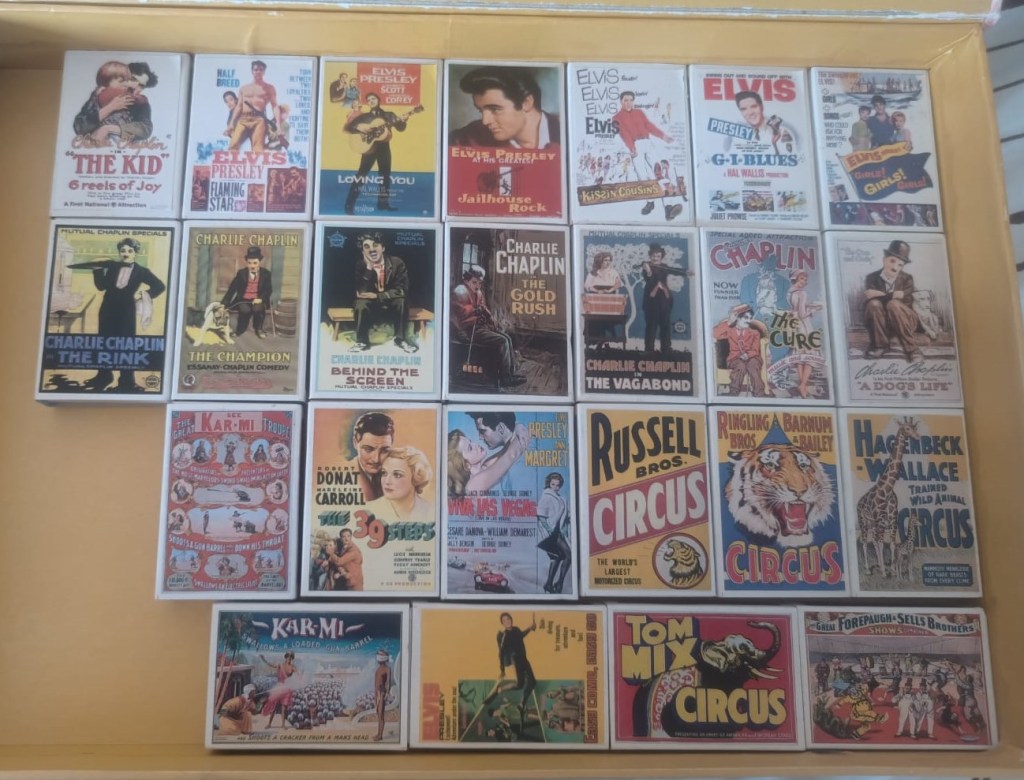
    These are a few from a collection of matchboxes we found on ebay… they are so unique- old movies, circuses, Laurel And Hardy, Chaplin, Tarzan and so many other themes.

    Top Row (Primarily Elvis Presley Films):

    1. Elvis Presley Movie Posters – Several matchboxes show famous Elvis Presley films like Loving You, Jailhouse Rock, G.I. Blues, and Girls! Girls! Girls!. These posters are iconic of the mid-20th century pop culture era, showcasing Elvis’s dual career as a musician and actor.

    Middle Rows (Primarily Charlie Chaplin and Classic Cinema):

    1. Charlie Chaplin Classics – Multiple matchboxes depict posters from Charlie Chaplin’s famous silent films, including The Kid, The Rink, The Champion, The Gold Rush, Behind the Screen, The Cure, and A Dog’s Life. These films were hugely influential in the early 20th century and remain beloved for Chaplin’s unique blend of humor and social commentary.
    2. Classic Thrillers – The matchbox featuring The 39 Steps references Alfred Hitchcock’s famous 1935 British spy thriller, known for its suspense and intrigue.

    Bottom Row (Circus Themes):

    1. Circus Advertisements – Several matchboxes feature vintage circus posters from famous troupes like:
      • Ringling Bros. and Barnum & Bailey Circus – Known as “The Greatest Show on Earth.”
      • Hagenbeck-Wallace Circus – Famous for its wild animal performances.
      • Russell Bros. Circus – Advertised as one of the largest motorized circuses.
      • Kar-Mi Troupe – Highlighting illusionists and performers from an earlier era.
      • Tom Mix Circus – Featuring Tom Mix, a legendary early 20th-century cowboy film star who later started a traveling circus.

    Interestingly, they arrived as boxes, with matches in them.

    I asked the seller why they don’t have any address on them, or country of manufacturing. He replied that they are handmade by him. Amazing skill, indeed. Will post more , some other day.

    #matchbox

  • Currency: Transnitria

    Currency:

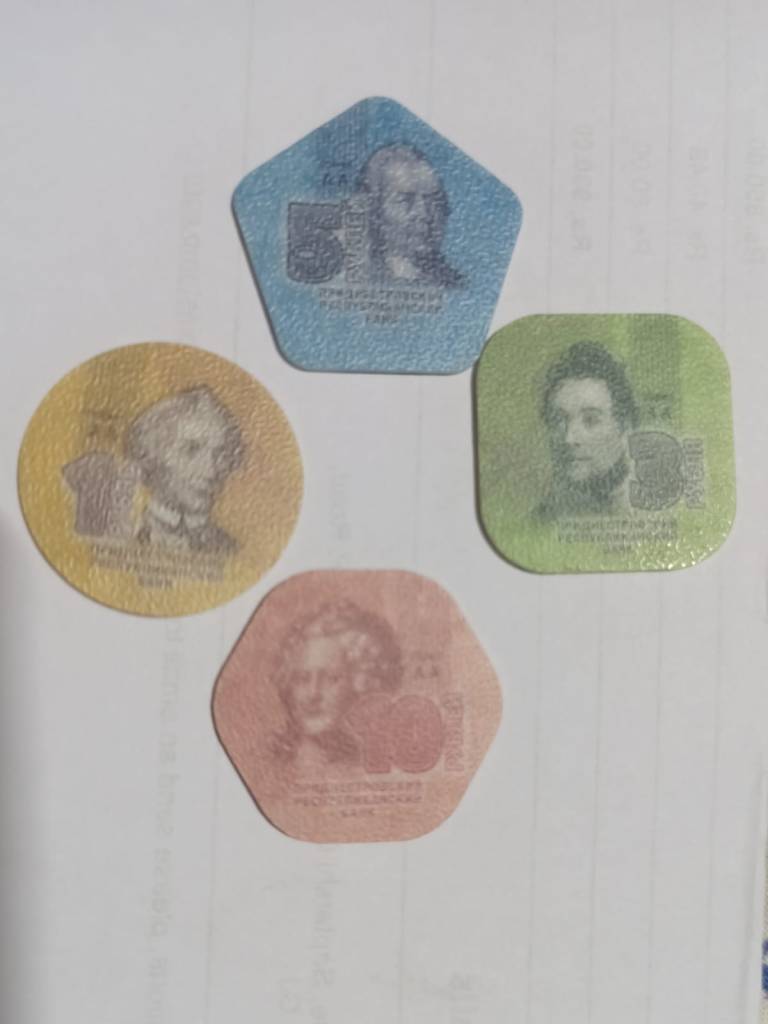
    Transnistria 2014 Set of 4 Composite Plastic Coins 1 3 5 10 Roubles .

    .. These plastic coins are unique and very different from regular coins but still amazing because they are composite plastic coins and very collectible with great features.

    Each denomination has a distinct color and shape:

    1 Ruble – Yellow (round)

    3 Rubles – Green (square with rounded edges)

    5 Rubles – Blue (pentagon-shaped)

    10 Rubles – Red or orange (hexagon-shaped)

    They feature portraits of important historical figures, likely tied to Transnistrian or Russian history.

  • Currency Note: French Indochina 1 piastre

    This banknote is from French Indochina, specifically issued by the Institut d’Émission des États du Cambodge, du Laos et du Vietnam. It represents 1 piastre, the official currency of French Indochina before these countries gained independence.

    French Indochina was a federation of French colonial territories in Southeast Asia, including modern-day Vietnam, Laos, and Cambodia.

    The piastre was introduced in the late 19th century and remained in circulation until the dissolution of French Indochina in the mid-20th century.After the independence of these countries, new currencies were introduced: the riel in Cambodia, the kip in Laos, and the dong in Vietnam.

    Key details about the note:

    1. Design Elements: The note features tropical trees and foliage, reflecting the natural environment of the region.

  • Notgeld: WW Era


    Notgeld: WW time emergency money… and, even in those times, people had a sense of humor, to come out with money depicting scenes such as the above one.

    Featured: An example of Notgeld (emergency money) from Germany, specifically from the town of Papenburg. Notgeld was used during periods of economic instability, particularly in the early 20th century, such as during or after World War I and during the hyperinflation of the 1920s.

    Key Features of the Image:

    1. Denomination:

      • The note is marked with “75 Pfennig,” which indicates its value.
    2. Artwork and Humor:

      • Notgeld often featured unique and sometimes humorous artwork, as seen here.
      • This particular note illustrates a scene likely intended to be satirical or reflective of social or economic conditions of the time.
    3. Text and Context:

      • The text at the bottom is in Low German (“Plattdeutsch”), a regional dialect. It roughly translates to:
        “The money must be taken from the people. You can’t shake it from the trees.”
      • This likely comments on taxation or economic hardship.
    4. Historical Context:

      • Issued in Papenburg in 1921, this aligns with the period when local municipalities or businesses issued Notgeld due to shortages of official currency.
      • Notgeld often became collectible due to its artistic and regional significance.

    Additional Background on Notgeld:

    • Materials: While some Notgeld was paper-based, others were made of materials like metal, porcelain, or even fabric.
    • Designs: They often featured local landmarks, folklore, or political commentary.

    This specific note from Papenburg reflects the creative and practical approaches communities took to cope with economic crises while also providing a fascinating glimpse into local culture and humor of the time.

  • Telephone Cards : Another nice collectible


    We first came to know about phone cards when I came abroad back in 1997 for a short while, and then in year 2002. At that time , mobiles were not very popular, and, there were many phone booths everywhere, from where we could call our friends and relatives.

    These are prepaid telephone cards, used to access public telecommunication services by inserting them into compatible payphones.

    The phone cards, in their varying designs, would come out regularly, and, occasionally we would have ‘jigsaw’ kind of cards, as depicted below.

    Some of the cards are from UAE, some from China and around the world. If you see closely, they are like a jigsaw, each of 4(butterfly) or 6(tiger) cards and so on.

    Since then, telephone cards have been deemed obsolete with mobile phones taking over, yet, they make a fascinating hobby, just like matchbox labels and the like. As time goes by, they will continue to get rarer.

    #telephonecards #hobby #jigsaw #cards
  • Currency Note: UAE Currency Board 1 Dirham


    Currency Notes :
    Denomination: One Dirham (1 AED).
    Issuer: This note was issued by the United Arab Emirates Currency Board, which was responsible for issuing the UAE’s currency before the Central Bank of the UAE was established.
    Design Highlights (Front Side):
    It depicts significant landmarks, with intricate artwork showcasing the cultural and architectural elements of the UAE.
    The text is written in Arabic, with the denomination and other details visible.
    Design Highlights (Back Side):
    The back features more designs with the denomination written in English.
    The background illustrates an important architectural or symbolic representation of UAE culture.
    Historical Relevance:
    Such notes were issued in the earlier phase of UAE’s currency history, potentially between the late 1970s and early 1980s.
    These notes are no longer in circulation but hold historical and collector value.