Among the many treasures from the past, some stand out not just for their value, but for the stories they quietly carry.
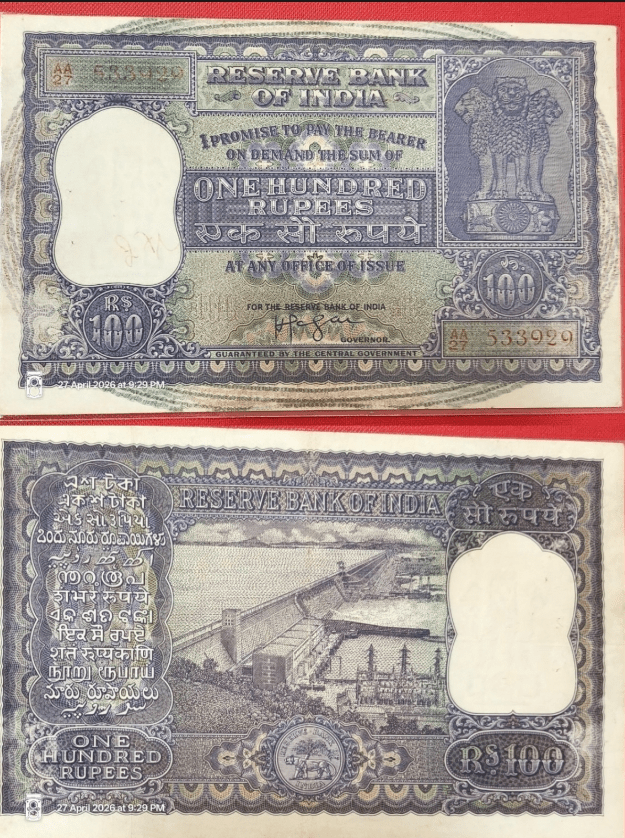
This ₹100 note from the Reserve Bank of India, dating back to the 50’s era of King George VI, is fondly nicknamed the “Phaphda Note” by collectors — thanks to the large watermark window that amusingly resembles the famous Gujarati snack! Signed by H.V.R. Iyengar, it’s from the AA series, i.e. an early prefix .
But beyond the nickname lies a piece of history.
Issued at a time when ₹100 was a significant sum, these notes were not widely circulated, making surviving examples quite special today.
The front proudly displays the Ashoka Pillar — even before it became India’s national emblem — while the reverse showcases a majestic dam, symbolizing the nation’s early strides in infrastructure and progress.
With its intricate design, multilingual script panel, and old-world charm, this note is more than currency — it is a snapshot of a transitioning India.
A little worn, yes… but then again, history rarely stays crisp. 🙂


Leave a Reply