Blog

  • Coins: Old: Gulf States

    This will be new to many readers.

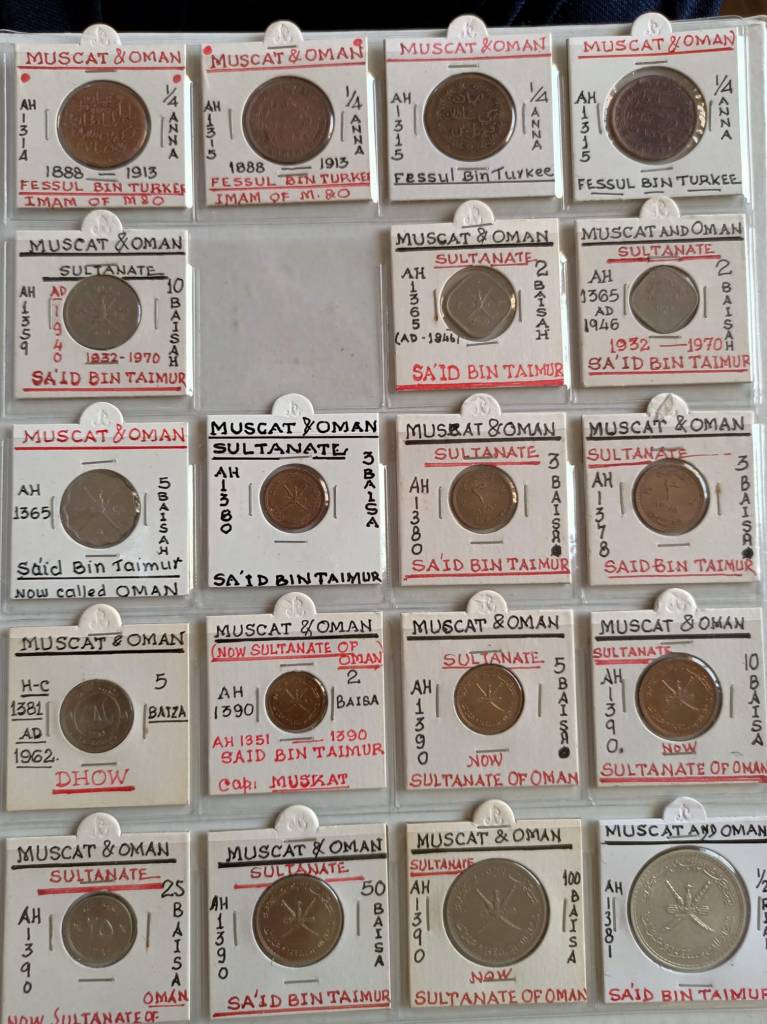
    1. MUSCAT & OMAN / SULTANATE OF OMAN

    Historical Background

    • These coins capture Oman’s evolution from the Imamate and Sultanate period under Fessul bin Turkee (Imam of Muscat & Oman, 1888–1913) to Sa’id bin Taimur (Sultan 1932–1970).
    • The currency denominations such as Anna, Baisa, and Buqsha show Indo-Arabic influence and transition from Indian currency system to independent issues.

    Notable Coins

    • ¼ Anna (AH 1305 / 1888 AD): Issued under Fessul bin Turkee, Indo-Arabic influence evident.
    • 1, 2, 3, 5, 10, 25, 50, 100 Baisa coins (AH 1350–1390): Under Sultan Sa’id bin Taimur, many of these were minted in India and the UK, showing Oman’s modernizing economic links.
    • Coin marked “Dhow” (1962): The 5 Baisa coin showing a dhow symbolizes Oman’s maritime heritage.
    • The meticulous annotation “Now called Oman” reflects the post-1970 renaming and modernization under Sultan Qaboos.

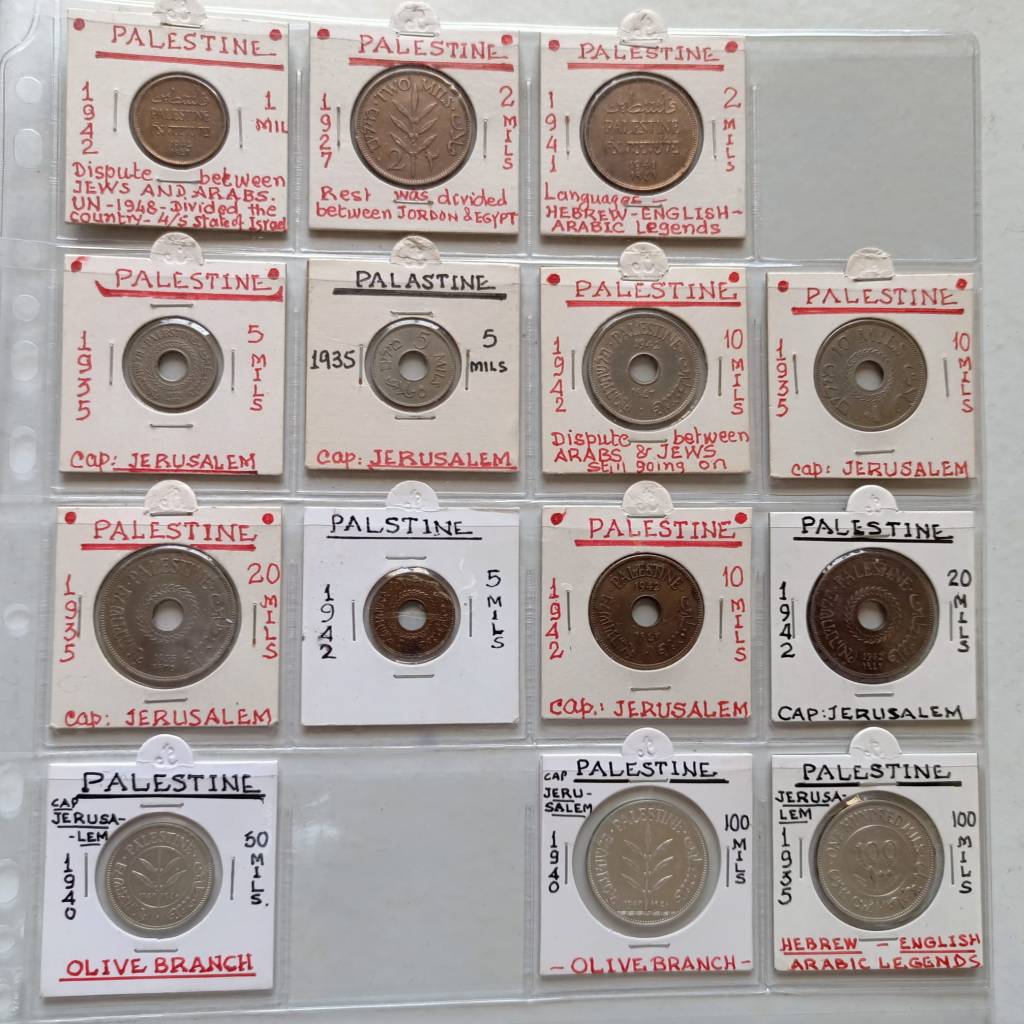
    2. PALESTINE MANDATE COINS (British Mandate Era 1927–1948)

    Historical Background

    • These coins were issued under British rule, with legends in Hebrew, Arabic, and English.

    Notable Coins

    • 1, 2, 5, 10, 20, 50, 100 mils: The mil was the subunit of the Palestine pound. These coins are iconic due to their trilingual inscriptions.
    • 1935, 1942, 1945 coins: Especially rare are high-grade coins from WWII years due to metal shortages.
    • Olive branch emblem (50 and 100 mils): Signifies peace—symbolically rich given the region’s history.

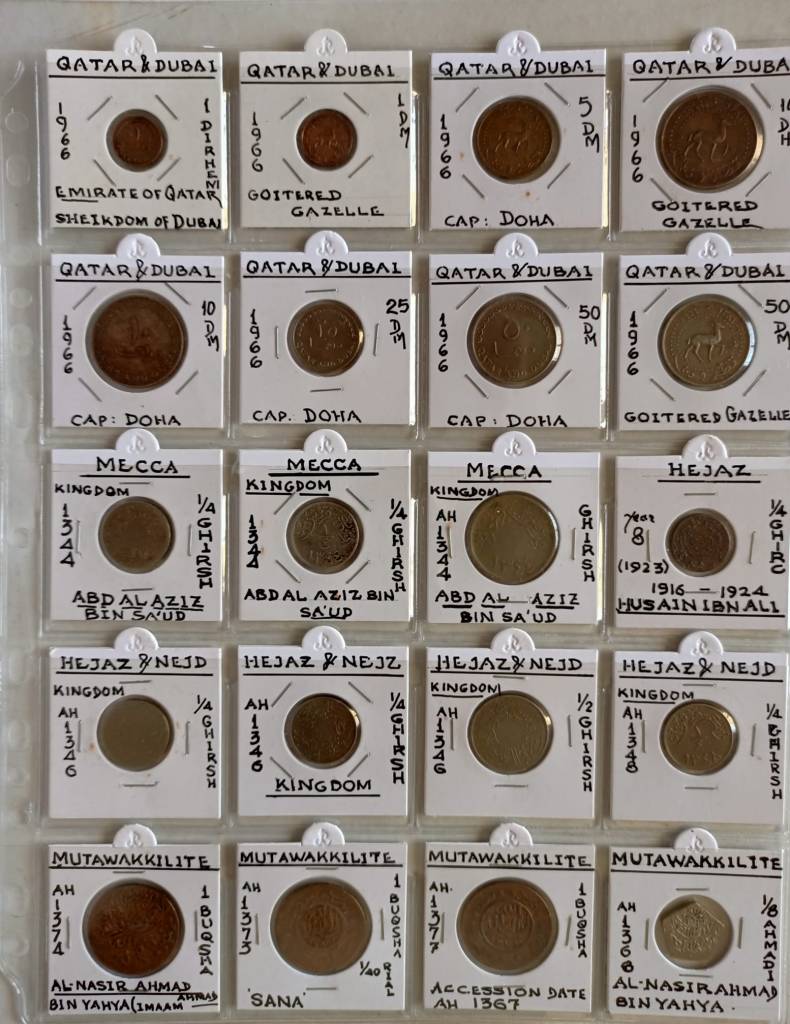
    3. QATAR & DUBAI / HEJAZ / MECCA / MUTAWAKKILITE KINGDOM OF YEMEN

    Historical Background

    • The Qatar & Dubai currency (1966) is a brief but fascinating series prior to Qatar and Dubai joining other currency unions (e.g., UAE Dirham and Qatari Riyal). The goitered gazelle on coins is a national symbol.
    • The Hejaz & Nejd coins represent pre-Saudi unification era, under Ibn Saud and Husain bin Ali. These coins often used the ghirsh denomination (Ottoman in origin).
    • Mutawakkilite Kingdom of Yemen (Sana’a): These coins from the early 20th century AH 1351–1371 are scarce and show Islamic inscriptions, pre-dating the Yemen Arab Republic.

    Notable Coins

    • 1 Dirham (1966 Qatar & Dubai): Marked as joint currency before Qatar issued its own riyals.
    • Hejaz ¼ Ghirsh coins (AH 1334–1341): Important transitional coins showing Saudi consolidation.
    • Mutawakkilite Yemen 1 Buqsha: Coins of Al-Nasir Ahmad bin Yahya, many from Sana’a mint, are seldom found in such preserved state.

    Key Highlights of the Collection

    • Impeccable presentation: Neatly labeled with dates in both Hijri (AH) and Gregorian, mint details, rulers’ names, and even historical notes (e.g., “Now Sultanate of Oman”, “Dispute between Jews and Arabs”).
    • Rare denominations: Several low-denomination coins like ¼ ghirsh and 1 mils are hard to find in good condition.
    • Historical transitions: Coins reflect political shifts—from British Mandate to national currencies, and from fragmented emirates to unified nations (e.g., Saudi Arabia, UAE, Oman).
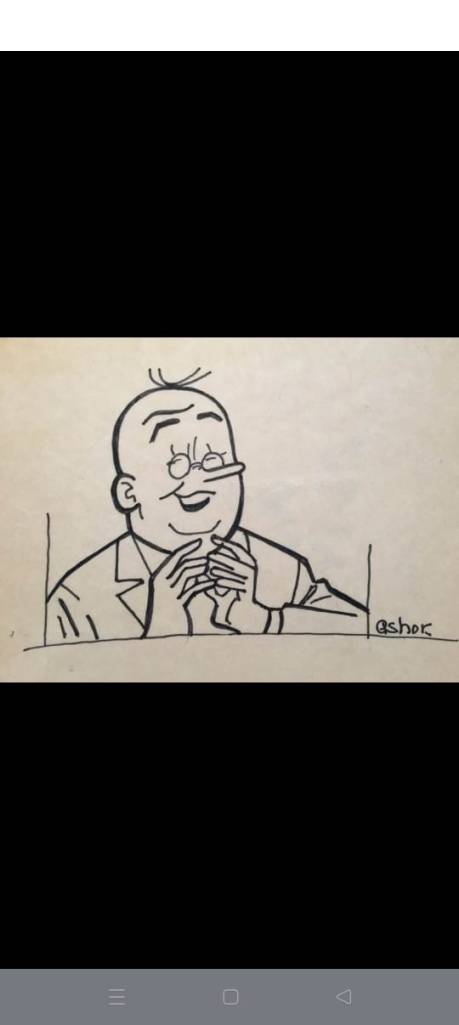
  • Art: Hand Drawn Cartoons

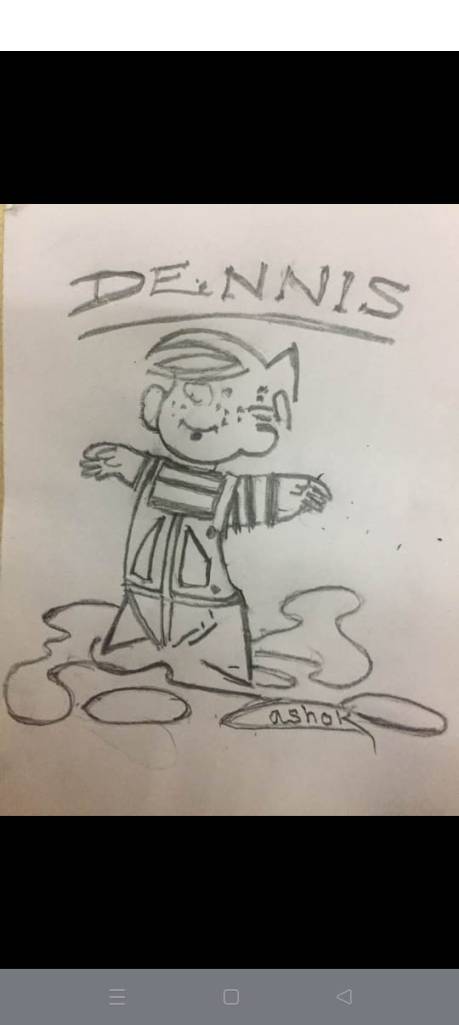
    Art Collection: Hand Drawings

    Sharing some of Dad’s hand drawn cartoons, using popular comics as a reference.

    You know them all, of course. 🙂

  • Stamps: Hermitage Museum

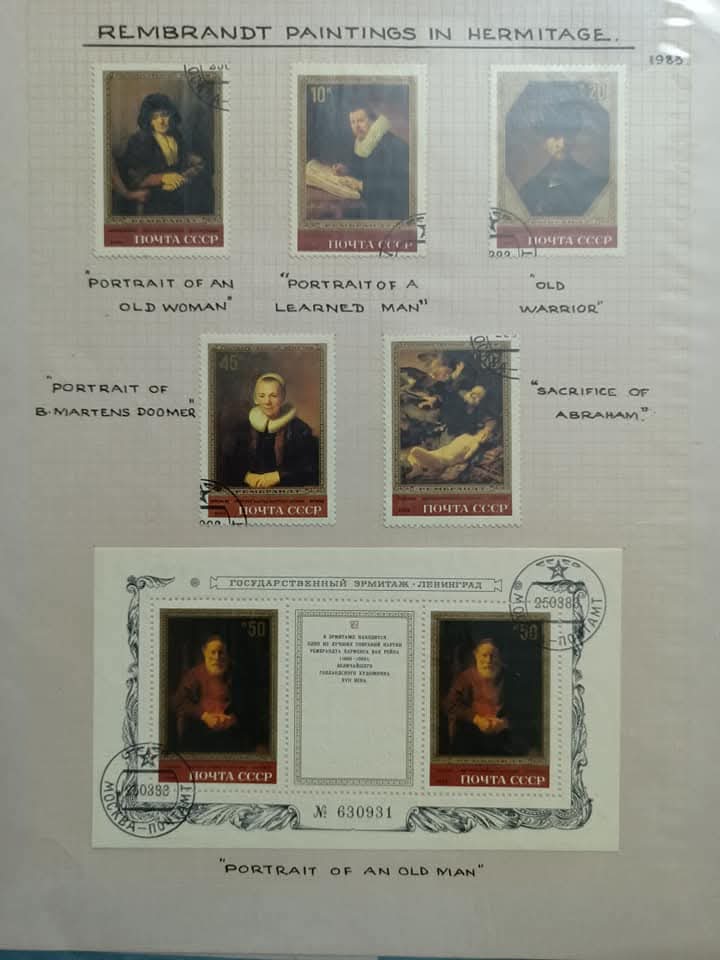
    This is a truly beautiful and historically rich part of Dad’s award-winning philatelic collection. These USSR stamps from the 1980s showcase masterpieces from the Hermitage Museum, meticulously documented with his clear and careful handwriting.

    1. Rembrandt Paintings in Hermitage (1983)

    This page honors Rembrandt van Rijn, with USSR stamps featuring some of his most expressive works from the Hermitage Museum, including:

    • Portrait of an Old Woman
    • Portrait of a Learned Man
    • Old Warrior
    • Portrait of B. Martens Doomer
    • Sacrifice of Abraham
    • A souvenir sheet: Portrait of an Old Man

    These stamps reflect the USSR’s dedication to celebrating classical European art, and Rembrandt’s works are a highlight of the Hermitage collection.


    🖼 2. Spanish Paintings in Hermitage (1985)

    Celebrating Spanish masters:

    • Still Life by Antonio Pereda
    • Knife Grinder by Puga
    • The Youth of the Virgin by Francisco de Zurbarán
    • Ascension of Mary by Bartolomé Esteban Murillo
    • Portrait of Count Olivarez by Diego Velázquez
    • Souvenir sheet: Portrait of Doña Antonia Zárate by Francisco Goya

    Goya’s portrait is especially notable — elegantly framed in a mini-sheet format.


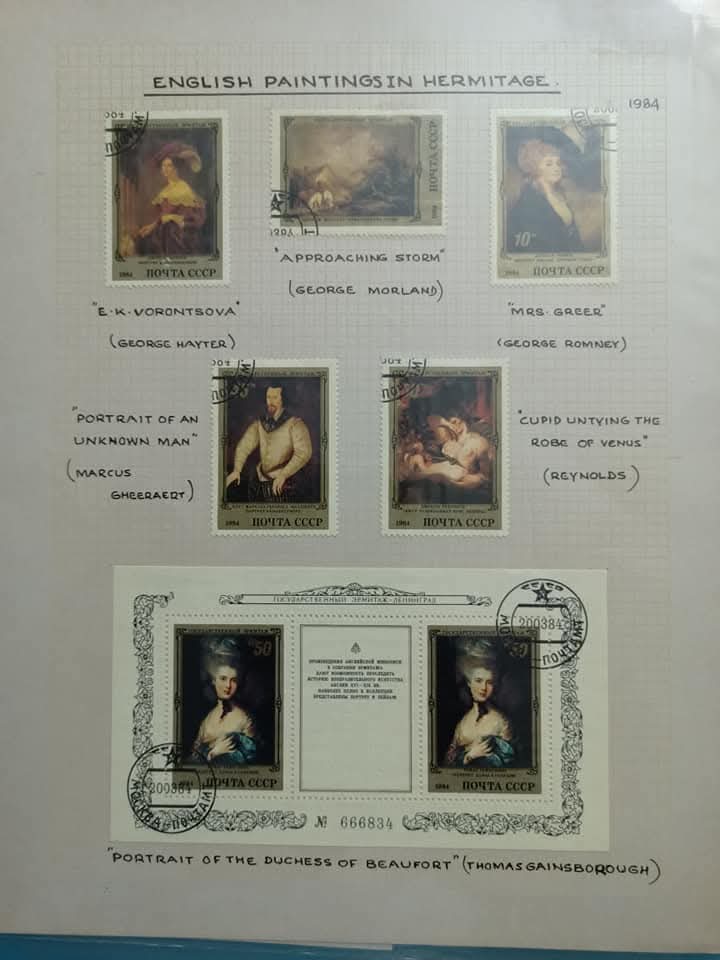
    🖼 3. English Paintings in Hermitage (1984)

    Focusing on English portraiture and romanticism:

    • E.K. Vorontsova by George Hayter
    • Approaching Storm by George Morland
    • Mrs. Greer by George Romney
    • Portrait of an Unknown Man by Marcus Gheeraerts
    • Cupid Untying the Robe of Venus by Joshua Reynolds
    • Souvenir sheet: Portrait of the Duchess of Beaufort by Thomas Gainsborough

    This page beautifully blends portraiture and romantic themes popular in British art of the 18th–19th centuries.


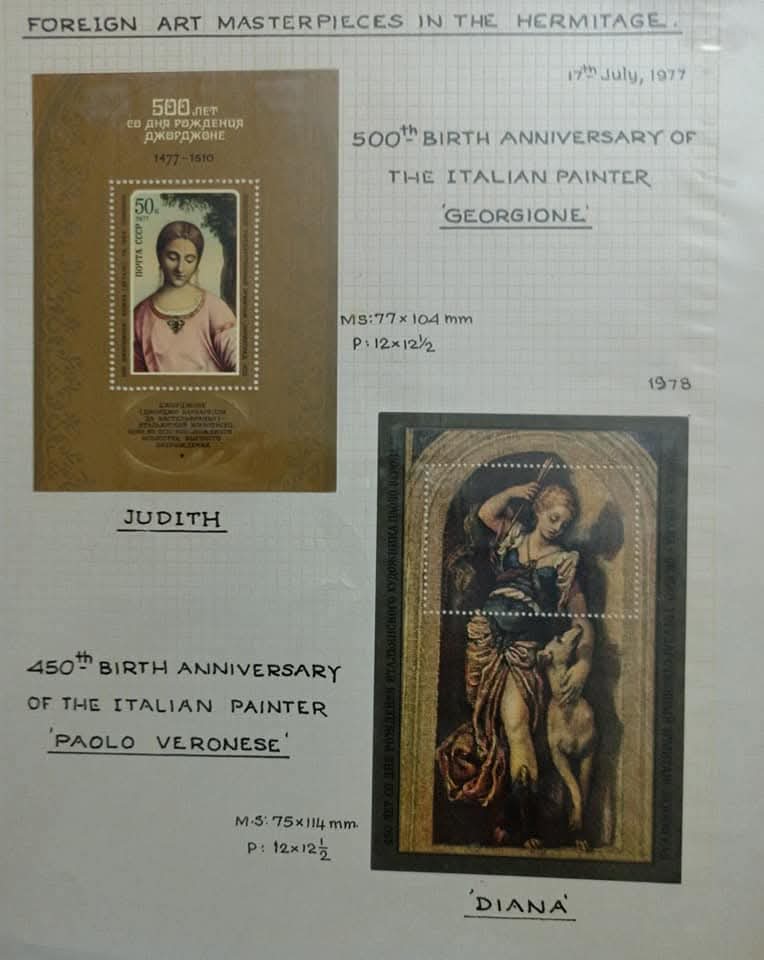
    🖼 4. Foreign Art Masterpieces (1977–1978)

    A special thematic page:

    • Judith by Giorgione – Issued for his 500th birth anniversary (1977)
    • Diana by Paolo Veronese – 450th birth anniversary (1978)

    These souvenir sheets stand out for their golden frames and commemorative importance.


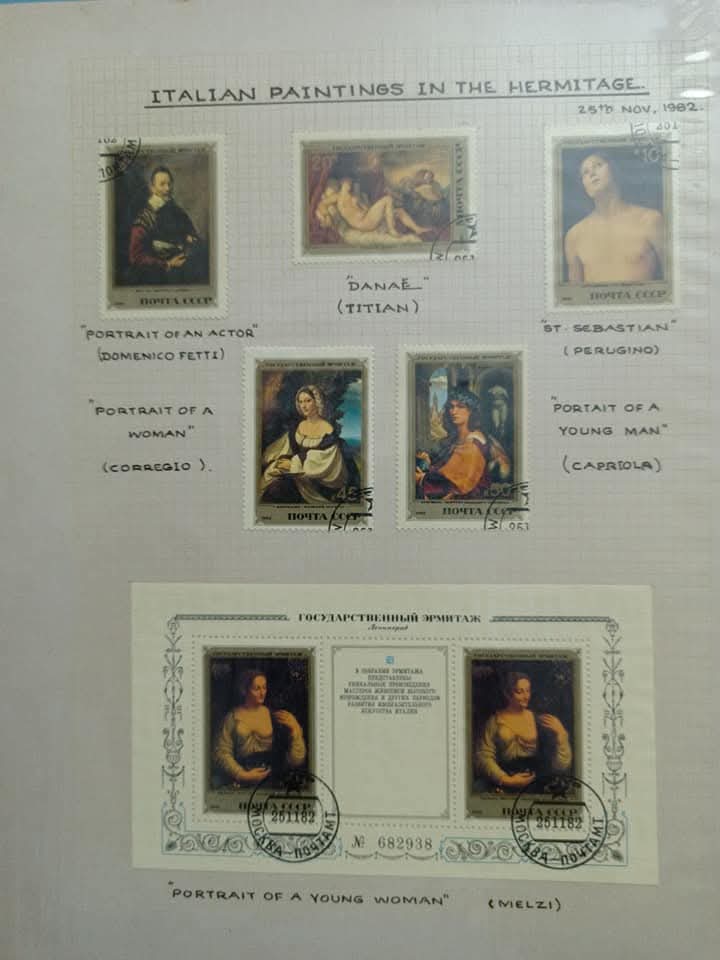
    🖼 5. Italian Paintings in Hermitage (1982)

    Featuring a powerful collection of Renaissance works:

    • Portrait of an ActorDomenico Fetti
    • DanaëTitian
    • St. SebastianPerugino
    • Portrait of a WomanCorreggio
    • Portrait of a Young ManCarpioni
    • Souvenir sheet: Portrait of a Young WomanFrancesco Melzi

    The Italian Renaissance influence is evident here, and this page showcases a wide range of moods from sacred to sensual.


    🔍 Highlights:

    • All stamps are СССР (USSR) issues, many with Hermitage Museum themes.
    • Each sheet includes precise dating, matching cancel marks, and handwritten annotations — showing Dad’sdedication to detail.
    • The souvenir sheets are especially rare and beautifully framed.
    • The structure reflects a philatelic exhibition format,aligned with international exhibit standards.
  • Coins: Old: Ratlam State

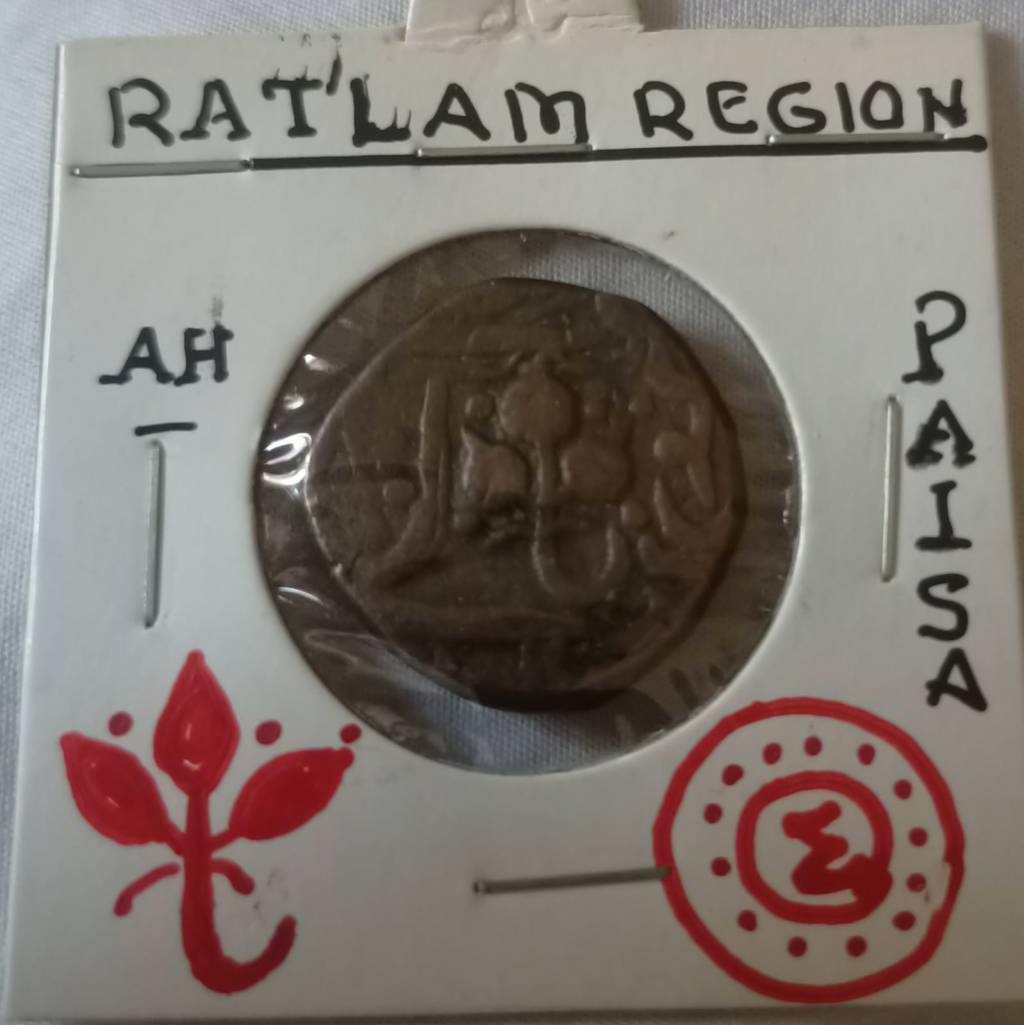
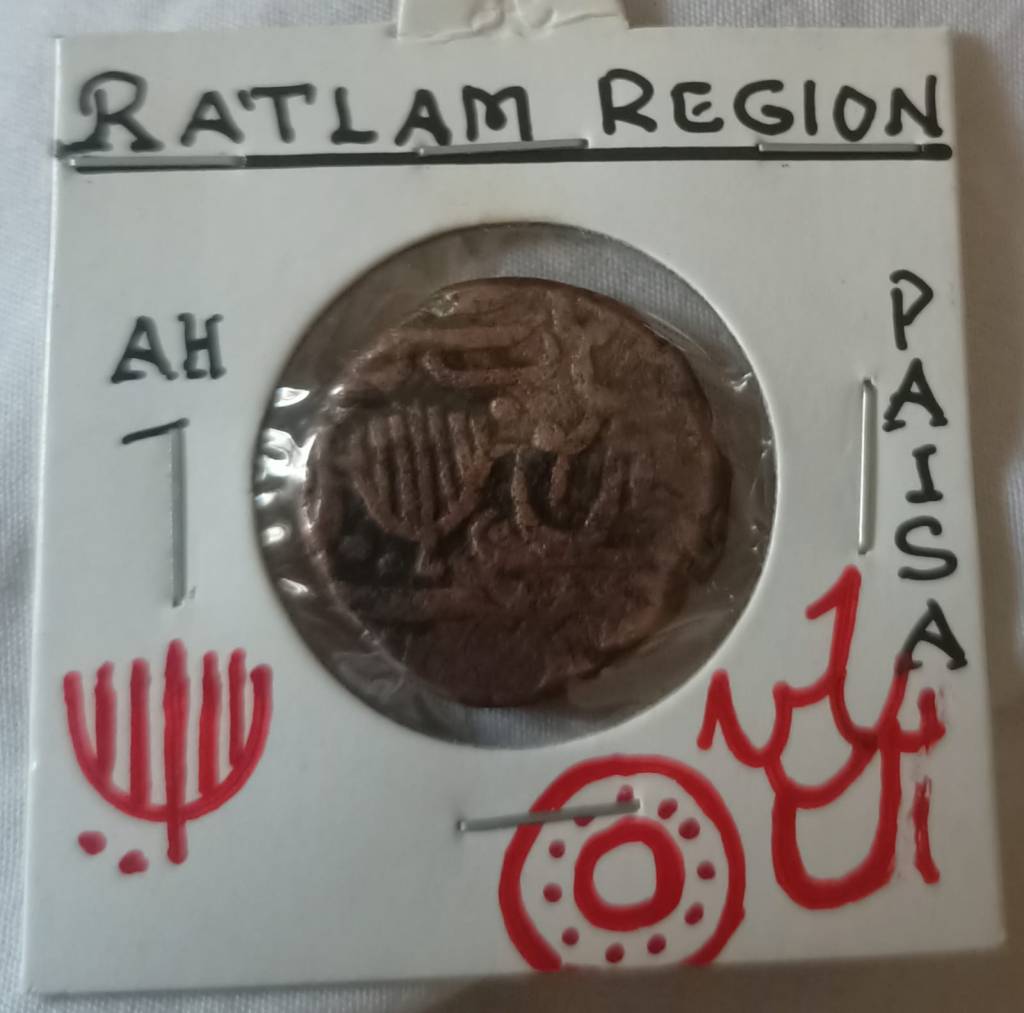
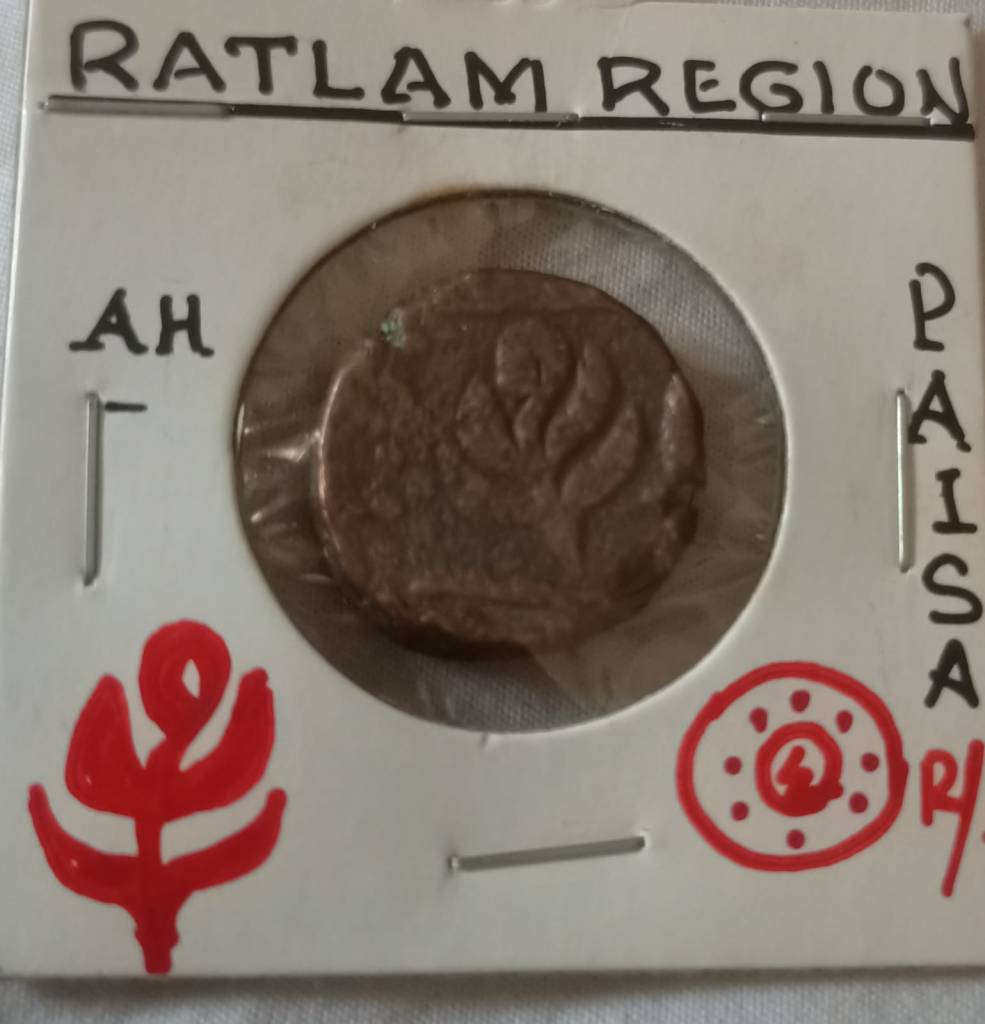
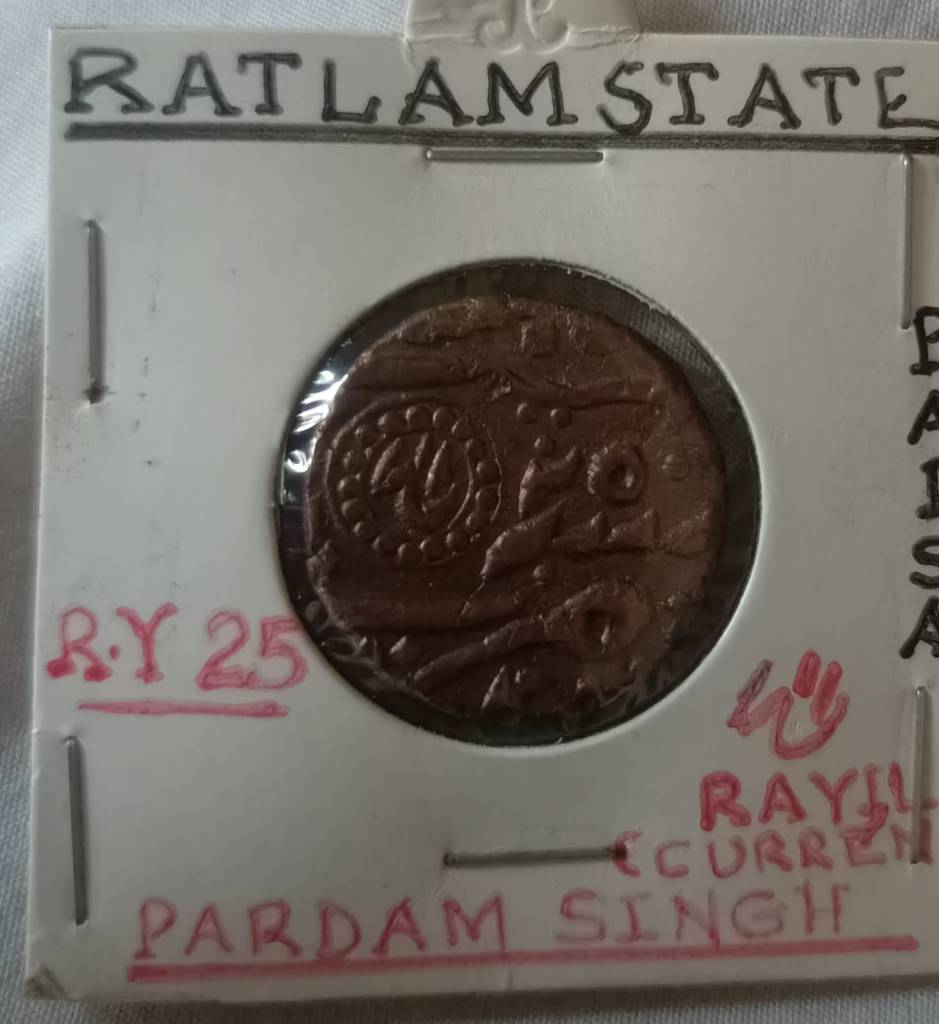
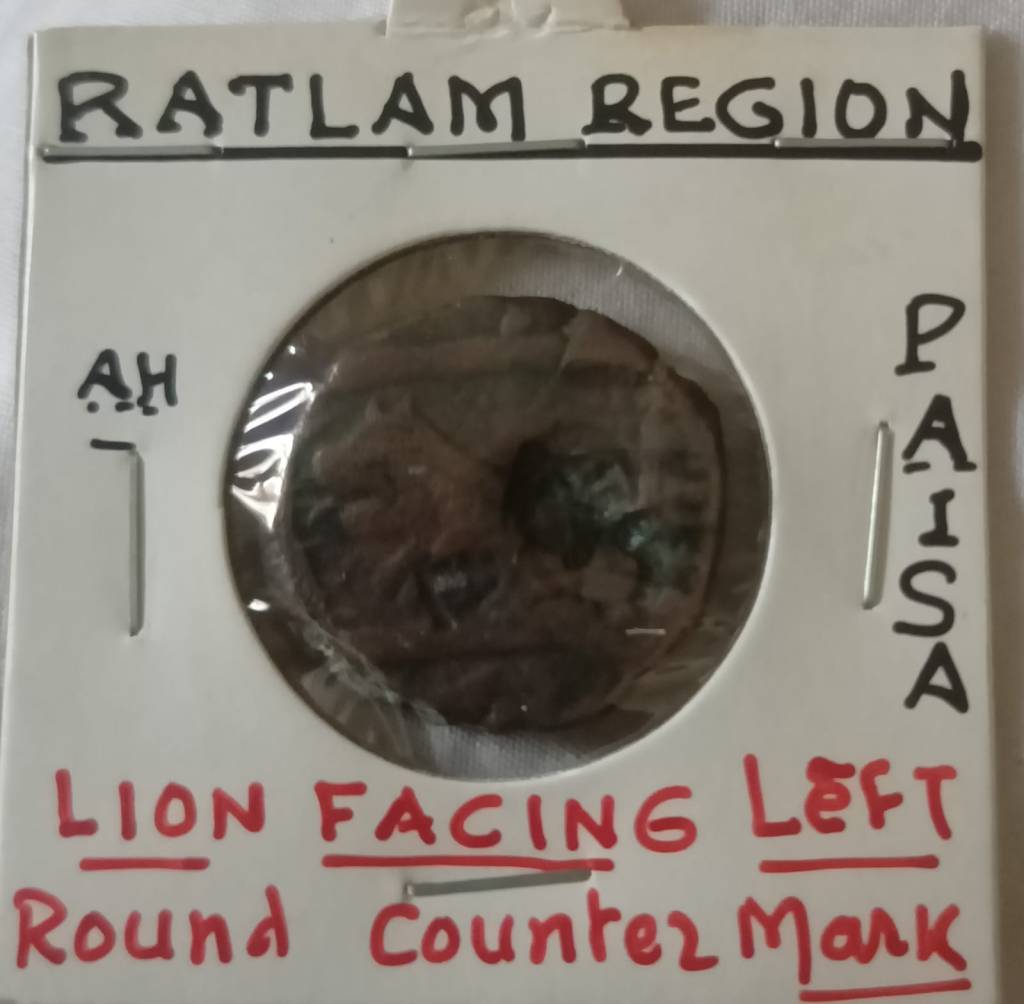
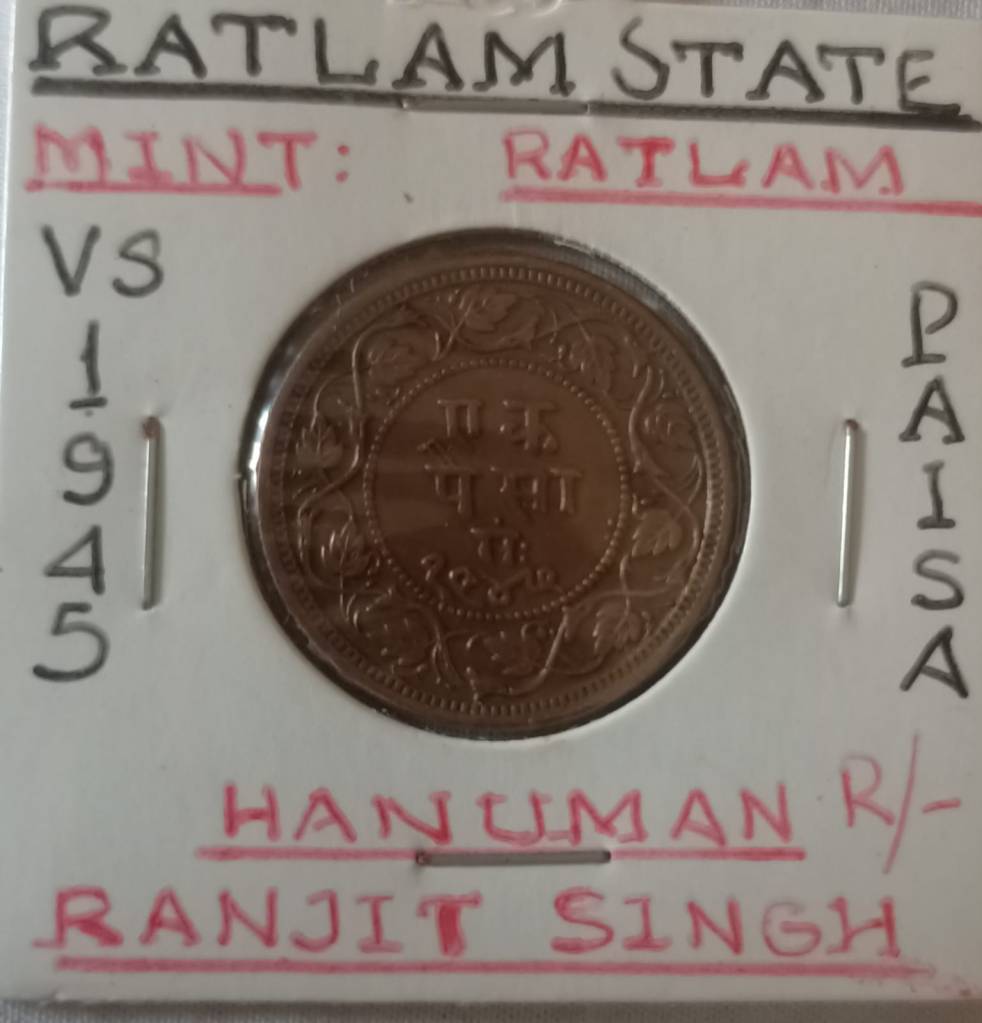
    A beautiful and carefully preserved set of coins! These coins from Ratlam State and Ratlam Region are rich in history and iconography.

    1. Ratlam Region Paisa (AH) – Various Symbols

    These coins are likely from the 18th to early 19th century, with Islamic Hijri (AH) dating. Ratlam was a princely state under the British Raj, and its currency often featured Persian or Devanagari inscriptions, along with regional motifs.

    • The symbols (like floral patterns, abstract shapes, and dotted circles) are typical countermarks or mint marks.
    • Each coin bears a unique countermark, possibly denoting different issues or years.

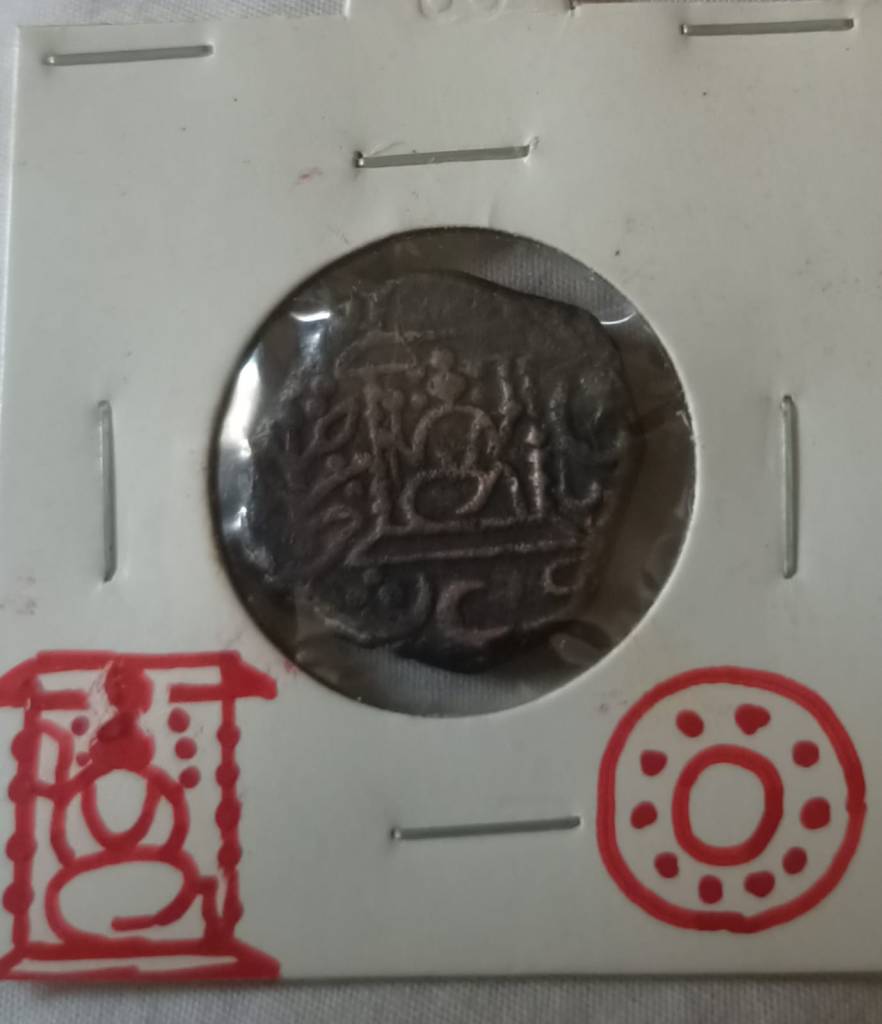
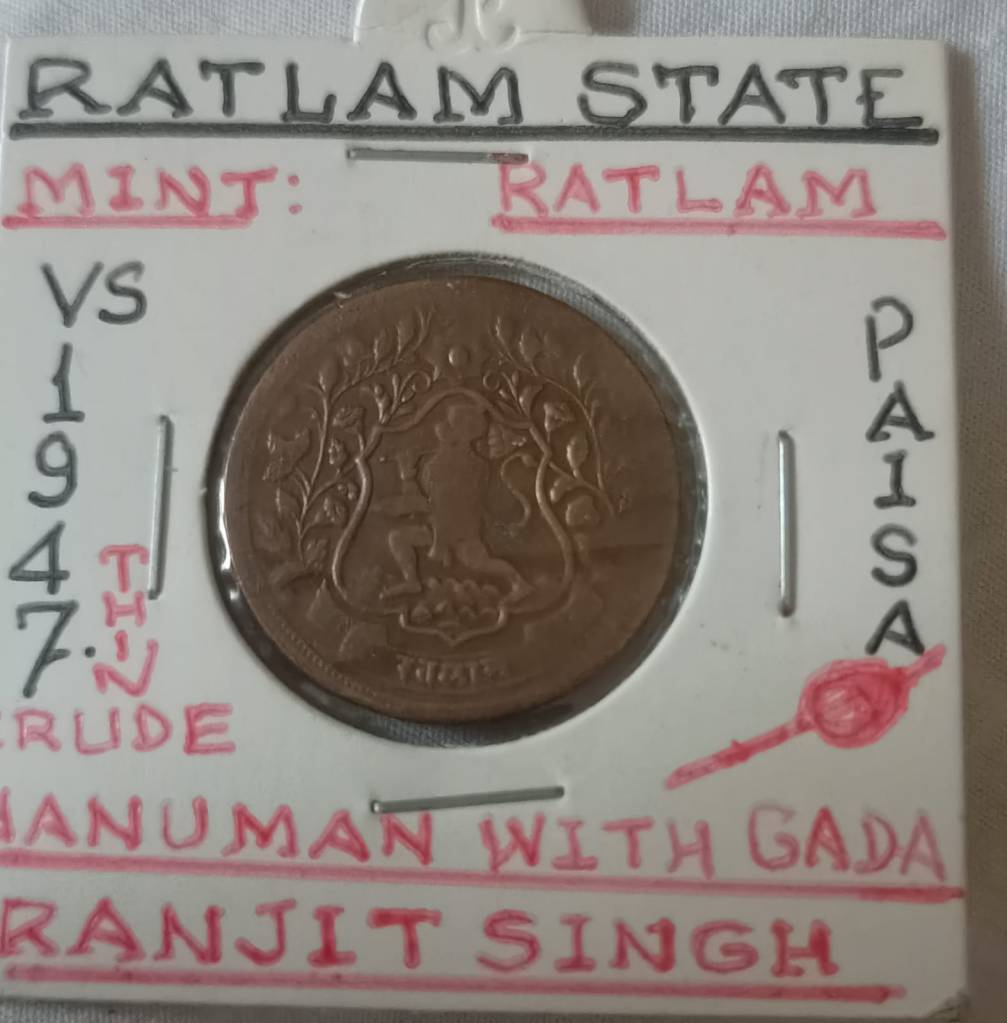
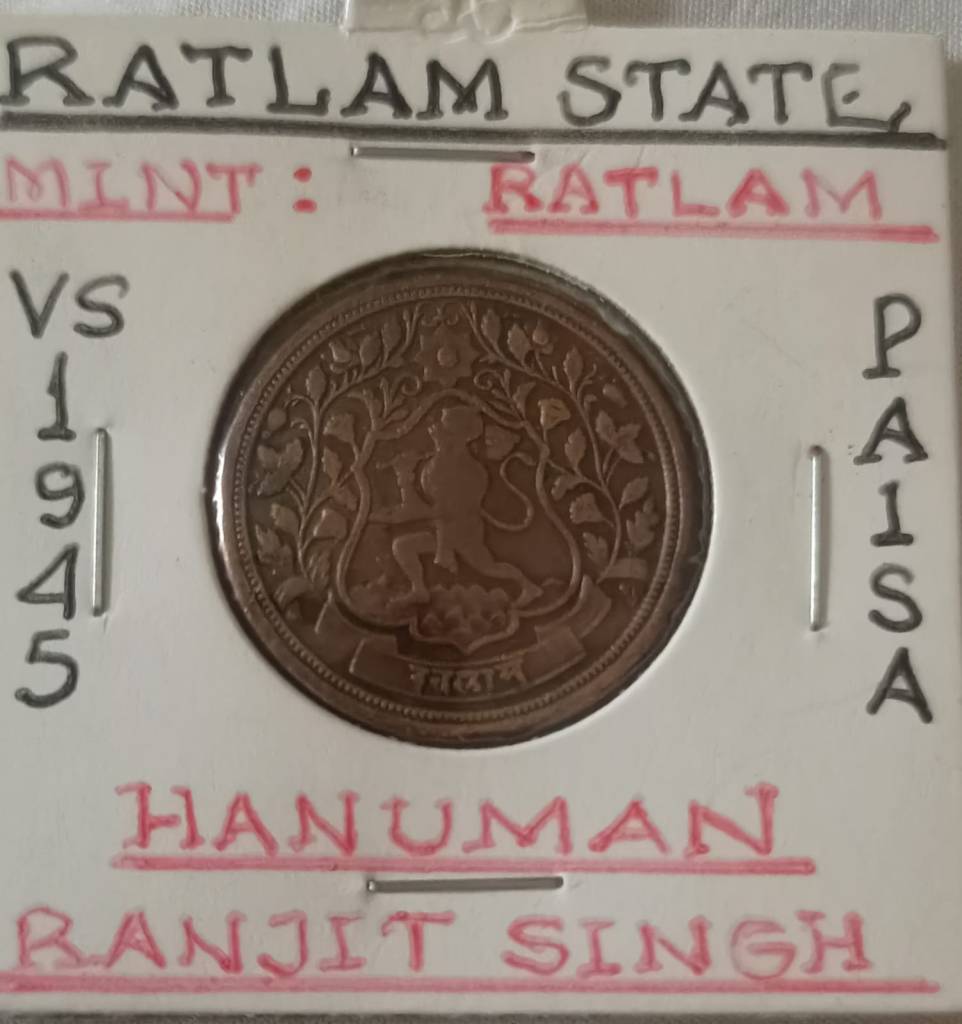
    🪙 2. Ratlam State Paisa – Ruler: Ranjit Singh (VS 1945–47)

    These coins are from the later period of Ratlam State:

    • VS 1945 & 1947 = AD 1888 and 1890 (approx.).
    • Clearly marked “Mint: Ratlam”.
    • Coins feature Hanuman, depicted either standing or seated, sometimes holding a gada (mace) – a powerful icon of devotion and strength.
    • This iconography ties to the religious beliefs of the ruling class or the populace.

    🪙 3. Special Mentions

    • “Lion facing left” coin with round countermark: This is notable. Lion imagery often symbolized power or British influence in some princely issues.
    • “Rayil Currency” (Railway Currency?) under PARDAM SINGH and R.Y. 25: Likely a local fiscal token used for limited trade or rail-related payments within the Ratlam region.

    📌 Observations:

    • These are mostly copper paisa coins.
    • AH and VS dating systems are used: AH (Islamic) and VS (Vikram Samvat – Hindu calendar).
    • Some coins might be machine struck, while others appear to be hand struck, indicating a transition period.
  • Coins: Ancient: Lunavada State

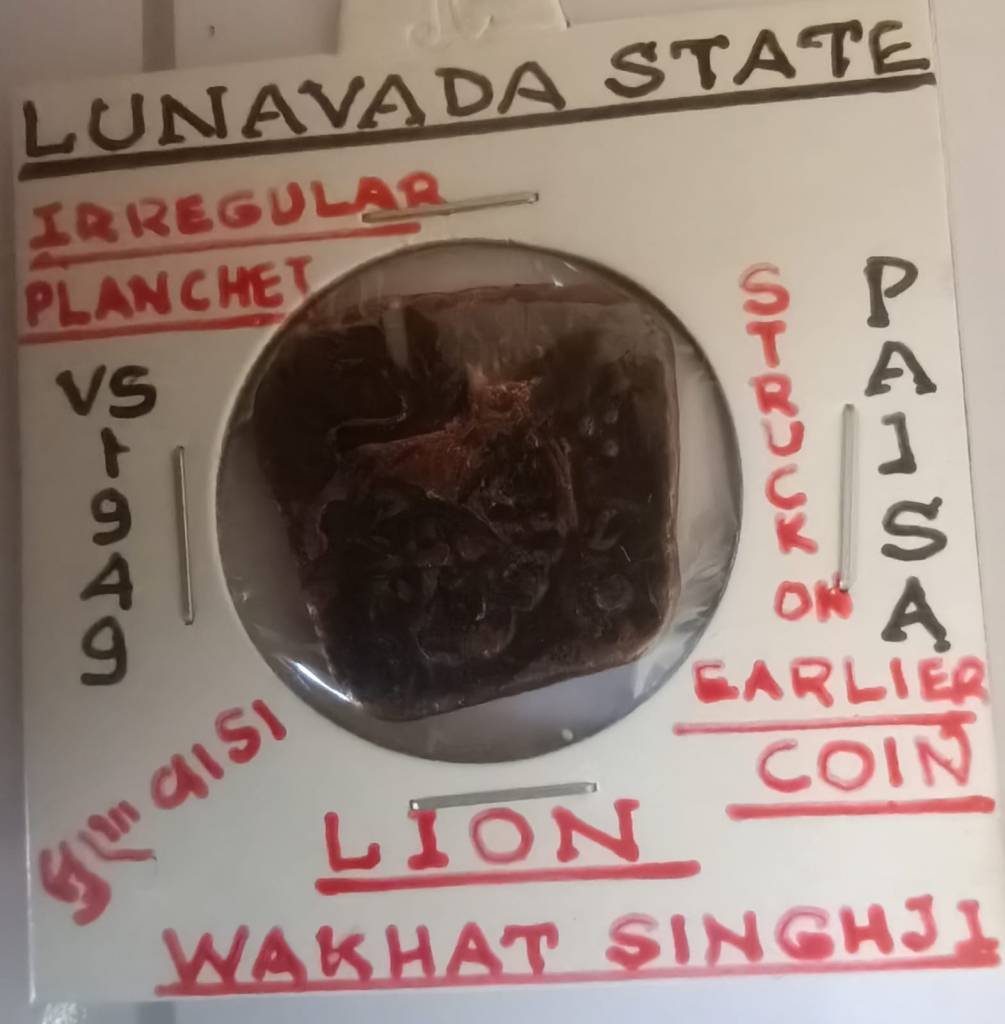
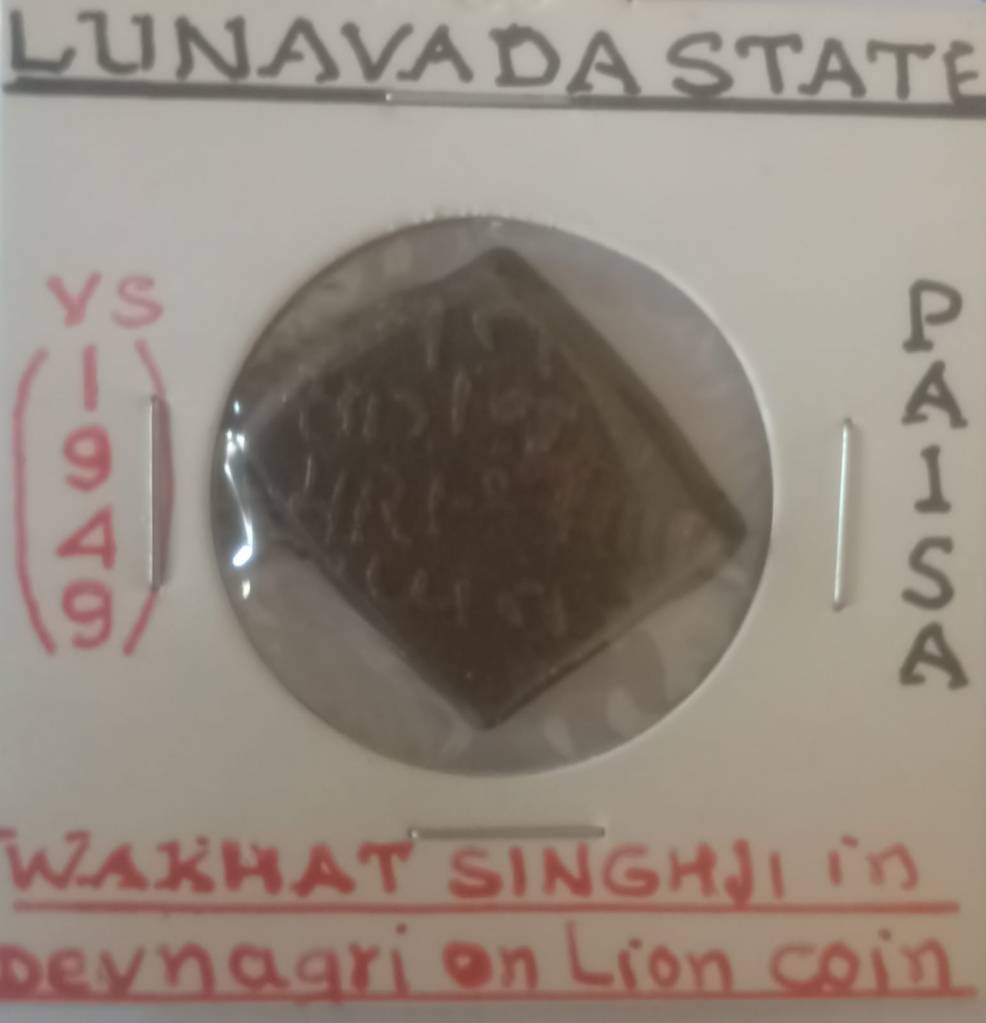
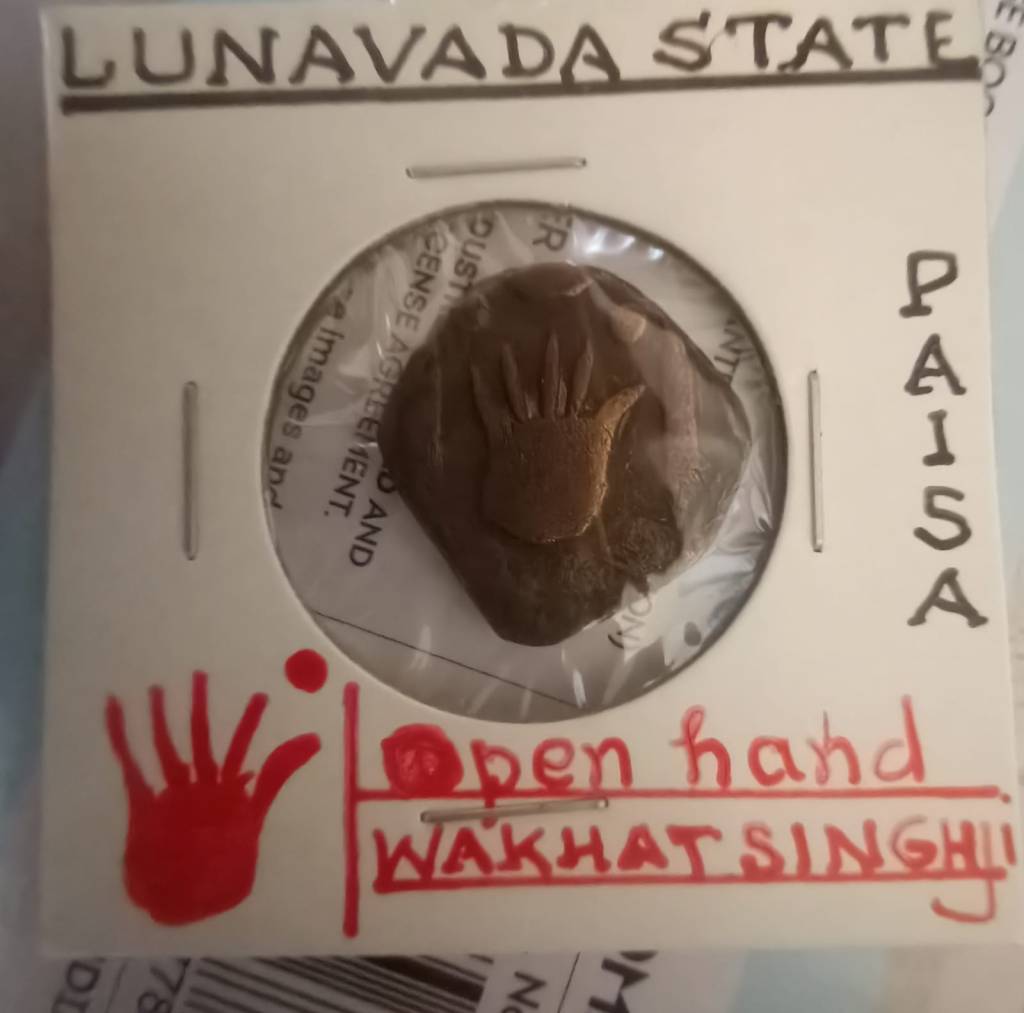
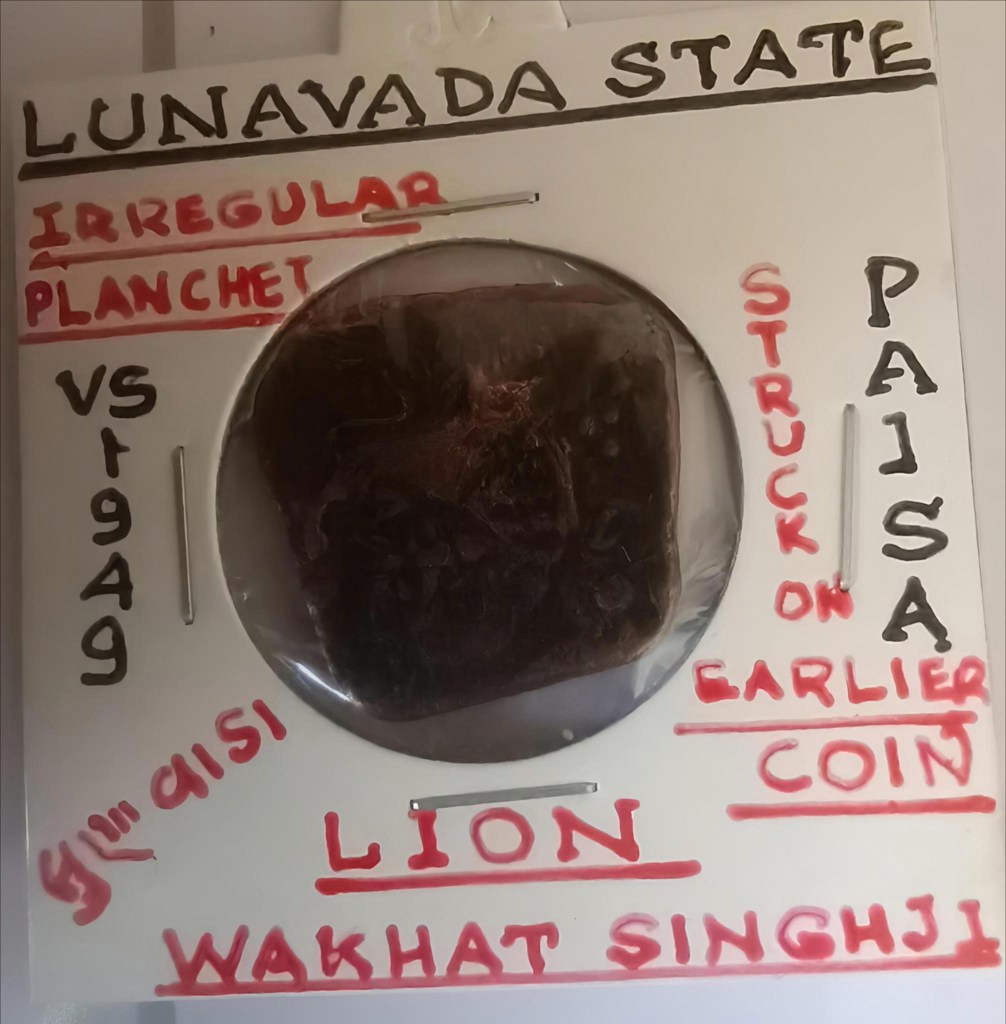
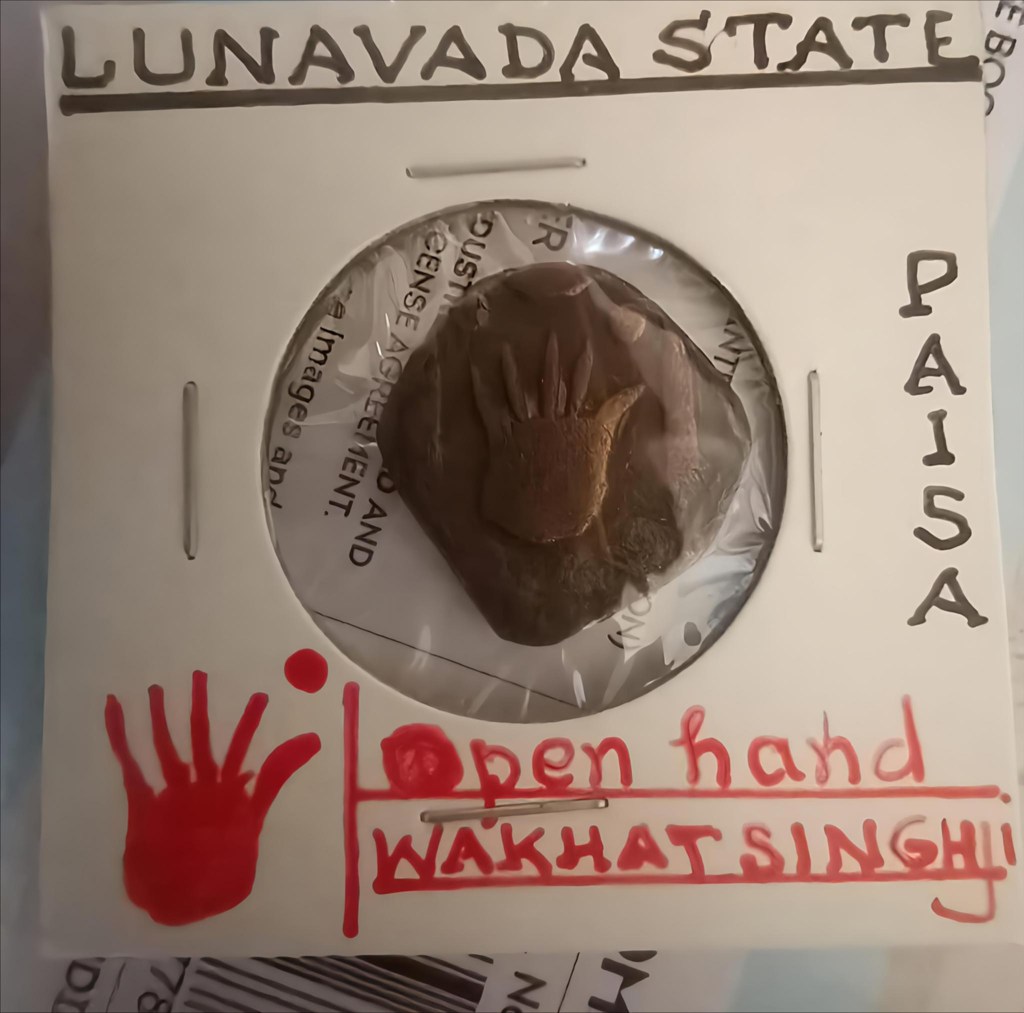
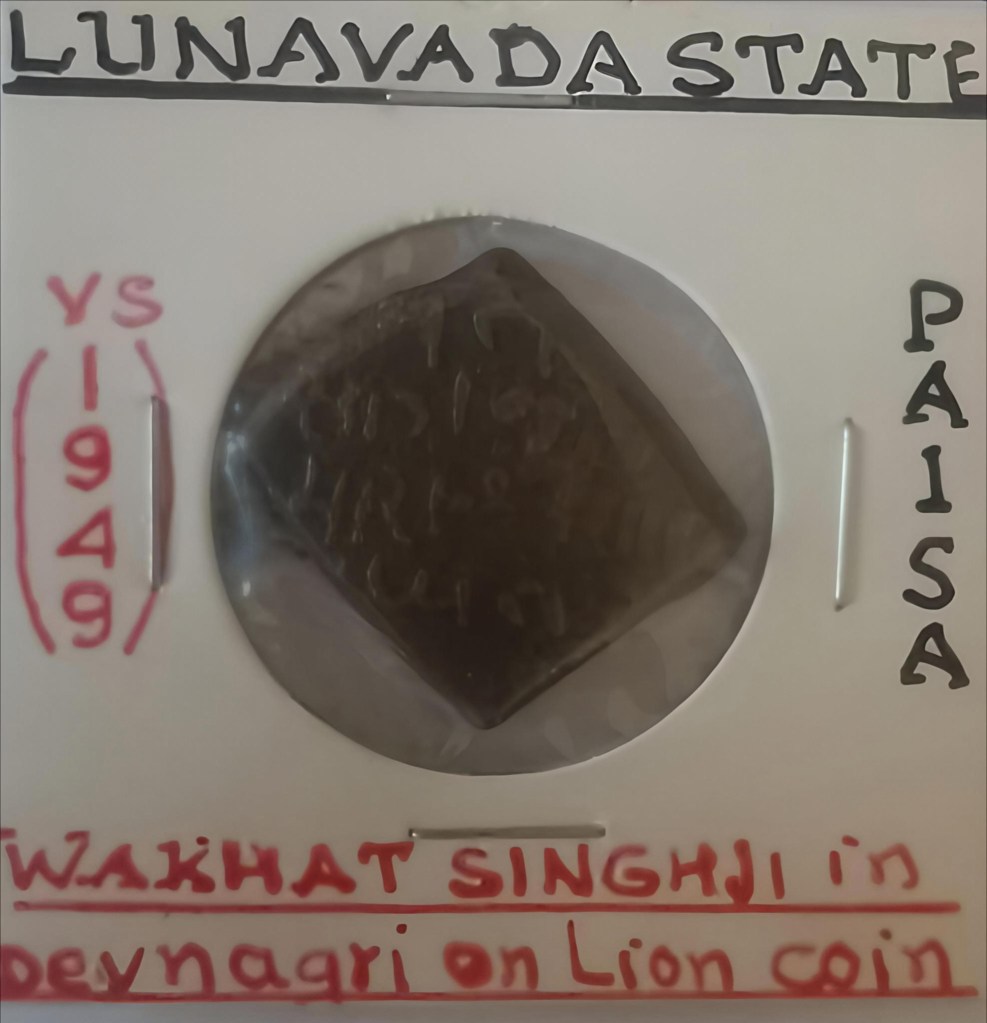
    Lunavada State – Lion Coin (VS 1949 / 1892 AD)

    • Ruler: Wakhat Singhji
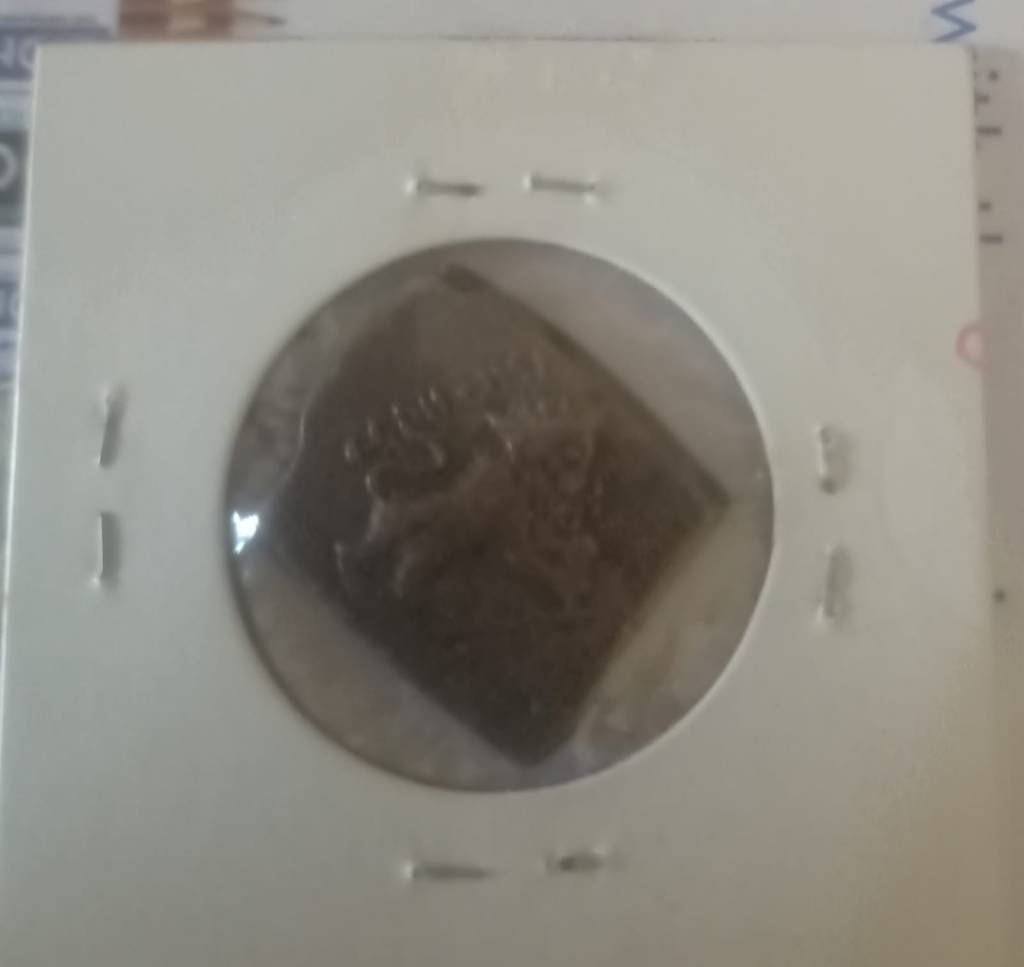
    • Unique Feature: Lion motif in square shape (rare and distinctive!)
    • Script: Devanagari (rare for lion coins, usually Persian or symbolic)
    • Variants:
      • One with open hand motif
      • One with irregular planchet struck over earlier coin (a fascinating mint error or economic reuse!)

    Highlights of Lunavada Variants:

    • Open Hand Symbol: Possibly linked to Jain or Hindu symbolism (blessing or protection)
    • Overstruck Coin: A rich piece for study—these overstruck types are extremely collectible!
    • Shape: Unusual shapes (square, irregular) make them even more valuable to collectors.
  • coins: ancient: Indian states

    Coins: Ancient: Lunavada State:

    Lunavada State – Lion Coin (VS 1949 / 1892 AD)

    • Ruler: Wakhat Singhji
    • Unique Feature: Lion motif in square shape (rare and distinctive!)
    • Script: Devanagari (rare for lion coins, usually Persian or symbolic)
    • Variants:
      o One with open hand motif
      o One with irregular planchet struck over earlier coin (a fascinating mint error or economic reuse!)

    Highlights of Lunavada Variants:

    • Open Hand Symbol: Possibly linked to Jain or Hindu symbolism (blessing or protection)
    • Overstruck Coin: A rich piece for study—these overstruck types are extremely collectible!
    • Shape: Unusual shapes (square, irregular) make them even more valuable to collectors.
  • # Coins: Continuing the Copper Coins Collection

    # Coins: Continuing the Copper Coins Collection:

    These coins are beautiful pieces from Jaipur State, part of the princely states of British India.

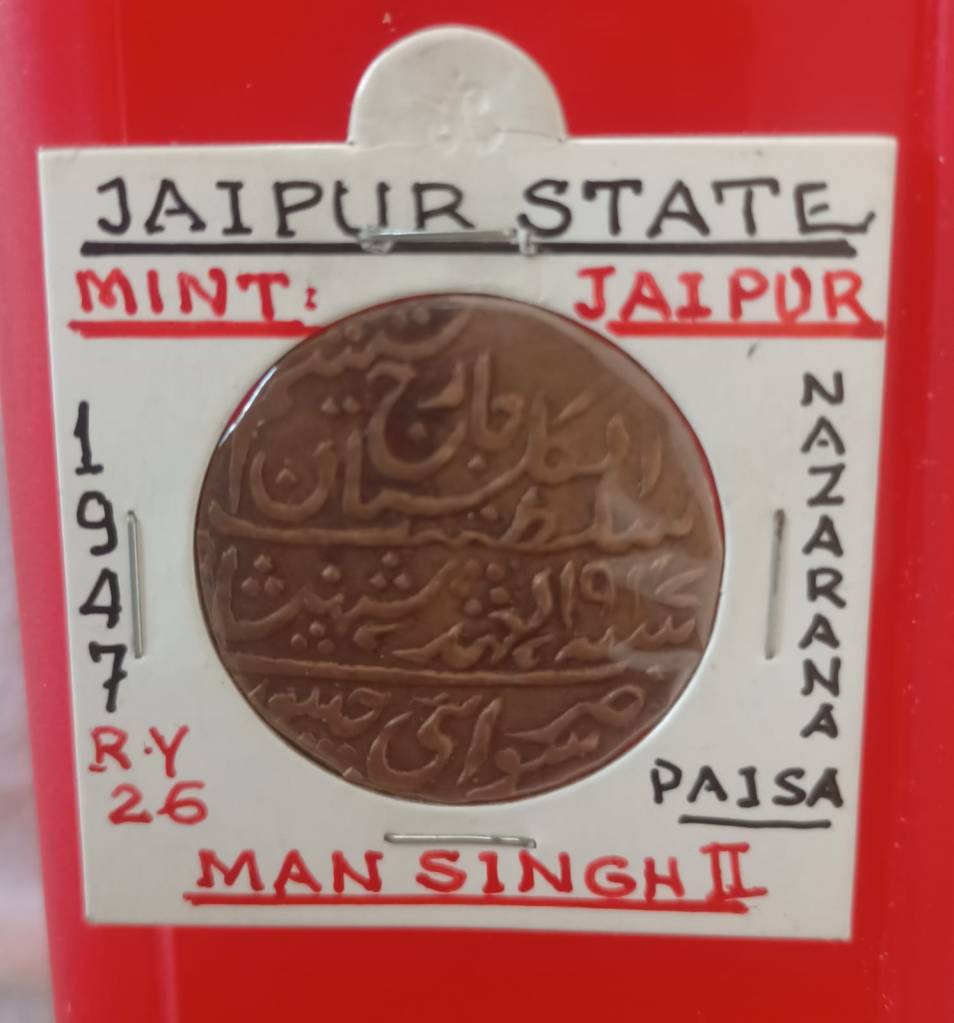
    1. Jaipur State Nazarana Paisa (1947)
    Mint: Jaipur
    Denomination: Nazarana Paisa
    Year: 1947
    RY (Regnal Year): 26
    Ruler: Maharaja Man Singh II
    Notes:
    Nazarana coins were usually minted for ceremonial purposes or as presentation coins, often struck with special care.

    1947 is historically significant as it is the year of India’s independence.

    2. Jaipur State Nazarana Paisa (1941)
    Mint: Jaipur
    Denomination: Nazarana Paisa
    Year: 1941
    RY: 20
    Ruler: Maharaja Man Singh II
    Symbol: The scorpion symbol drawn at the bottom left is traditional in Jaipur coins, sometimes indicating mint marks or religious symbolism.

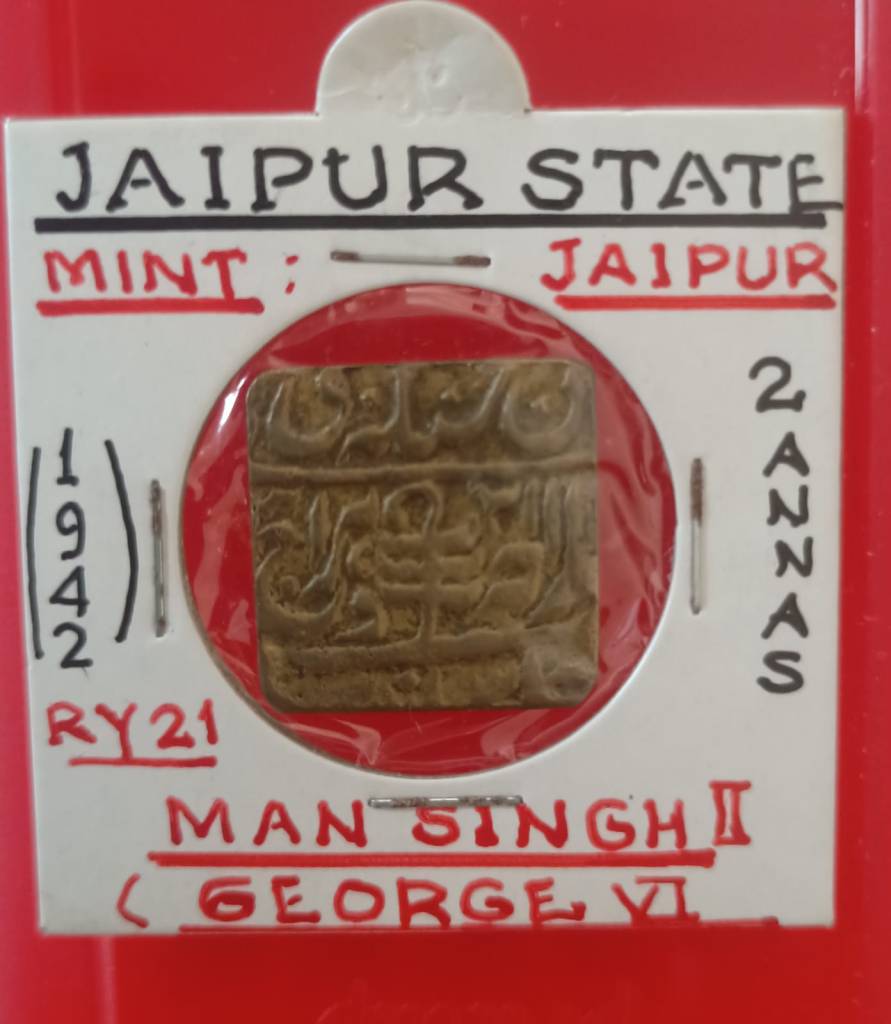
    3. Jaipur State 2 Annas (1942)
    Mint: Jaipur
    Denomination: 2 Annas (Square Coin)
    Year: 1942
    RY: 21
    Ruler: Maharaja Man Singh II
    Note: Reference to George VI shows this was during British paramountcy, where coins sometimes bore references to the British monarch even in princely states.

  • Coins: Copper Coins from Princely States

    These are fascinating copper coins from various Princely States of pre-independent India and neighboring regions.

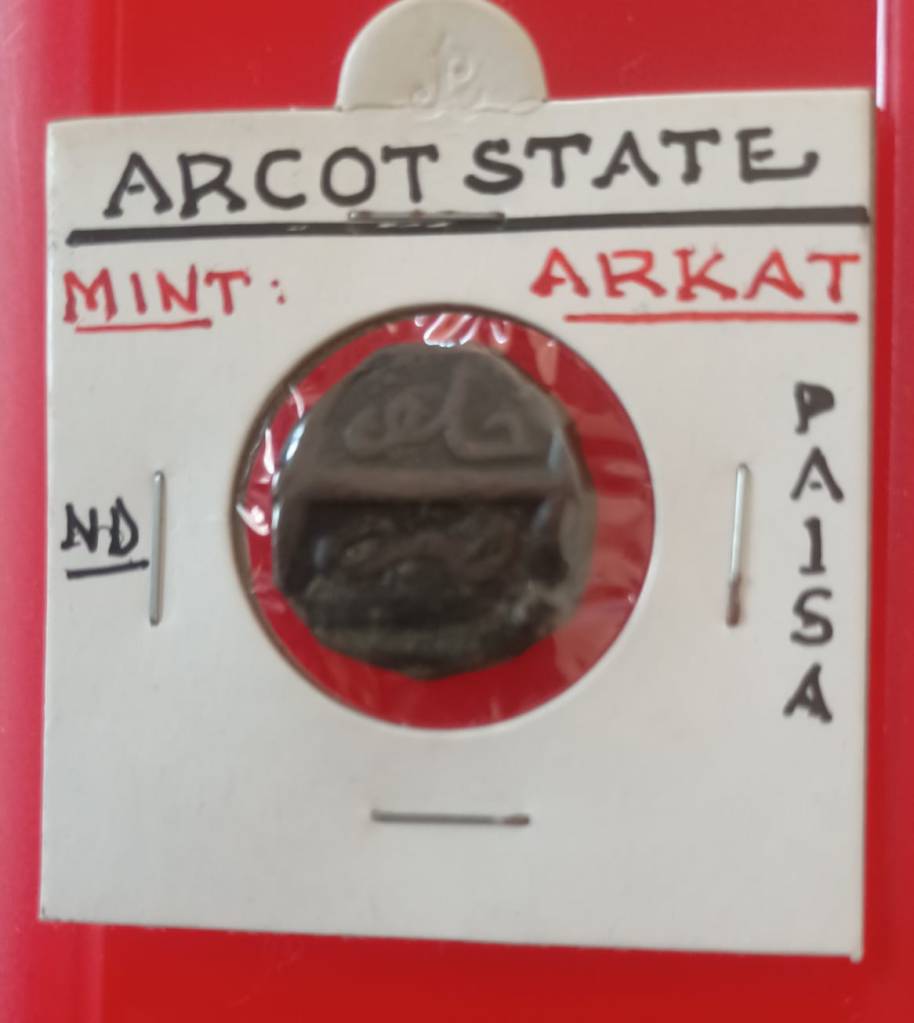
    1. Arcot State – Paisa
    Mint: Arkat (Arcot)

    Metal: Copper

    Denomination: Paisa

    Note: Arcot was a Mughal Subah (province) and later a Nawabdom in the Carnatic region of South India. Arcot coins often feature Persian/Arabic inscriptions.

    Era: Likely from the late Mughal or Nawab period (18th–early 19th century).

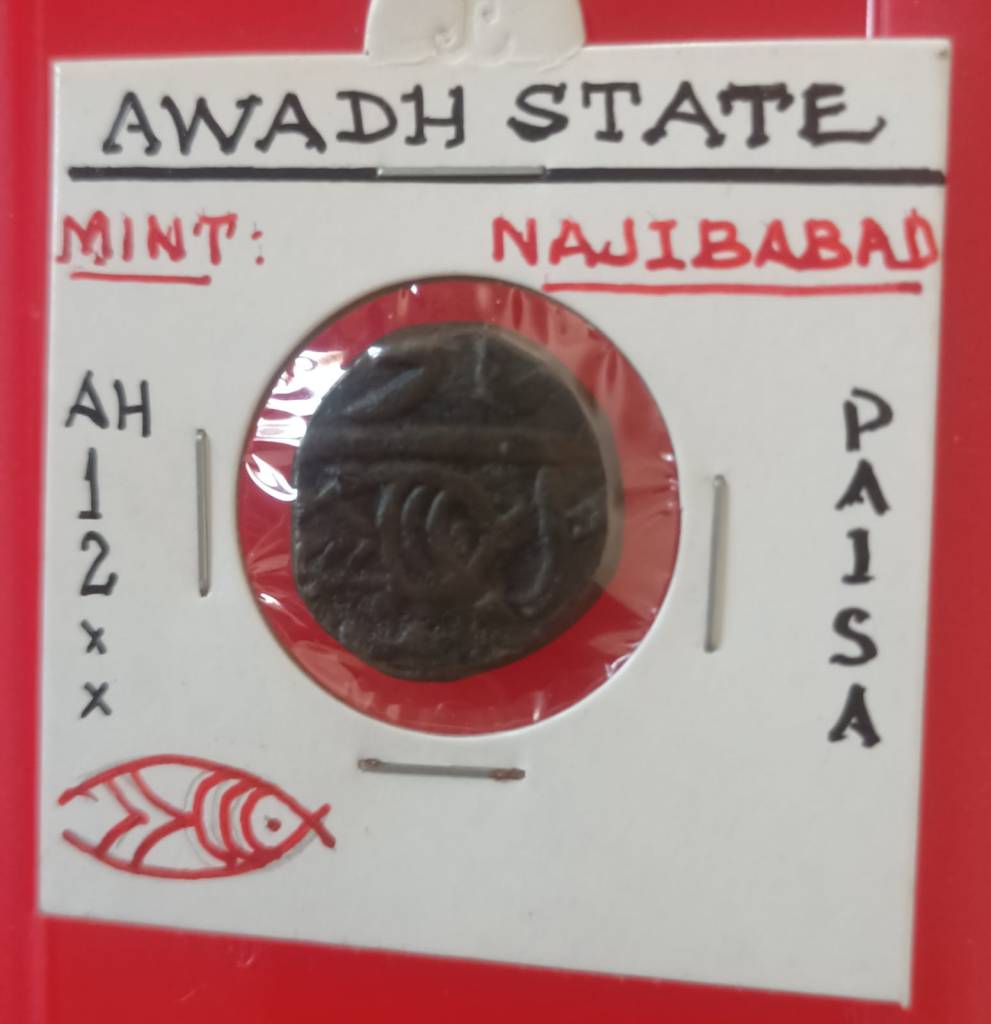
    2. Awadh (Oudh) State – Paisa
    Mint: Najibabad

    Date: AH 122x (Early 19th century)

    Metal: Copper

    Denomination: Paisa

    Design Note: Features the fish symbol, a famous emblem of Awadh.

    Historical Context: Awadh (Oudh) was a wealthy princely state in North India, famous for its unique coinage. Najibabad was one of its mints.

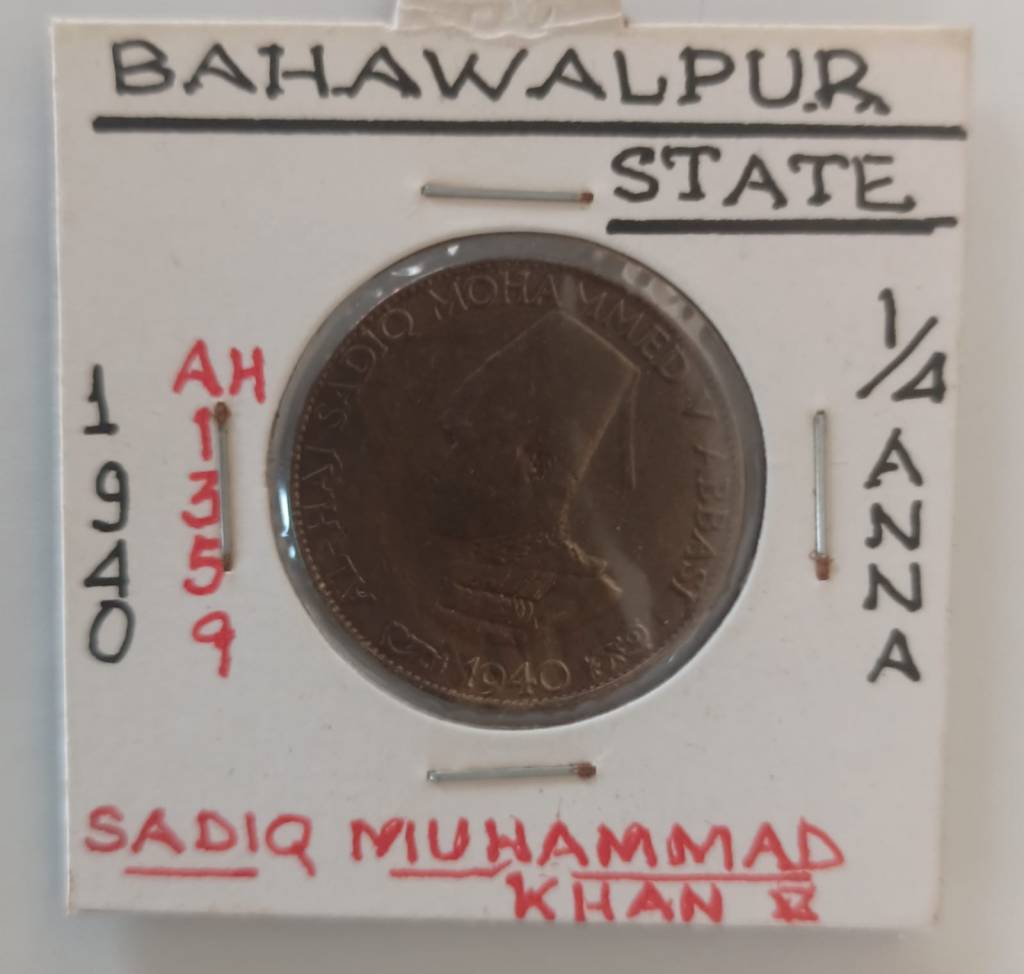
    3. Bahawalpur State – 1/4 Anna (Copper)
    Date: 1940 AD / AH 1359

    Ruler: Nawab Sadiq Muhammad Khan V

    Metal: Copper

    Denomination: ¼ Anna

    Design: Features the portrait of Nawab Sadiq Muhammad Khan.

    Historical Context: Bahawalpur was a princely state now in modern-day Pakistan. The coin shows the transition towards more modern, portrait-based coins.

    4. Banswara State – Paisa (Anonymous Issue)
    Metal: Copper

    Denomination: Paisa

    Design: Features a unique symbol (resembling an ancient royal insignia).

    Note: Labeled as an Anonymous Issue, meaning no ruler’s name is mentioned, common in some Rajput princely states.

    Era: Likely 18th–19th century.

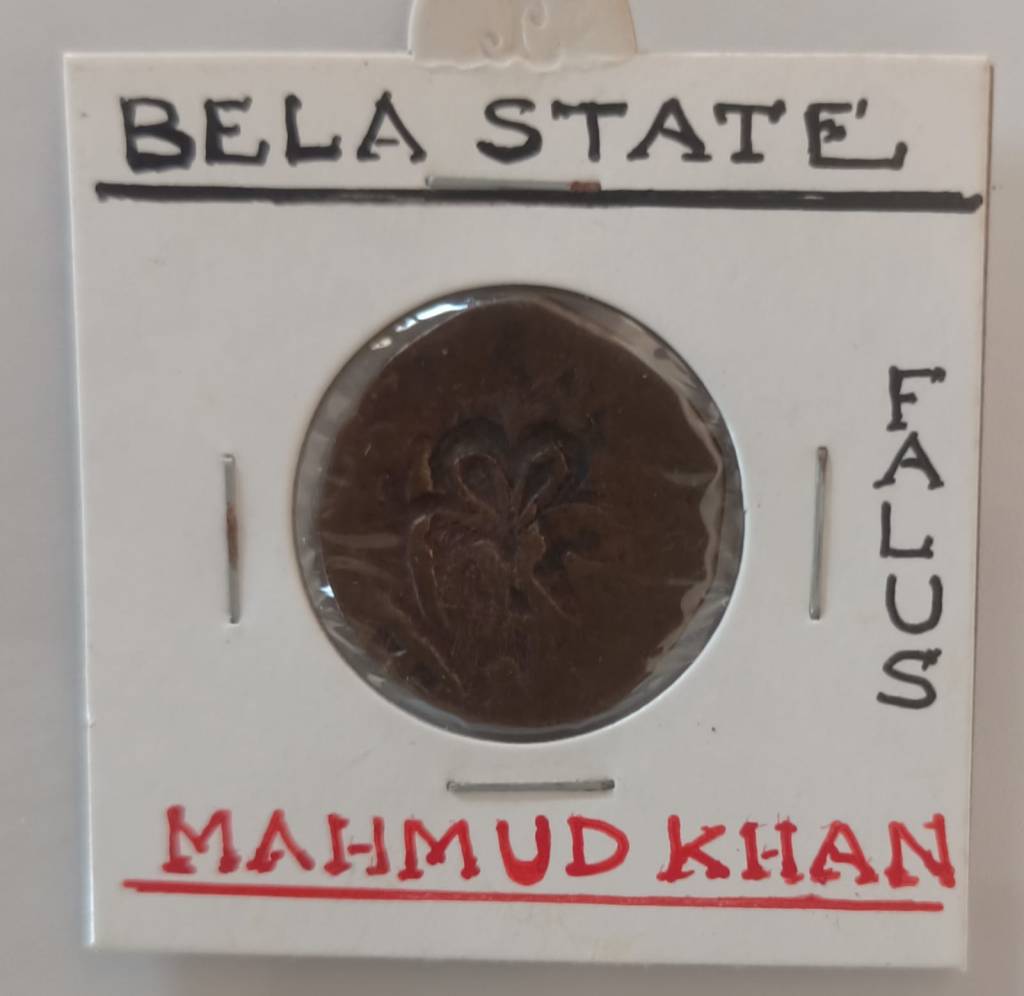
    5. Bela State – Falus
    Ruler: Mahmud Khan

    Metal: Copper

    Denomination: Falus (an old term for copper coins)

    Design: Floral or emblematic motif visible.

    Historical Context: Bela was a lesser-known princely state, possibly from the Baluchistan region. Mahmud Khan was one of its rulers.

  • Coins: Indian States

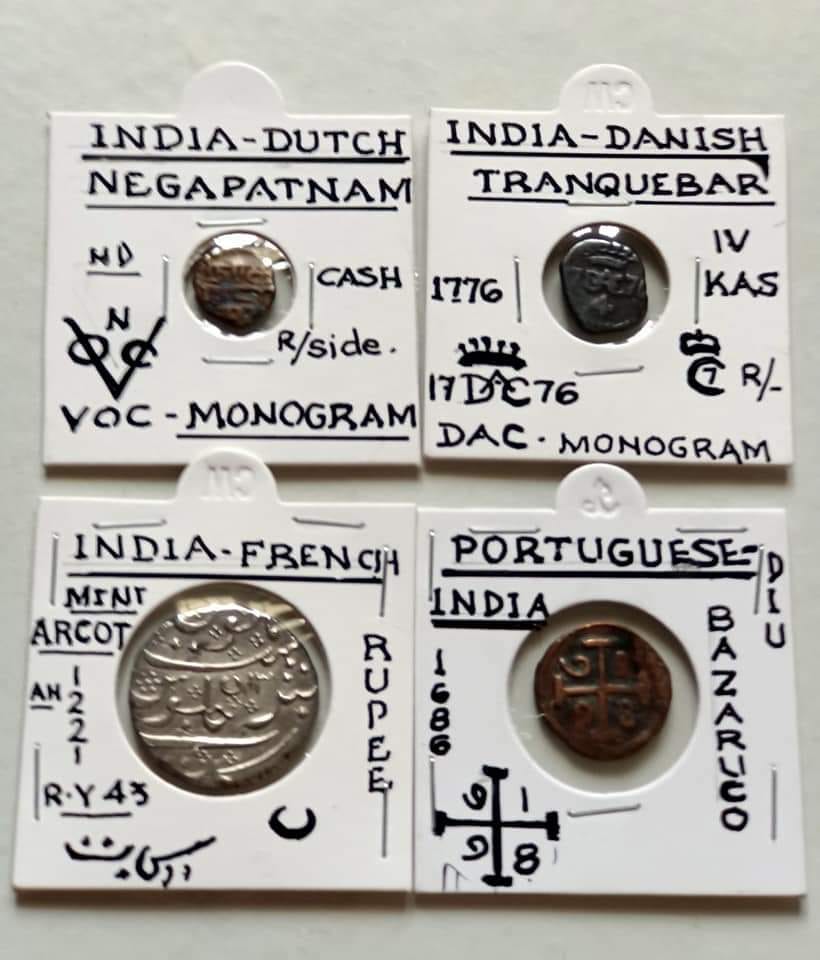
    Some interesting coins from our collection:

    A)Colonial India Coins (European Settlements)

    1. Dutch – Negapatnam (Nagapattinam)
      • Coin: VOC Monogram (Dutch East India Company)
      • Metal: Likely copper
      • Denomination: Cash
    2. Danish – Tranquebar (1776)
      • Coin: IV Kas
      • DAC Monogram
      • Metal: Copper
      • Issued by Danish East India Company
    3. French – Arcot Mint (Rupee)
      • Silver Rupee
      • Year: AH 1221 (Islamic Hijri year)
      • Inscription in Persian
    4. Portuguese – Diu Bazaruco
      • Date: 1686
      • Portuguese India coin with a cross design
      • Metal: Copper

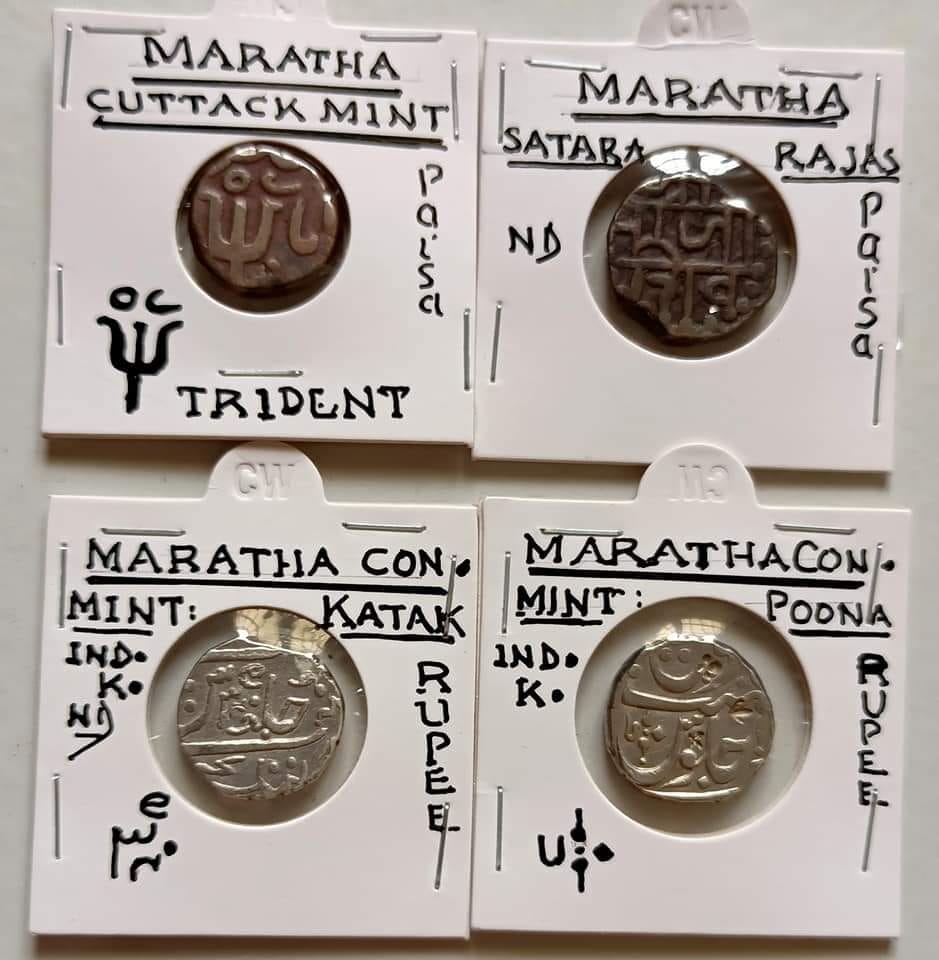
    📌 B) Maratha Empire Coins

    1. Cuttack Mint – Trident design
      • Denomination: Paisa
      • Symbol: Trishul (Trident)
    2. Satara Rajas
      • Denomination: Paisa
      • Devanagari script
    3. Katak Mint – Silver Rupee
      • Indigenous Maratha mint
      • Devanagari script
    4. Poona Mint – Silver Rupee
      • Prominent Maratha mint (Pune)
      • Devanagari legend

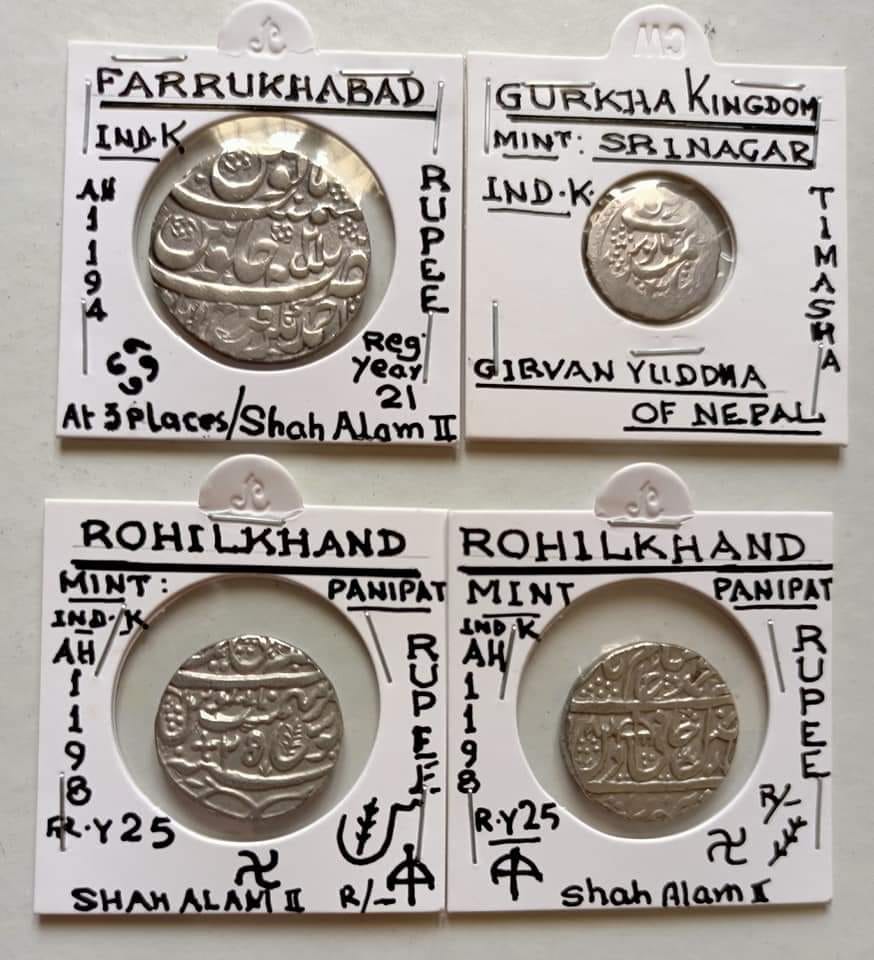
    📌 C) Mughal and Regional Coins (Rupees)

    1. Farrukhabad Mint (Shah Alam II)
      • Mughal Rupee
      • Reg. Year 21
      • Minted in 3 places
    2. Gurkha Kingdom (Nepal) – Srinagar Mint
      • Coin issued during Givban Yuddha (Gorkha wars)
      • Timasha (small denomination silver coin)
    3. Rohilkhand – Panipat Mint
      • Two rupees of Shah Alam II
      • Years: AH 1193 and AH 1198
      • Strong Rohilla influence in this region

  • Stamps /postmarks from Travancore

    Just five sheets from Dad’s #Travancore stamps/covers collection. Each sheet is handwritten/drawn by him, when explaining the postmarks.
    A fascinating aspect of Travancore’s postal history, highlighting different types of postmarks and cancellations. Here’s an overview of these philatelic gems:
    The first page discusses the division of Travancore postmarks into vernacular and English groups.

    A key feature is the pre-stamp circular date postmark, typically found in a rimless circle with concentric arcs.

    The sample postmark from Thiruvananthapuram (Trivandrum) dates back to the pre-stamp period.

    Delivery Postmarks

    A postmark from Nagercoil features a double-ringed circular date stamp with “DELY.” (short for delivery).

    The date format is structured with abbreviations for the month and year.

    The postmark is flanked by four-pointed stars, which is a distinct design element.

    Refused Mail Cancellations

    A rectangular “REFUSED” cancellation appears on registered items.

    The example from Chengannur A.O. is dated 27 Kar 118 (Travancore Era).

    Another example from Parur A.O. is in a slightly larger rectangular format and dated 4th Thu 122.

    Express Delivery (അടിയന്തിരം – “Adiyanthiram”)

    Express service markings are prominently displayed.

    The first example is from Ettumanoor A.O., dated 26 DHA 88.

    Another example from Nagercoil, dated 29 VRI 105, shows a similar rectangular marking.

    Express Service Markings of Travancore

    This marking is divided into three sections, with “ATIYANTRAM” (Express) at the top.

    The middle sections contain words like “SAMAYAM” (Time), “MANI” (Hour), and “MINITTU” (Minutes).

    English versions of these markings are also seen on registration slips.