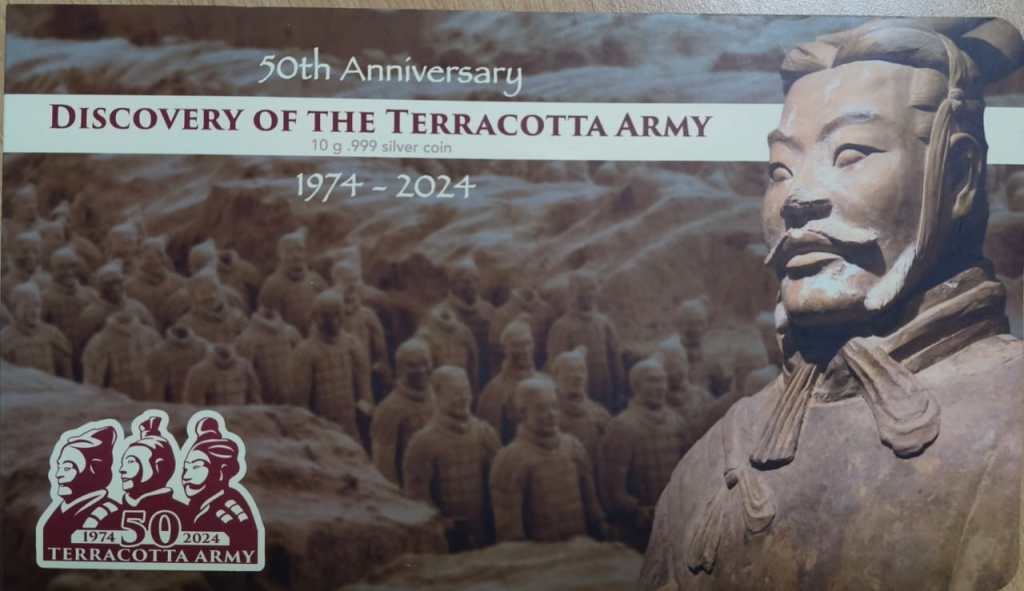
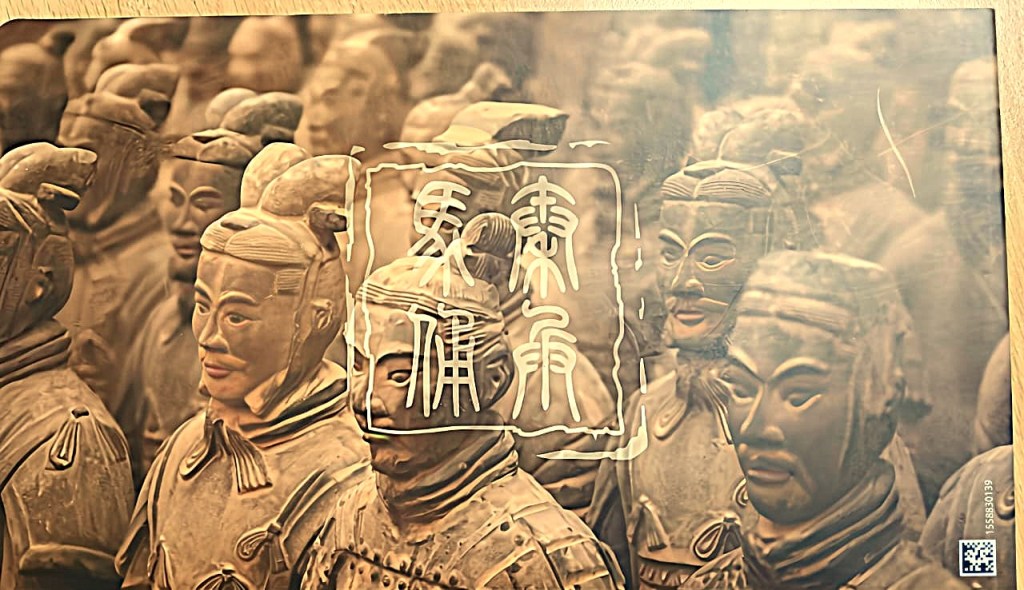
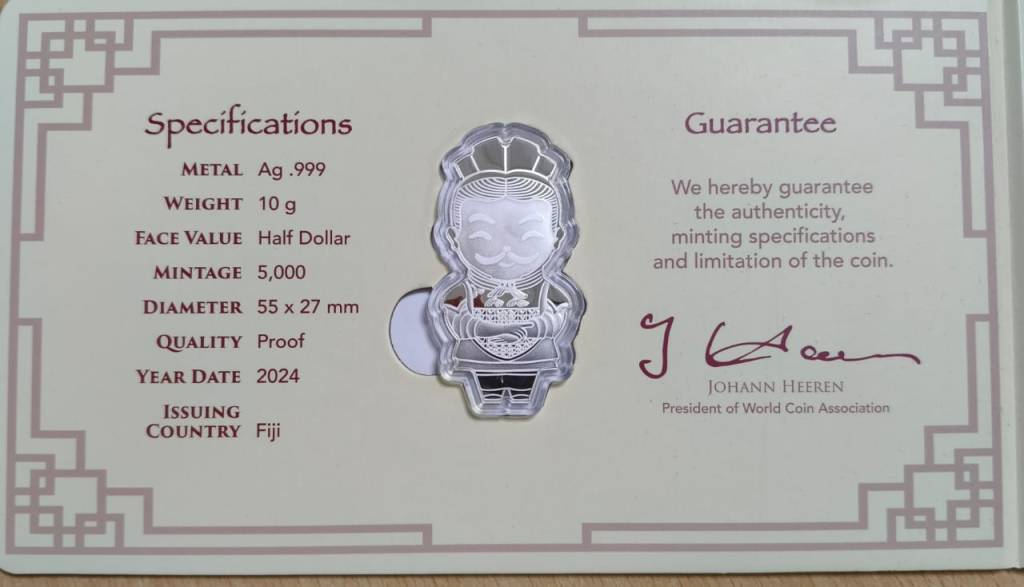
This coin celebrates the 50th Anniversary of the Discovery of the Terracotta Army (1974–2024).
The Terracotta Army was unearthed in 1974 near Xi’an, China, when farmers accidentally discovered the pits while digging a well.
The find is considered one of the greatest archaeological discoveries of the 20th century, tied to Emperor Qin Shi Huang (China’s first emperor, 259–210 BCE).
The army, with thousands of life-sized soldiers, horses, and chariots, was buried to guard his tomb and symbolize imperial power in the afterlife.
The coin: Obverse (front):
Shaped like a Terracotta Warrior in a stylized, almost cartoonish/Chibi representation.
Coins: Rare
Topic: Coins: Rare:
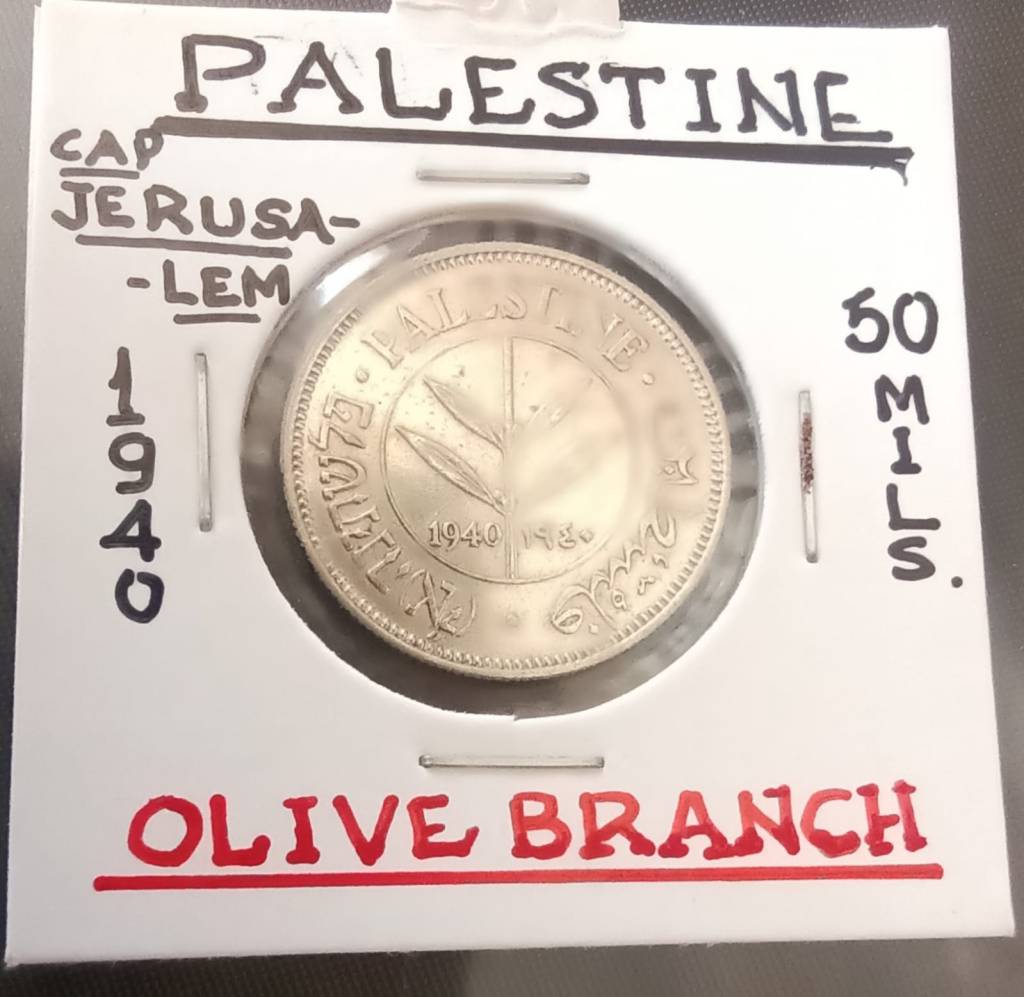
1. Palestine 50 Mils Coin – 1940 Obverse design: Features an olive branch — a peaceful emblem that never goes out of style. Languages: Inscribed in English, Arabic, and Hebrew – a trilingual design reflecting the British Mandate’s governance. Details: Year: 1940 Denomination: 50 Mils Material: Copper-nickel Historical Note: This coin was issued during the British Mandate of Palestine (1927–1948).
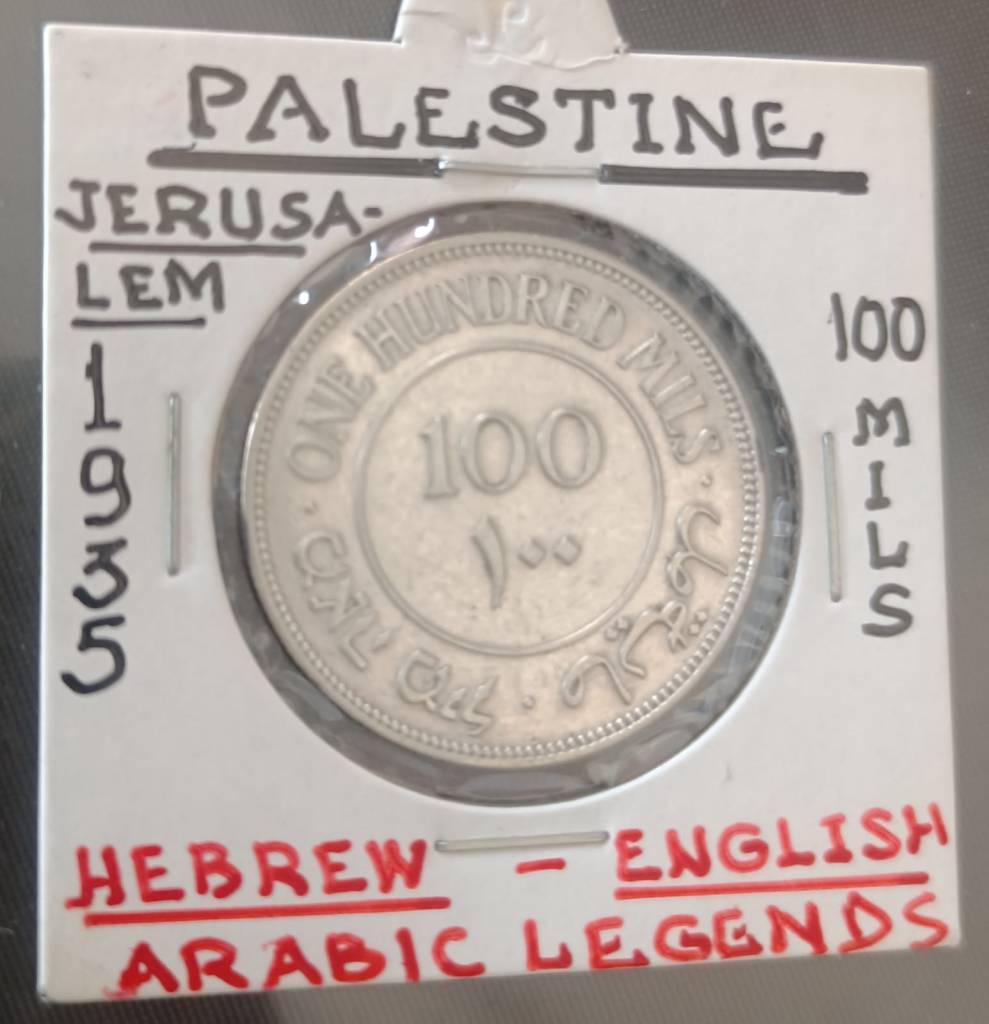
2. Palestine 100 Mils Coin – 1935 Design: Simple and elegant — large “100” in the center with value in 3 scripts around it. Languages: English, Arabic, Hebrew (same trilingual harmony) Details: Year: 1935 Denomination: 100 Mils Material: Silver (72% silver) Weight: Approx. 7.78 grams
Historical Note: One of the higher denomination coins used in Palestine pre-1948.
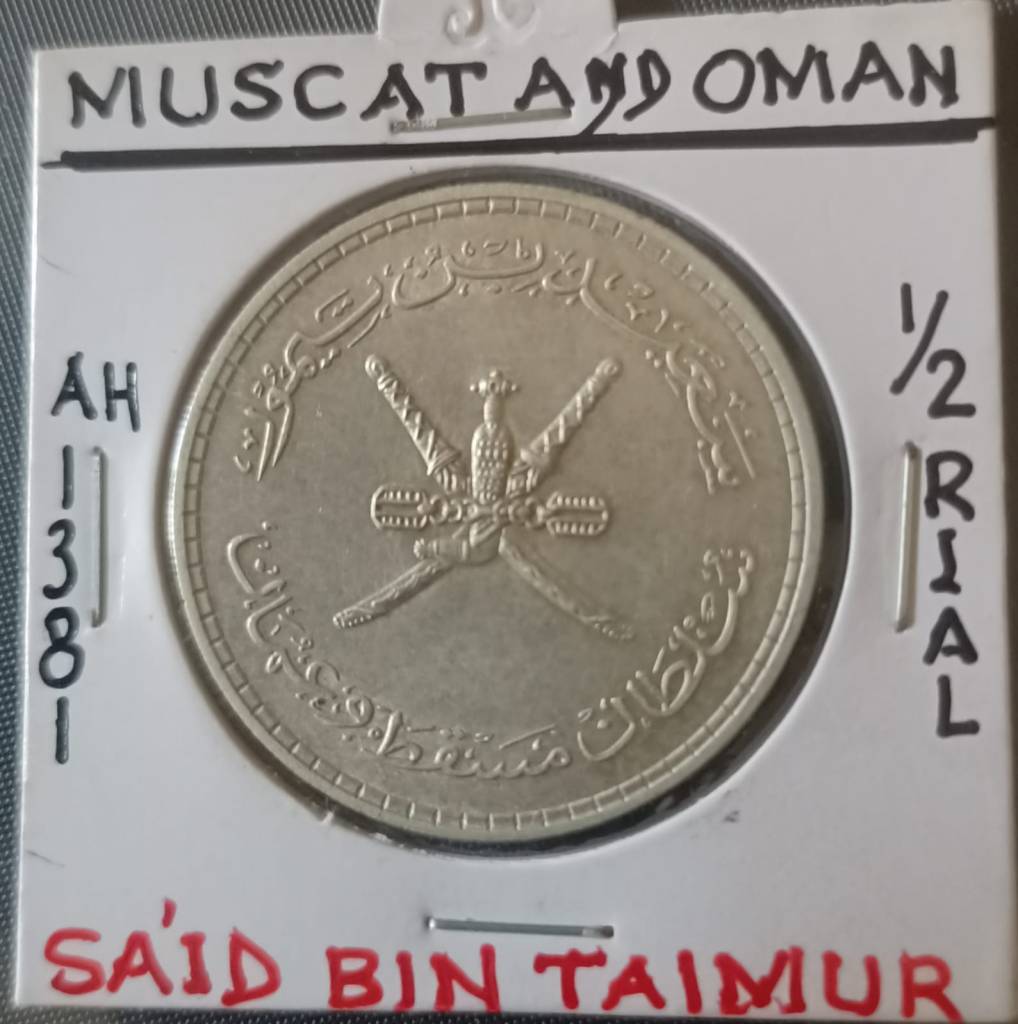
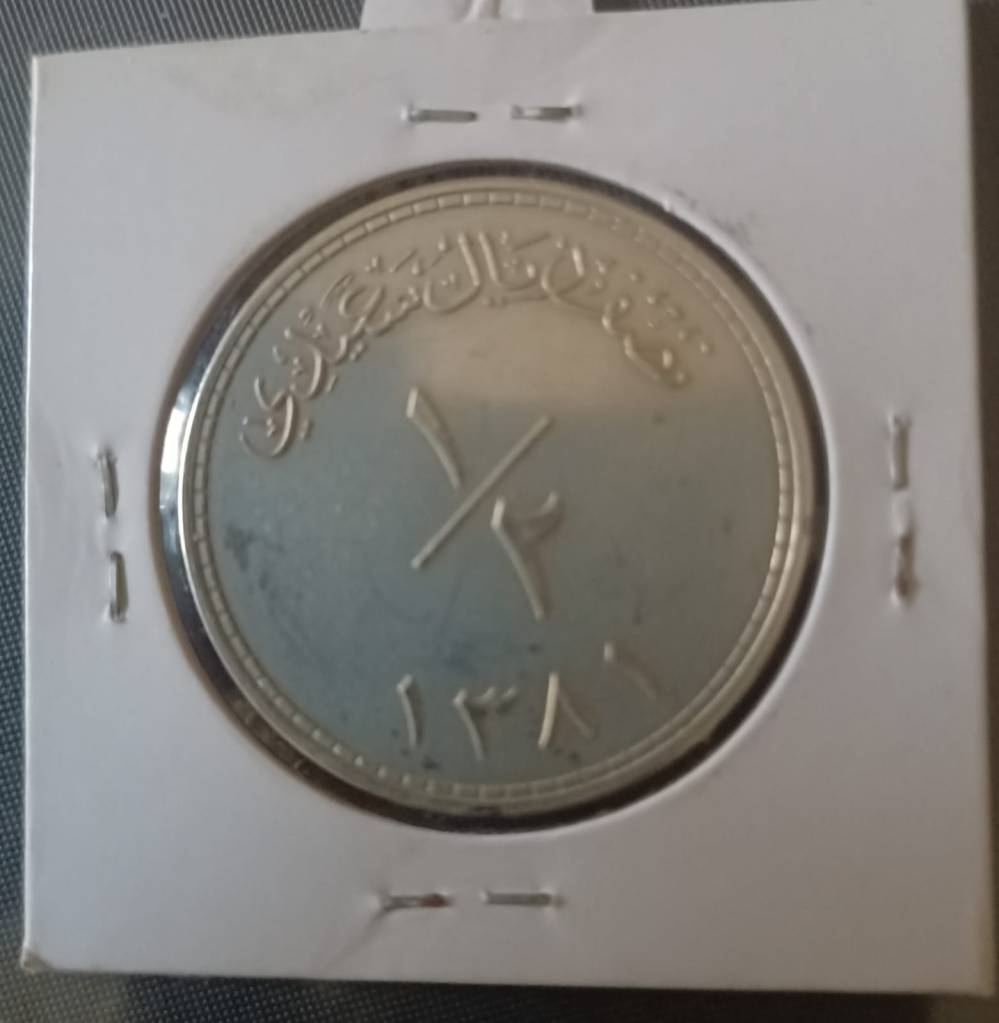
3. Muscat & Oman ½ Rial Coin – AH 1381 (≈ AD 1962) Obverse (Front): Features the classic Khanjar (dagger) emblem with crossed swords — a powerful symbol of Oman. Reverse (Back): Arabic text showing denomination ½ and year 1381 AH, which corresponds to 1961–62 AD. Ruler: Sultan Said bin Taimur Material: Nickel or cupro-nickel Details: • Denomination: ½ Rial • Country: Muscat and Oman (before unification as “Sultanate of Oman”) • Minted in: UK or Europe • Historical Note: Predecessor to the modern Omani rial — from a time when Oman was under a different light altogether. These coins are more than metal — they’re tiny storytellers of political change, cultural coexistence, and regional identity.
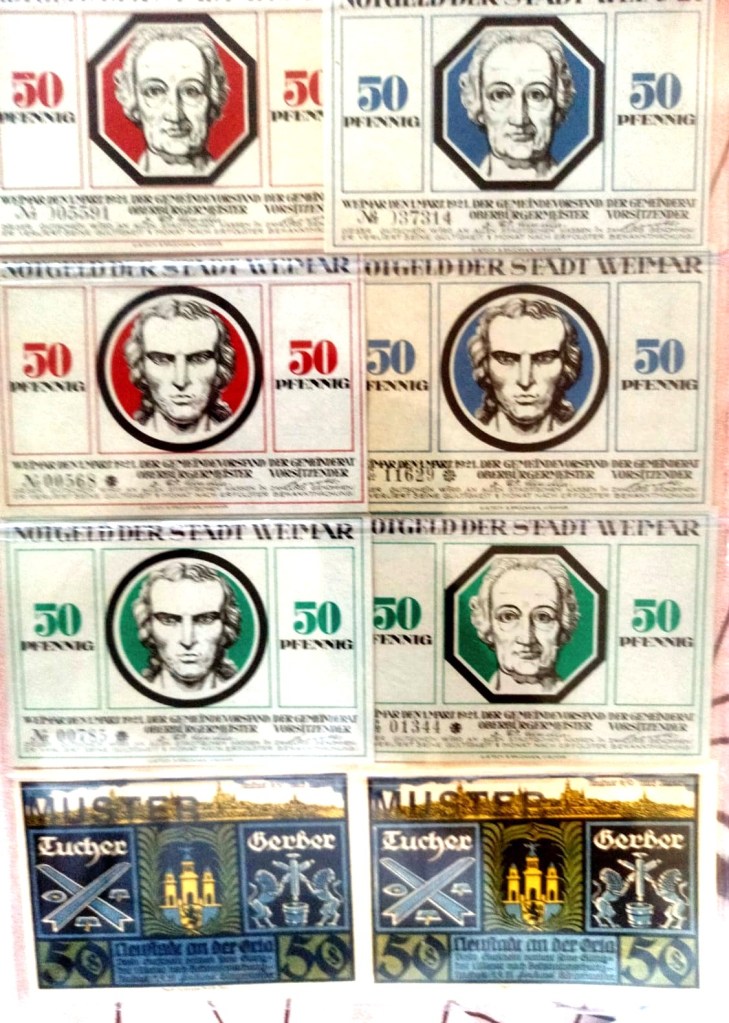
Portraits of Goethe & Schiller – Cultural icons of Weimar. Each note has a colored border (red, blue, green) which likely denotes part of a thematic series.
Each note is stamped and serialized, and marked “Notgeld der Stadt Weimar” (Emergency Money of the City of Weimar).
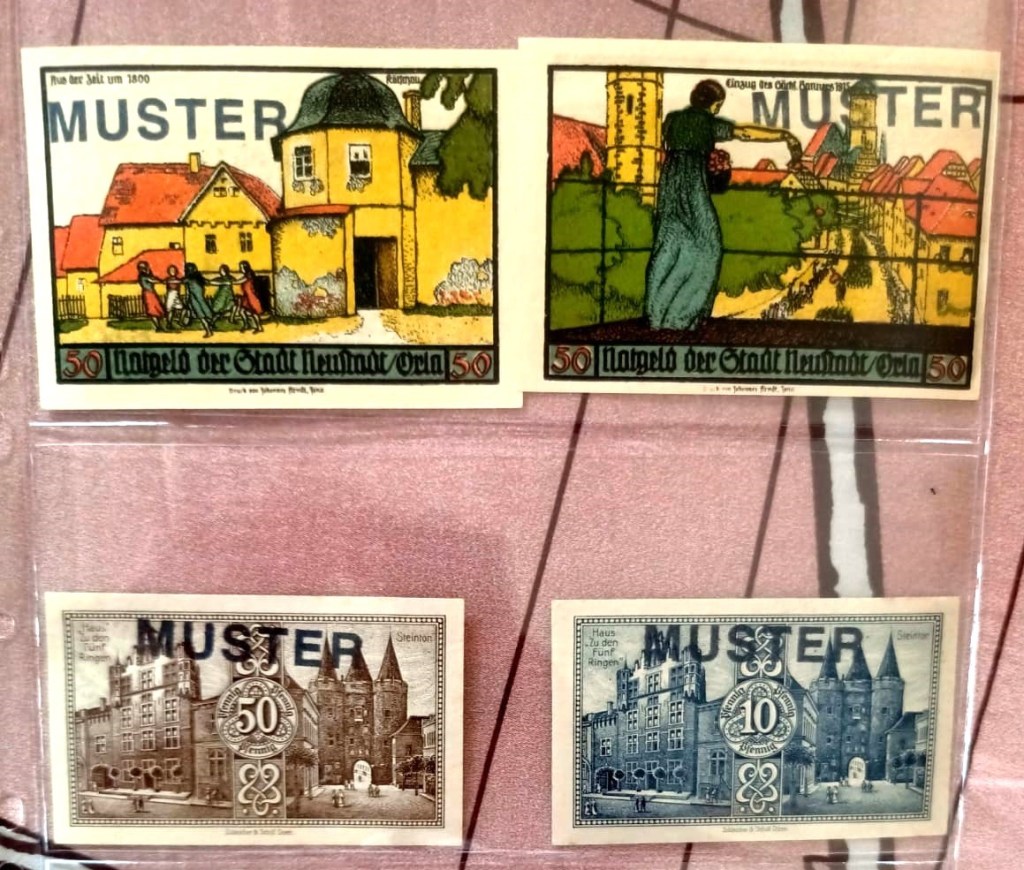
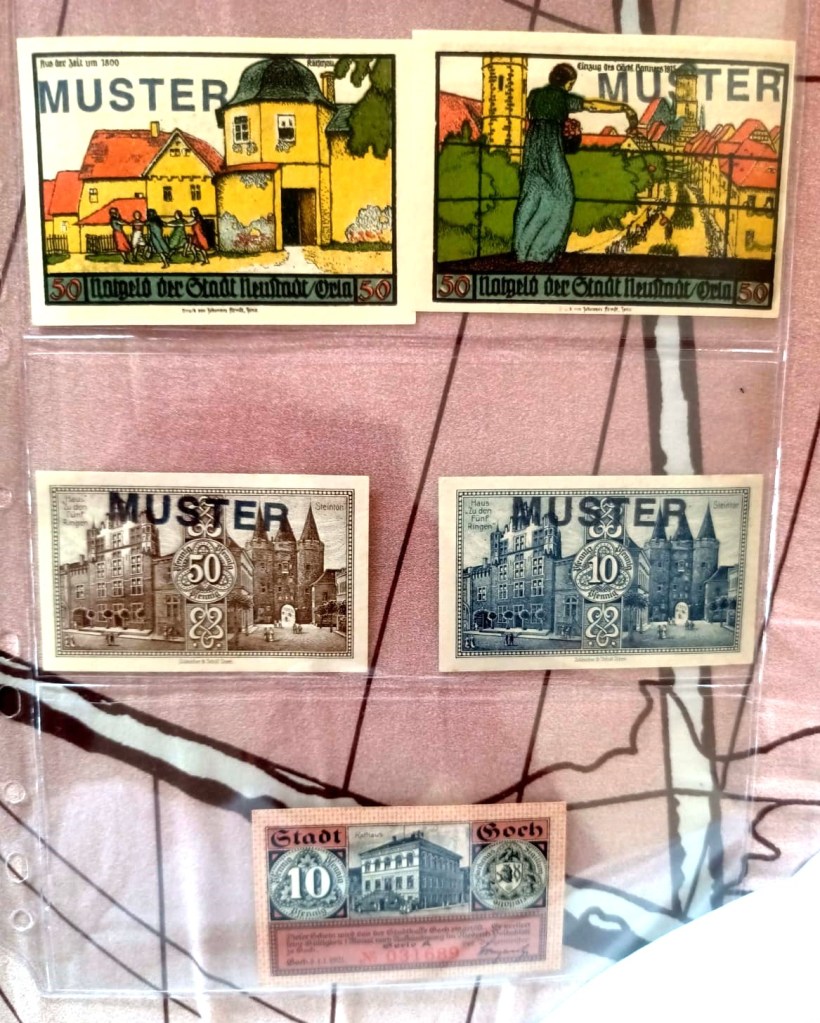
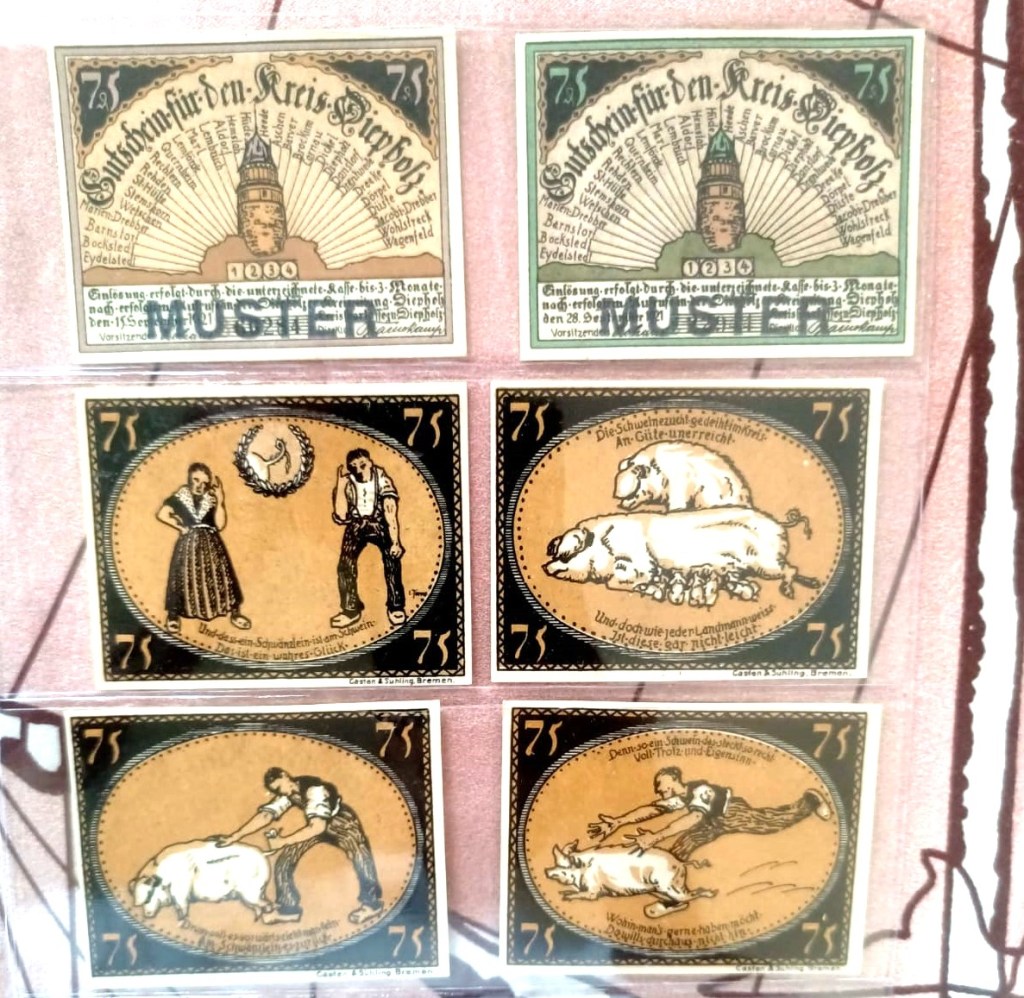
Note the MUSTER — these are specimen notes.rarer than normal ones.
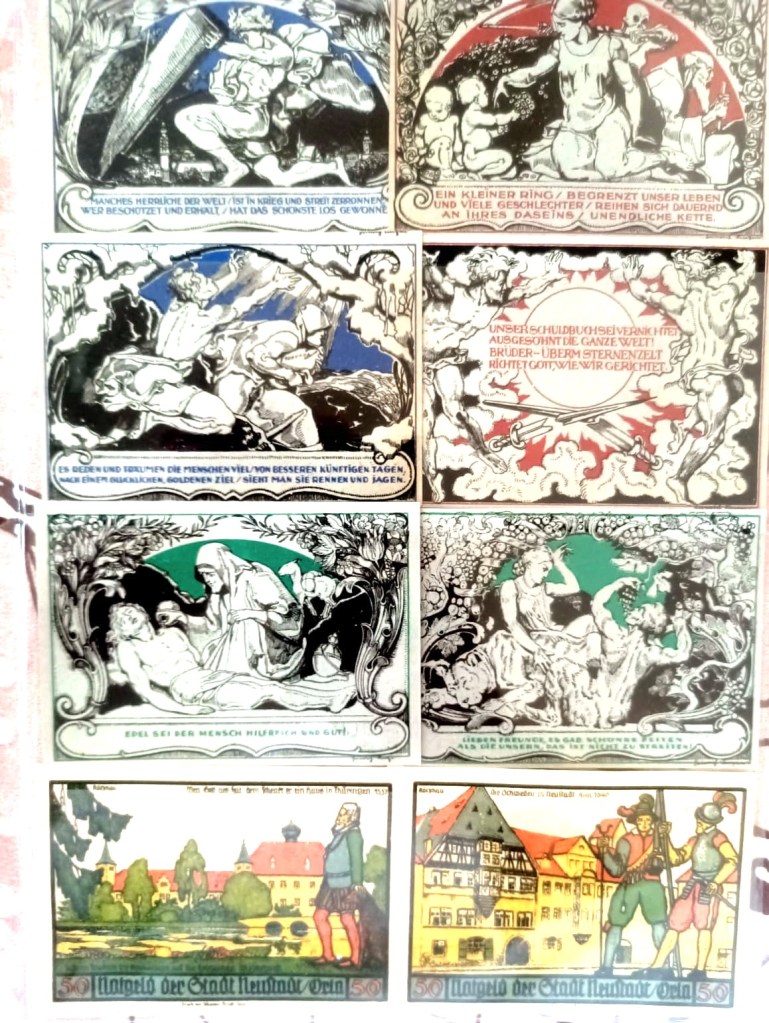
2nd Image: Storytelling Series with Classical Illustration
Texts include deep philosophical lines: one mentions “Unendliche Kette” (endless chain), another references “Hilfreich und gut” (helpful and good).
Bottom two are from Neustadt an der Orla again — town view themes, reflecting daily life or tales.
Artistic style: Jugendstil (German Art Nouveau) meets Expressionism.
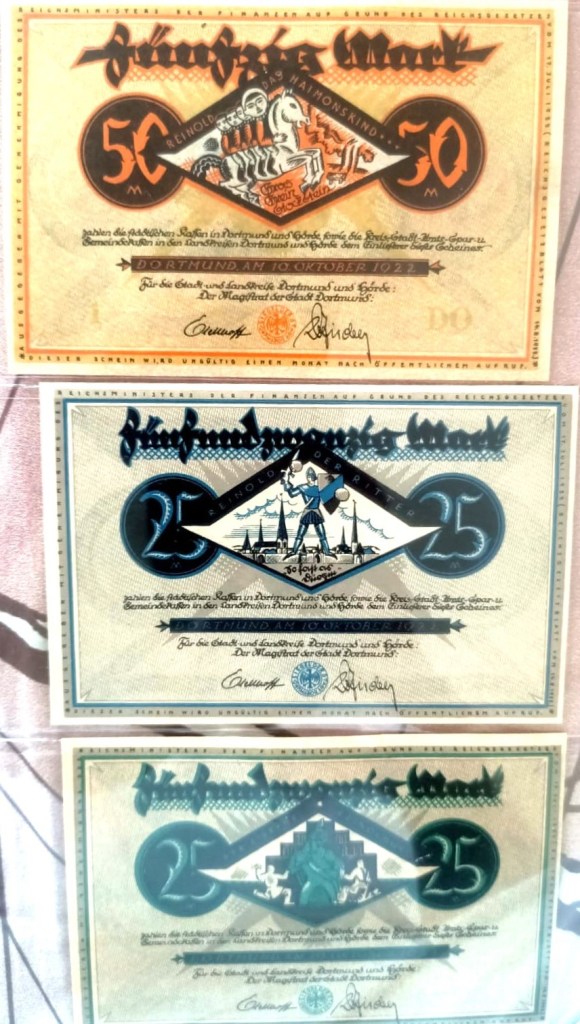
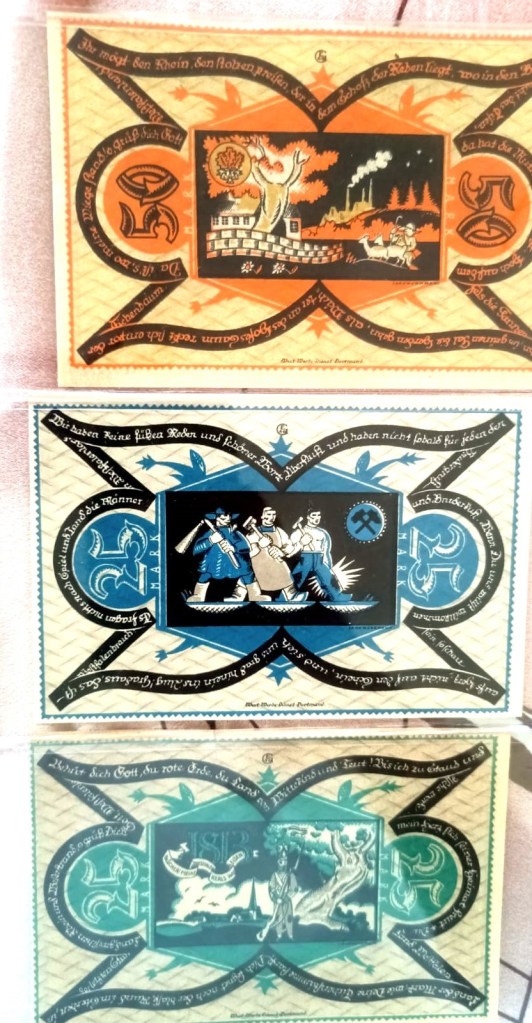
3rd Image: Dortmund Notgeld (1922)
All from Dortmund, dated October 1922.
Top: Reinhold & the “Wahnsinnskind” (child of madness!) —referencing turmoil.
Middle: Silhouette of Dortmund’s skyline.
Bottom: Classical/medieval motif with the town’s coat of arms.
These carry strong satirical and local patriotic vibes, classic Dortmund sets.
4th Image: More Dortmund (25/50 Marks)
Same design style and diagonal text layout as previous, with vivid colors (orange, blue, green).
Themes appear to show work, resistance, and perhaps even the Ruhr occupation
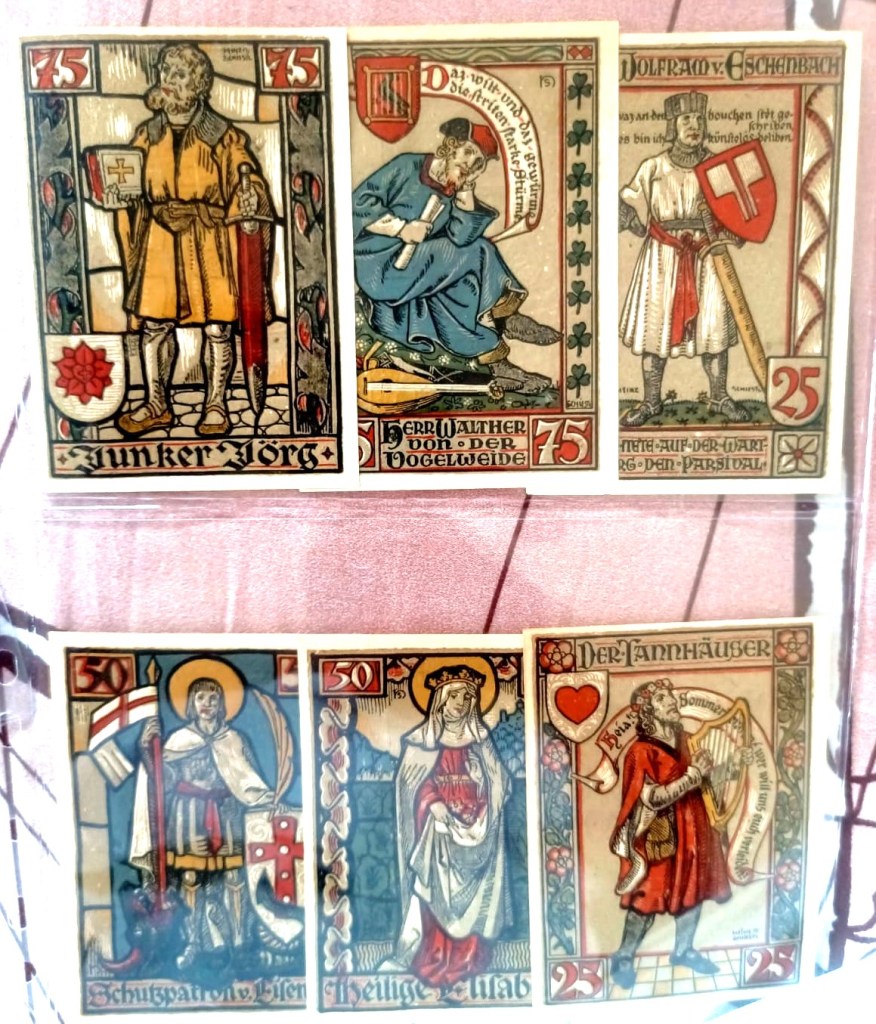
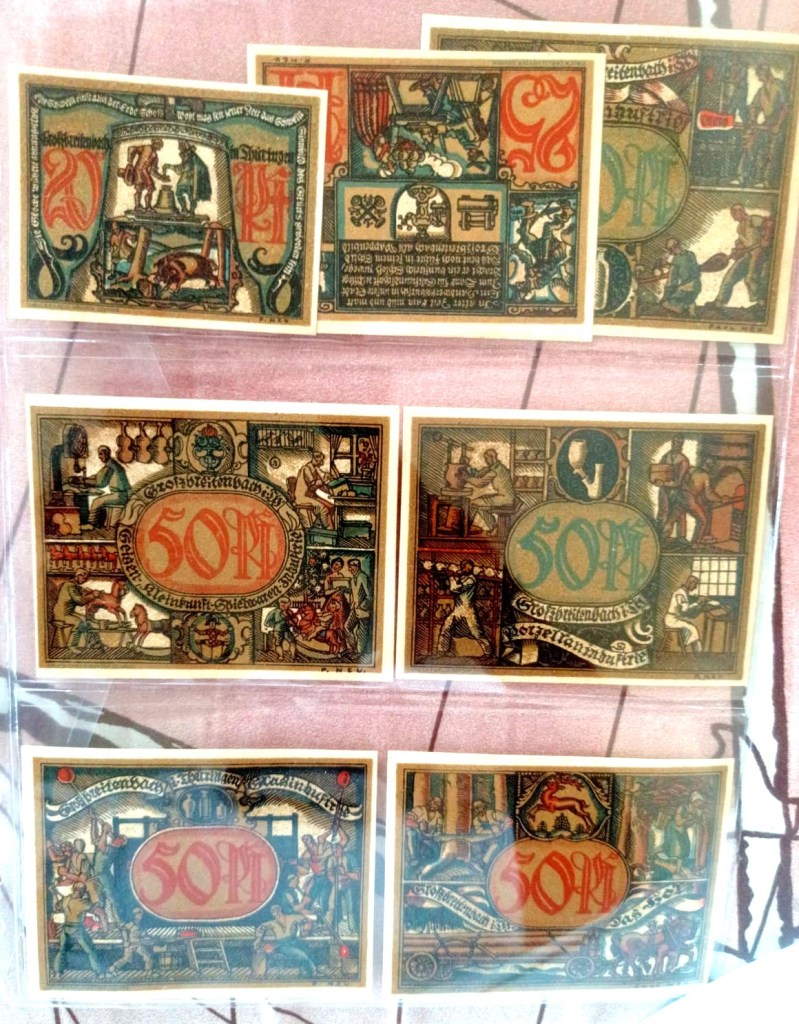
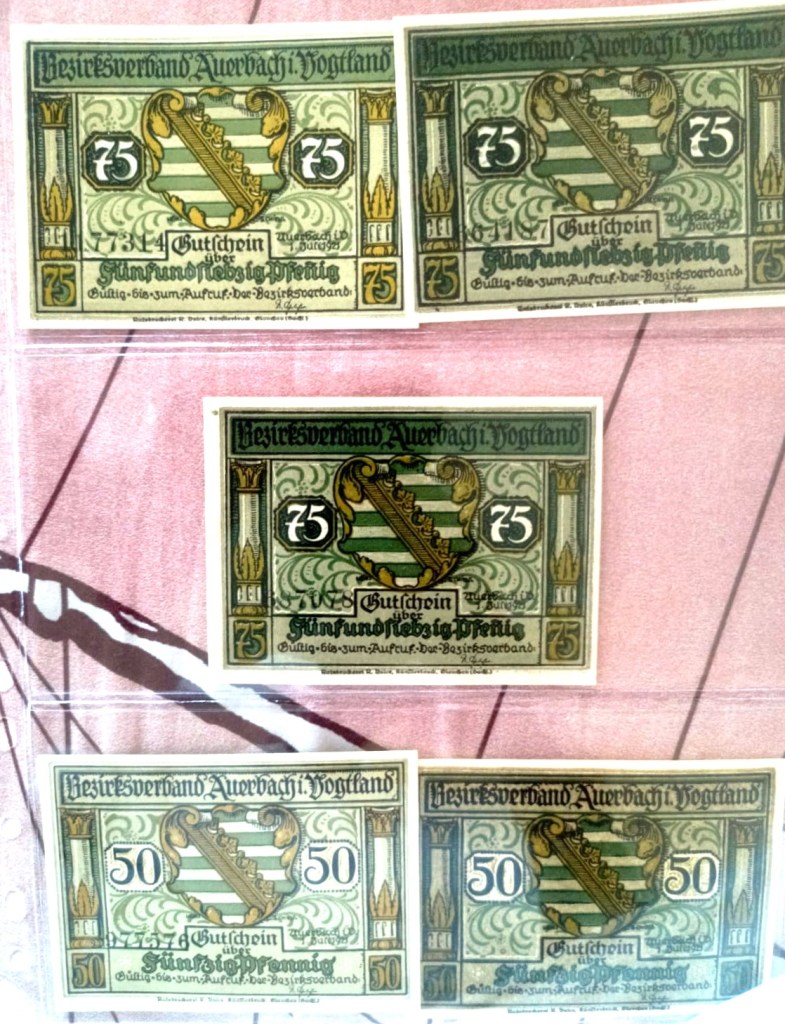
5th Image: Auerbach i. Vogtland – 75 and 50 Pfennig
Another town-based issue: “Bezirksverband Auerbach i. Vogtland”.
These are Gutscheine (vouchers) — technically not Notgeld, but similar purpose.
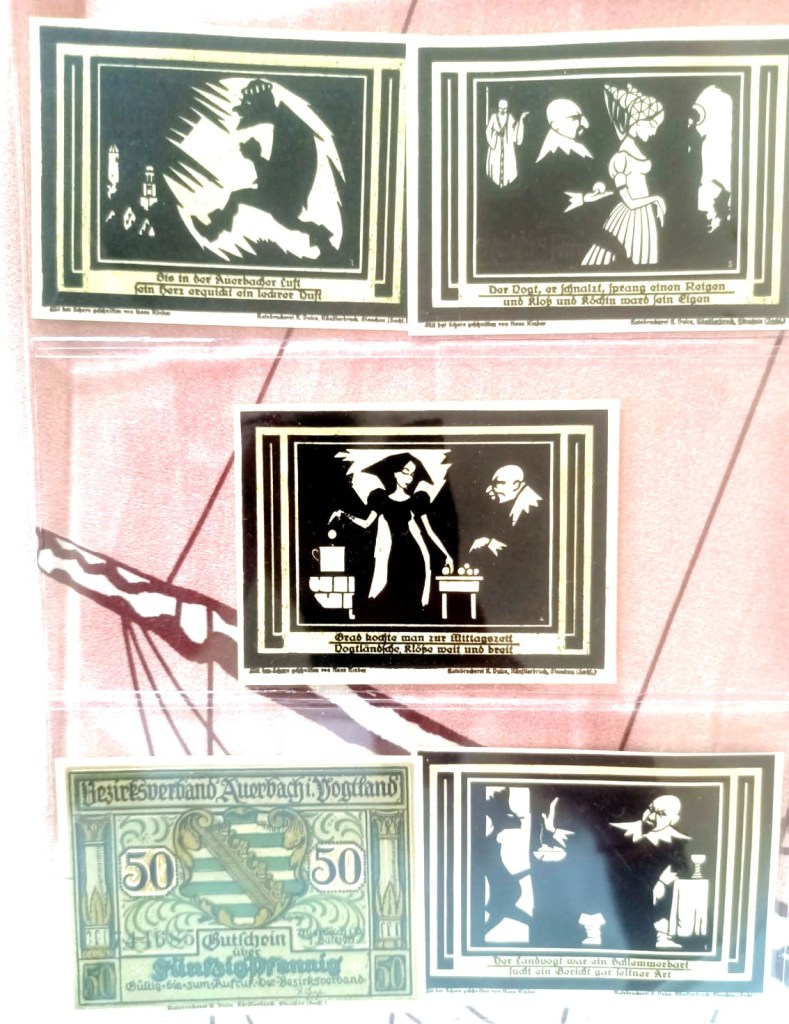
6th Image: Silhouette Series (possibly from Niesky or Leipzig region)
Some comic, others a bit dramatic — one shows a judge, another a monstrous shadow!
Themes of satire, morality, and daily life again — a kind of German Punch Magazine in pocket-size money form.
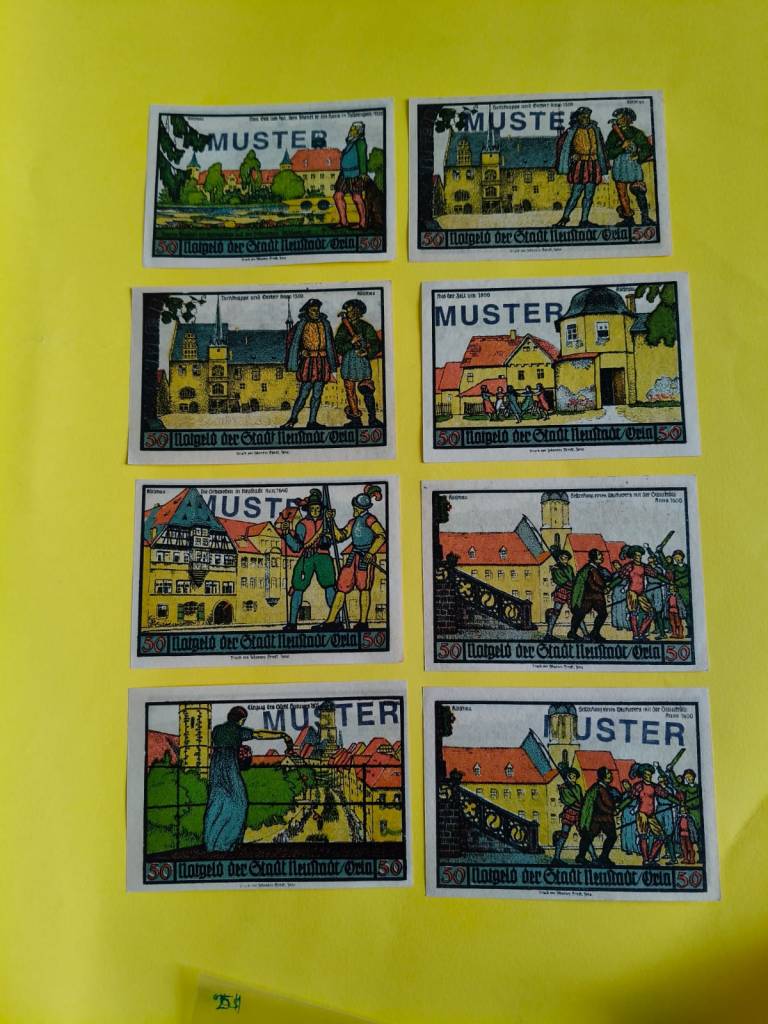
“Not just Notgeld — this one’s Muster-fied! 👑 Specimen notes were never used, never folded, and always a collector’s delight. From the charming town of Neumarkt, Bavaria
Specimen notes aren’t just placeholders—they’re behind-the-scenes royalty. 💼✨
This vibrant 50 Pfennig Notgeld set bears the bold word “MUSTER” — German for “sample” or “specimen.” That means these weren’t for everyday market strolls or sausage purchases… nope, these were the VIP test prints used for approvals, presentations, or printers’ archives.
Why do collectors love them? Because they’re: ✅ Rarer than regular issues ✅ Usually in top condition ✅ Tied to the printing and design history ✅ Sometimes never actually issued at all!
The Neumarkt series charms us with tales of medieval townsfolk, stately architecture, and local lore—each note like a freeze-frame from a vintage graphic novel. And the Muster mark? That’s the cherry on top 🍒—turning these from collectibles into conversation pieces.
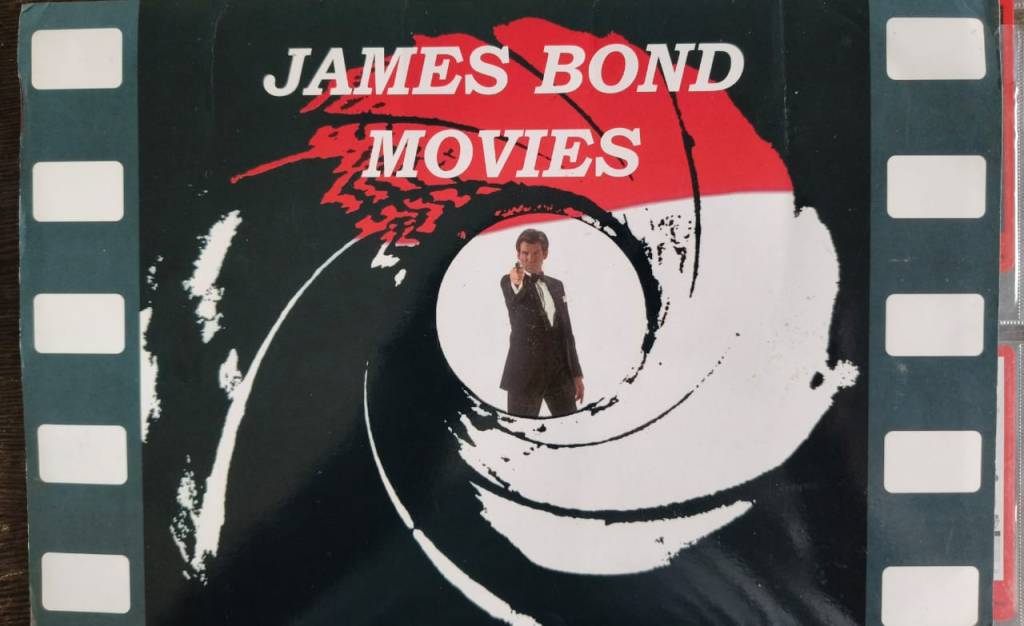
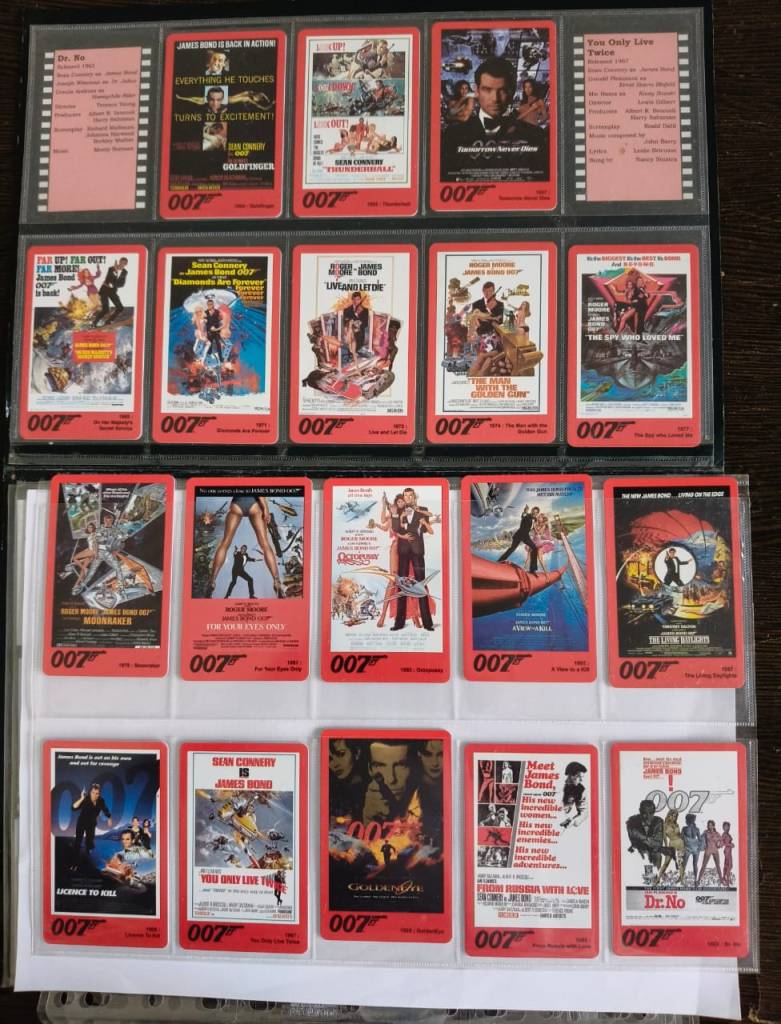
My name is Bond, James Bond.. how familiar are we we this line.
Presenting our license to thrill – a time capsule of suave suits, killer one-liners, and shaken martinis 🍸.
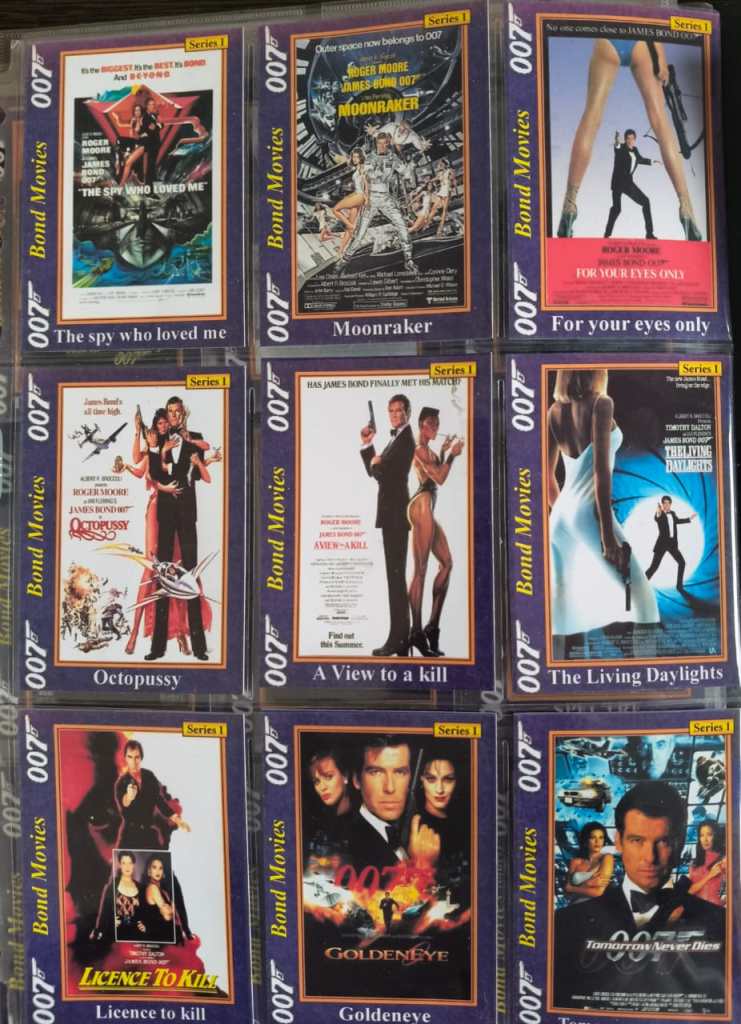
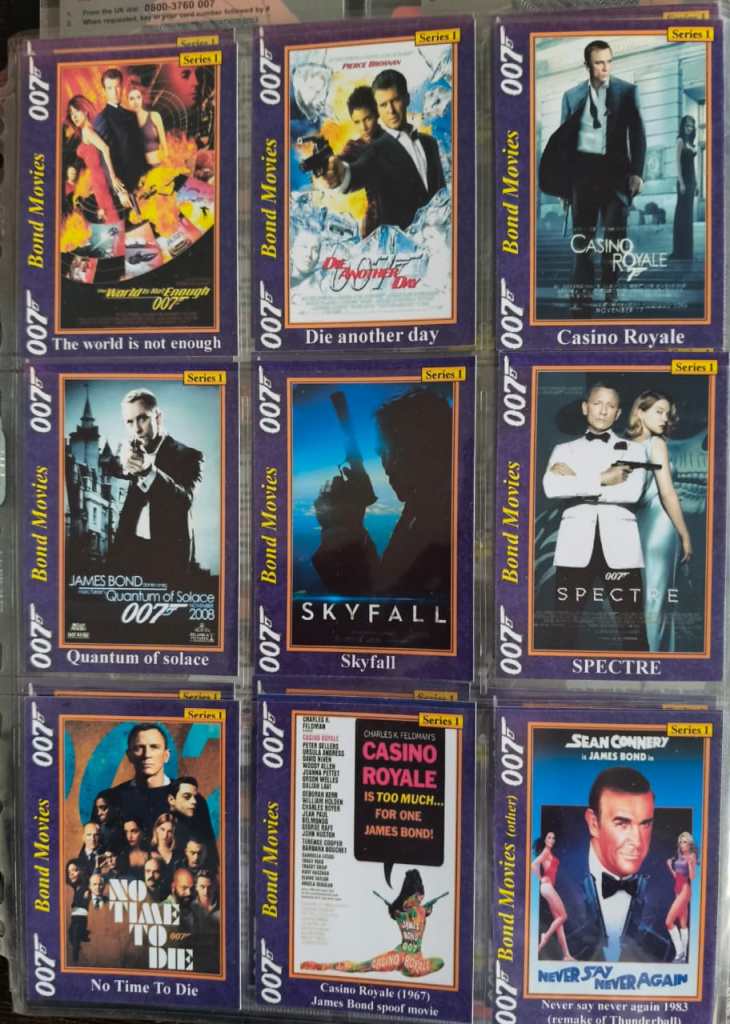
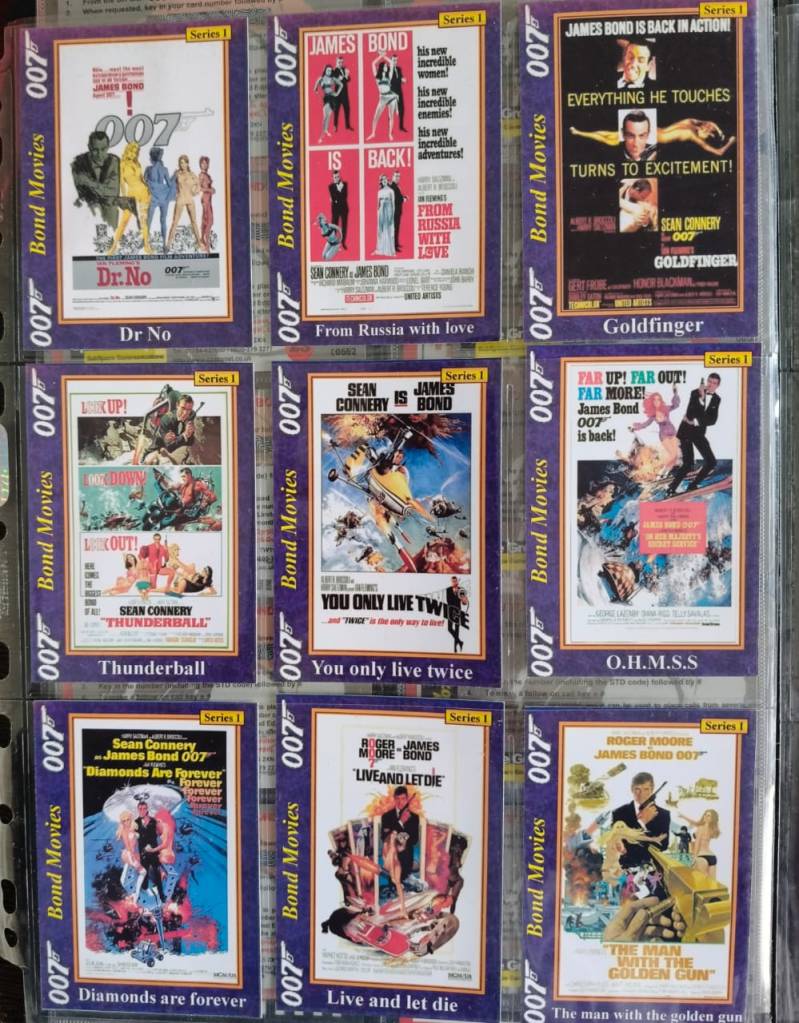
This gem from our collection is a tribute to the world’s most iconic spy – a full-blown James Bond Movies Collector’s Folder that could make even Q jealous. From Sean Connery’s cold charisma to Daniel Craig’s gritty finesse, this folder is MI6-approved nostalgia in 35mm spirit.
🕵️♂️ With poster cards featuring classics like Dr. No, Goldfinger, Moonraker, GoldenEye, Casino Royale, and Skyfall – this set tracks every twist, every villain, and every unforgettable Bond girl who sashayed across our screens. Bonus points for the quirky inclusions like the spoof Casino Royale (1967) and the renegade Never Say Never Again!
Each card? A mini-poster. Each film? A mission. Each Bond? A whole vibe.
📀 Swipe through and tell us – which Bond film is your forever favourite? And yes, we do believe “Nobody does it better.” 💥
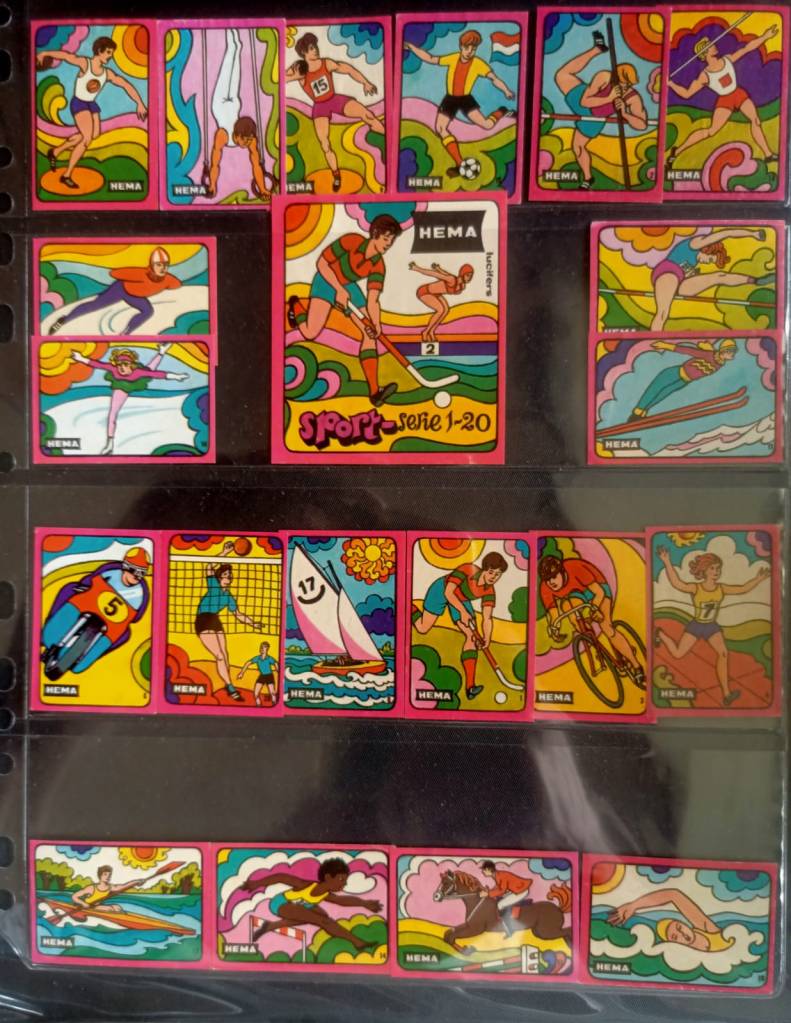
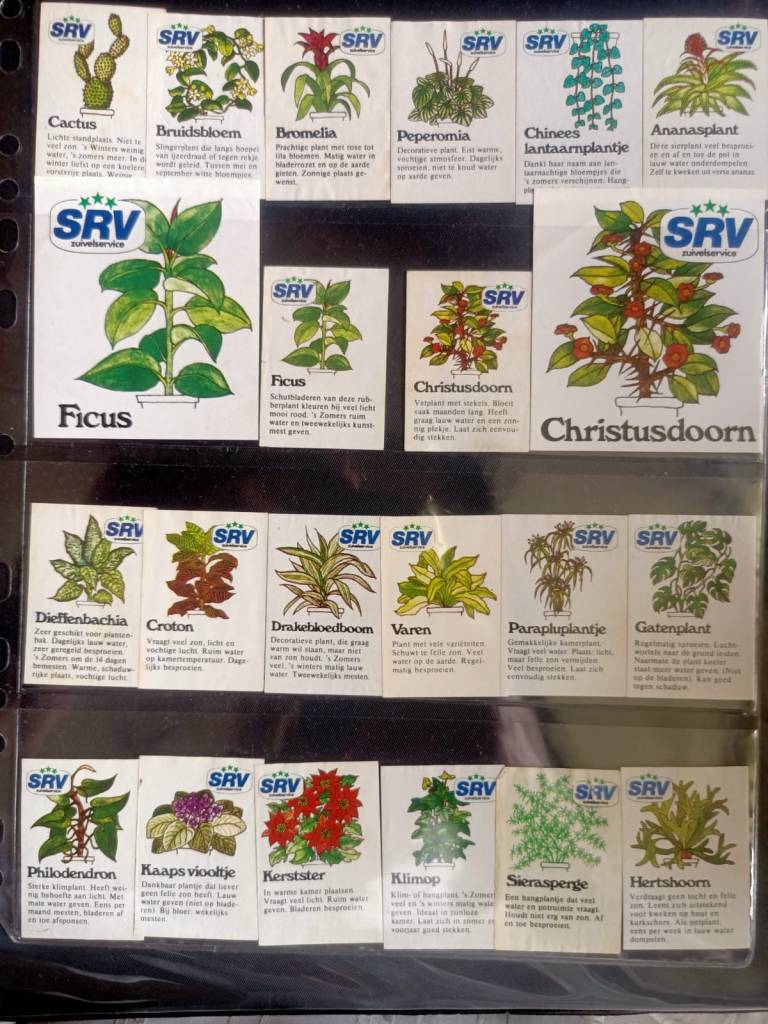
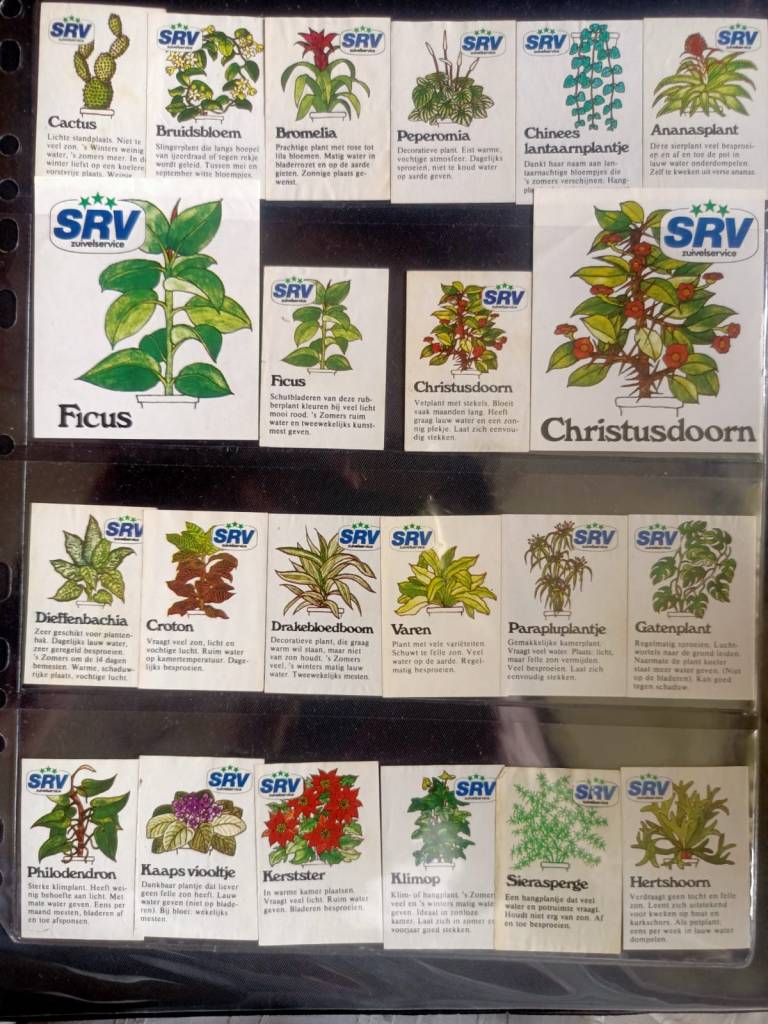
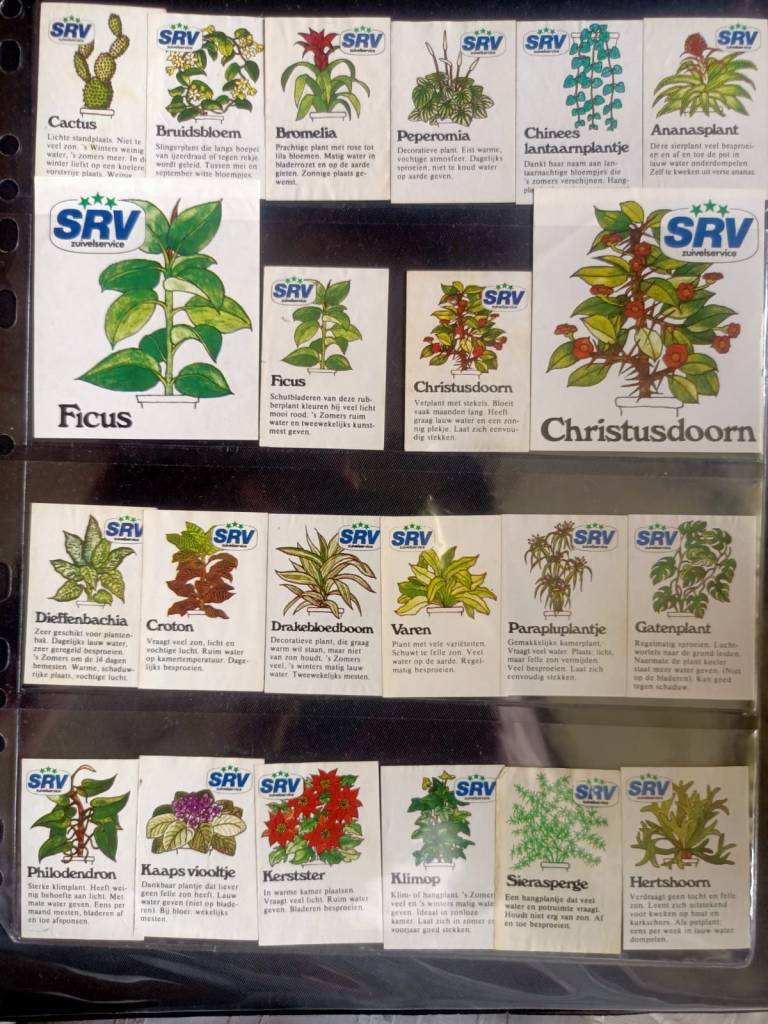
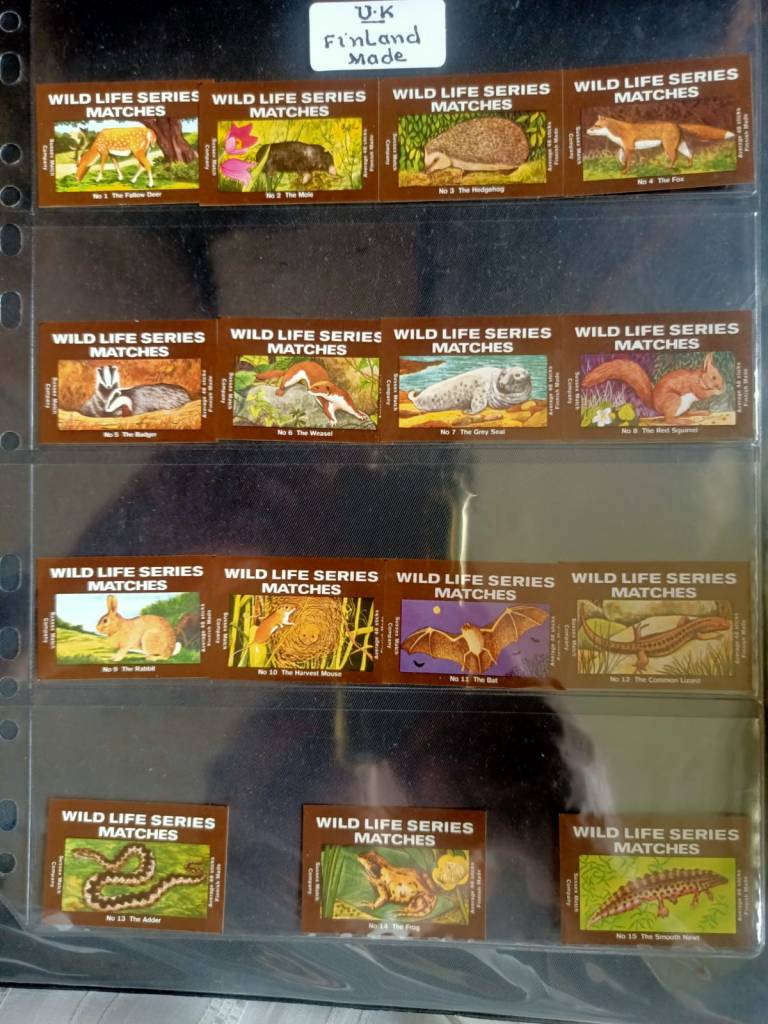
From neon-hued athletes in motion to serene houseplants and British woodland creatures, today’s post flips through more memories from our family collection.
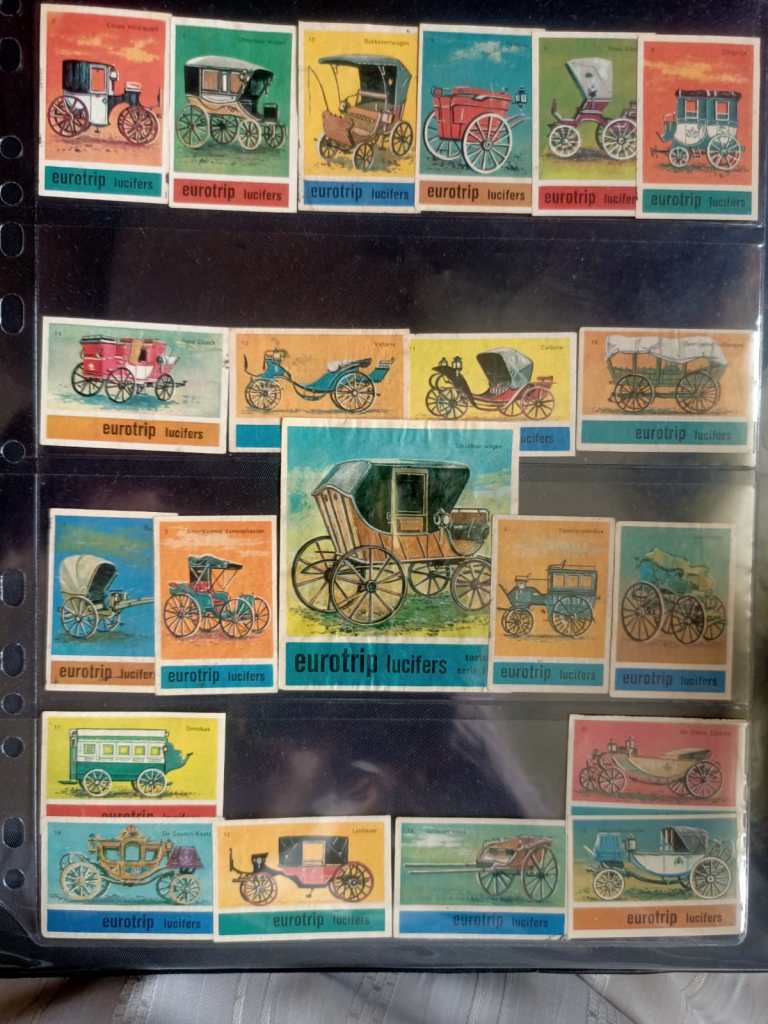
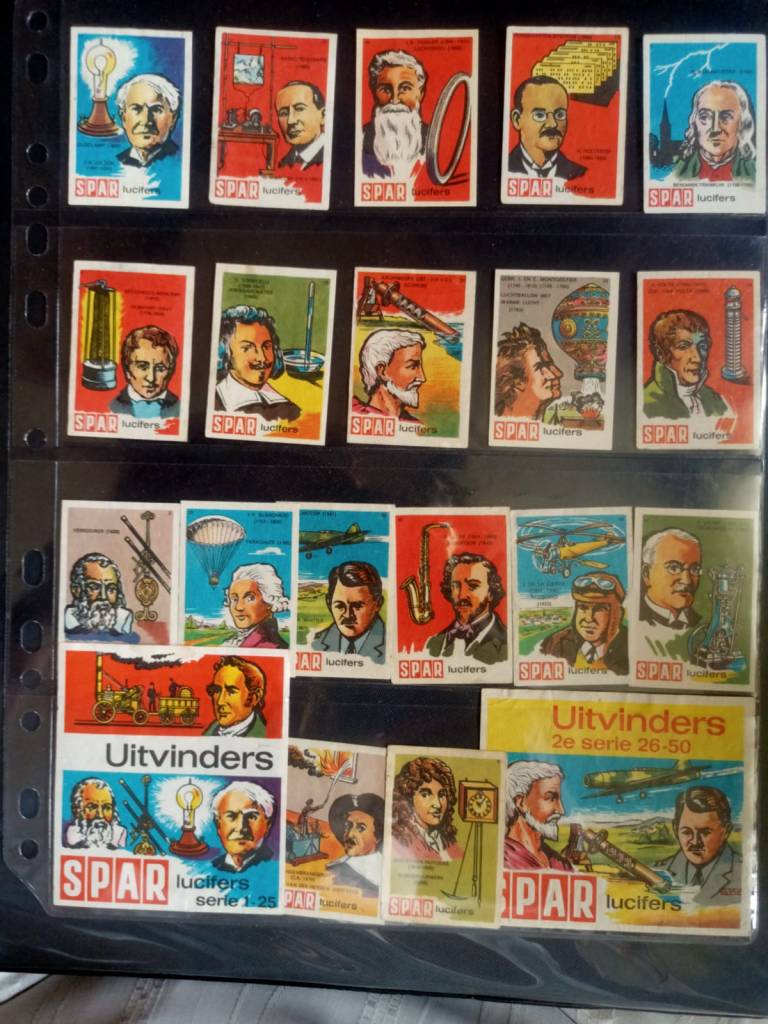
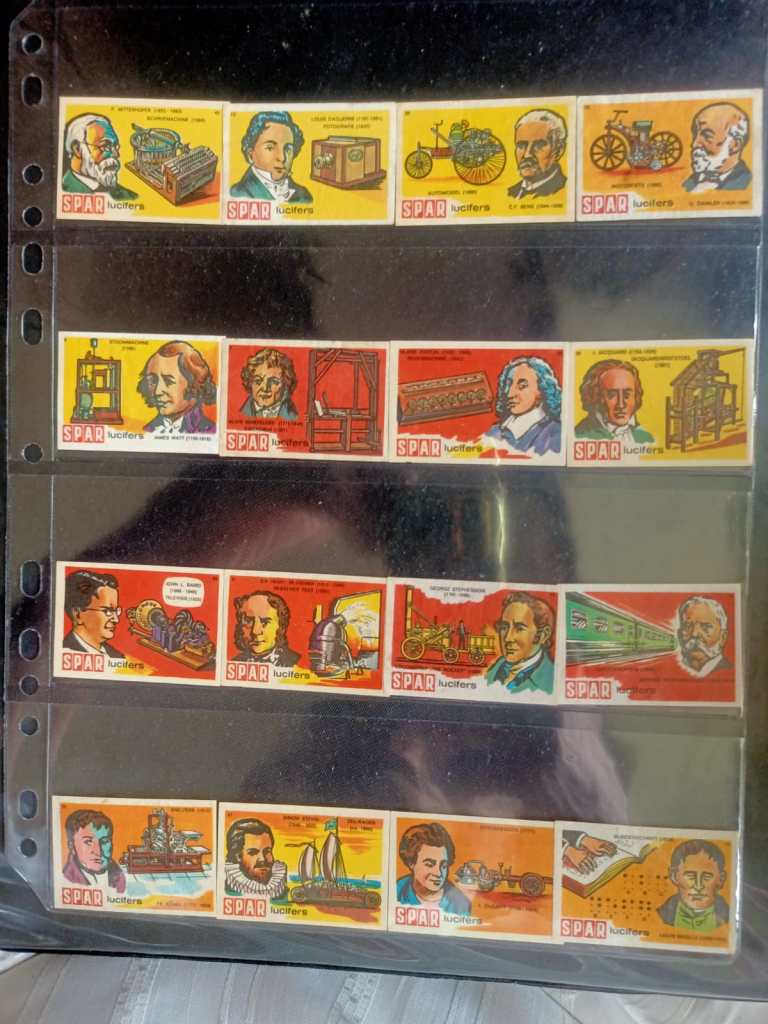
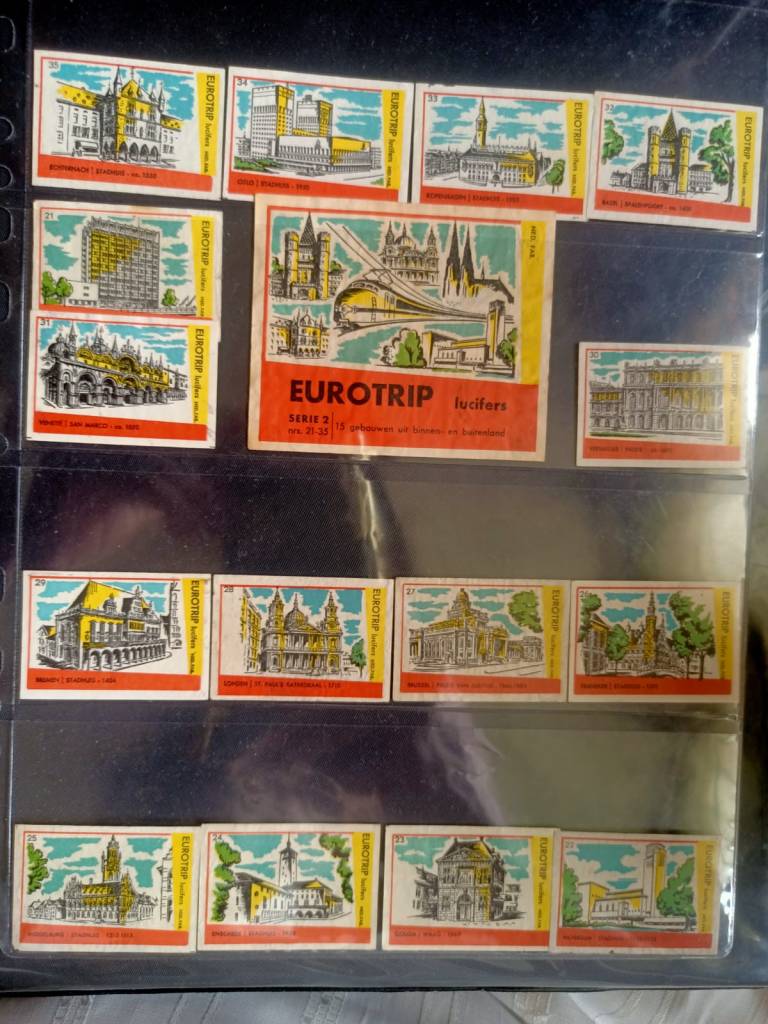
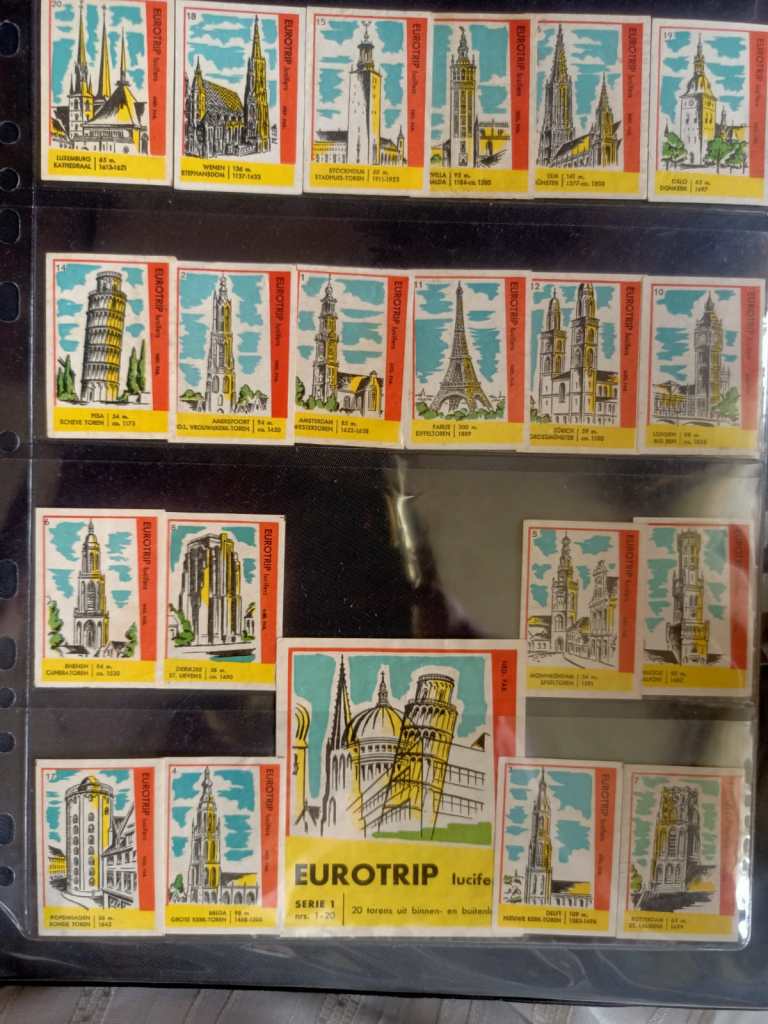
Set 1:• Lucifer labels were mini collectible marvels in mid-century Europe. Matchstick labels were printed in colorful sets to encourage repeat purchases. • SPAR & Eurotrip brands were among the top thematic label issuers in the 1950s–1970s.
1.Eurotrip “Carriages Series” (Lucifers – Korts Serie / Horse-drawn Vehicles), from coupe, to omnibus.
2. SPAR Lucifer “Uitvinders” (Inventors Series – Parts 1–50) from Thomas Edison, to Franklin to Galileo. 3.Eurotrip “Buildings & Towers” Series (Lucifers – Serie 1 & 2) From Eiffel Tower to Leaning Tower of Pisa, to St. Paul’s Cathedral.
Set 2: Vintage Matchbox Labels – a tribute to collectible labels, on: sport, houseplants, wildlife.
These little matchbox labels once lived on shelves, kitchen counters, and shop drawers—but today, they live in our hearts and archival sleeves.
Which one’s your favorite—Disco Skier or Dramatic Deer?
Currency Notes: Not from collection, just for info
Currency notes information: On a lighter note this time, not from our collection:
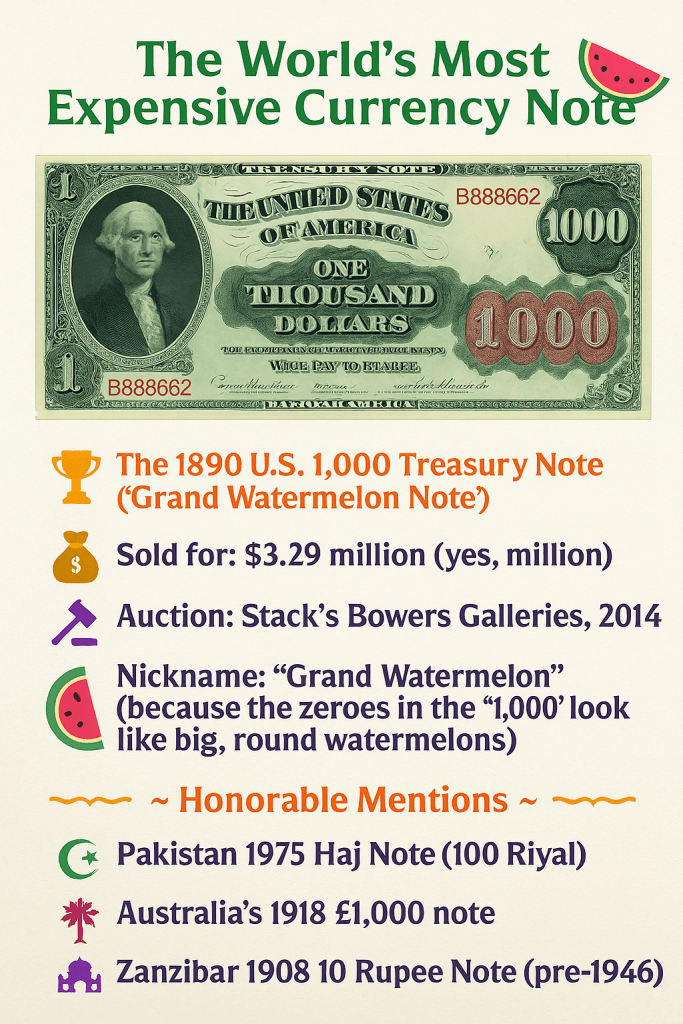
The World’s Most Expensive Currency Note: A Juicy Slice of Numismatic History 🍉
In the thrilling world of currency collecting, where designs dazzle and rarity reigns supreme, one note towers above the rest — the legendary 1890 U.S. $1,000 Treasury Note, famously nicknamed the “Grand Watermelon Note.”
Why “watermelon”? Well, the curvy zeroes in the “1,000” look like big, round slices of watermelon — and collectors were eating it up.
💸 Here’s why it makes headlines: Auction Price: A jaw-dropping $3.29 million (sold in 2014 by Stack’s Bowers)
Nickname: “Grand Watermelon” – for obvious fruity reasons 🍉🍉🍉
Only 7 Known Copies: Just 3 in private hands
Design: Features Civil War-era treasurer Edwin Stanton, but it’s those juicy zeroes that steal the show
Era: From a short-lived U.S. high-denomination series (used mainly between banks)
This note isn’t just expensive — it’s a slice of Americana, numismatic legend, and design quirkiness all rolled into one.
🥈 Other Jaw-Dropping Rarities Worth a Look: Pakistan 1975 Haj Note (100 Riyal) – Printed for pilgrims only, extremely scarce.
Australia’s 1918 £1,000 Note – Colossal denomination, even more colossal value.
Zanzibar’s 1908 10 Rupees – Colonial beauty, worth a fortune if you find one.
If you ever feel guilty about splurging on a slightly over-budget collectible, just remember — someone out there paid over ₹27 crore for a note with fruity vibes and a Civil War guy on it. 😄
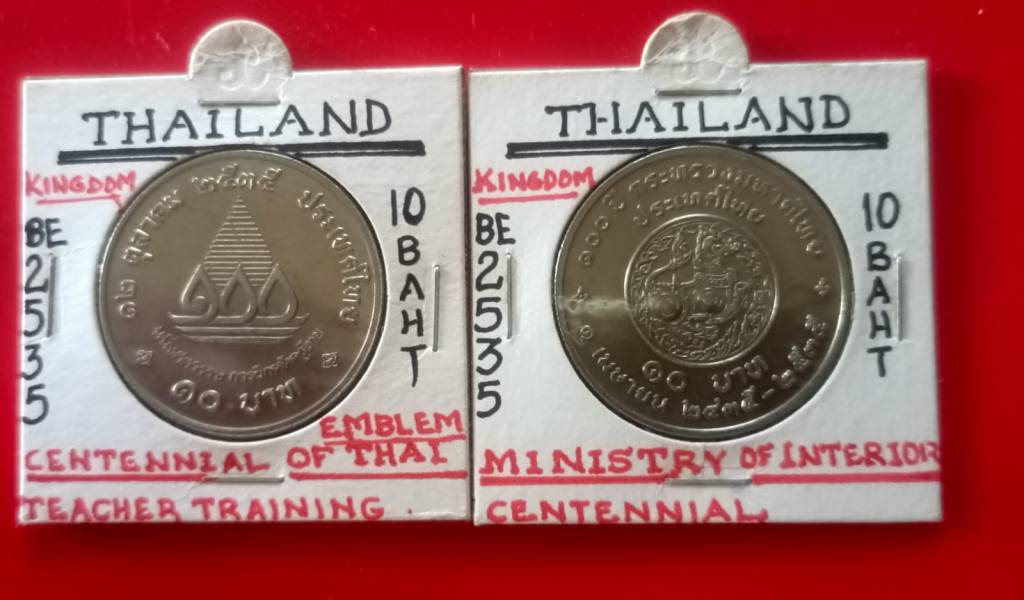
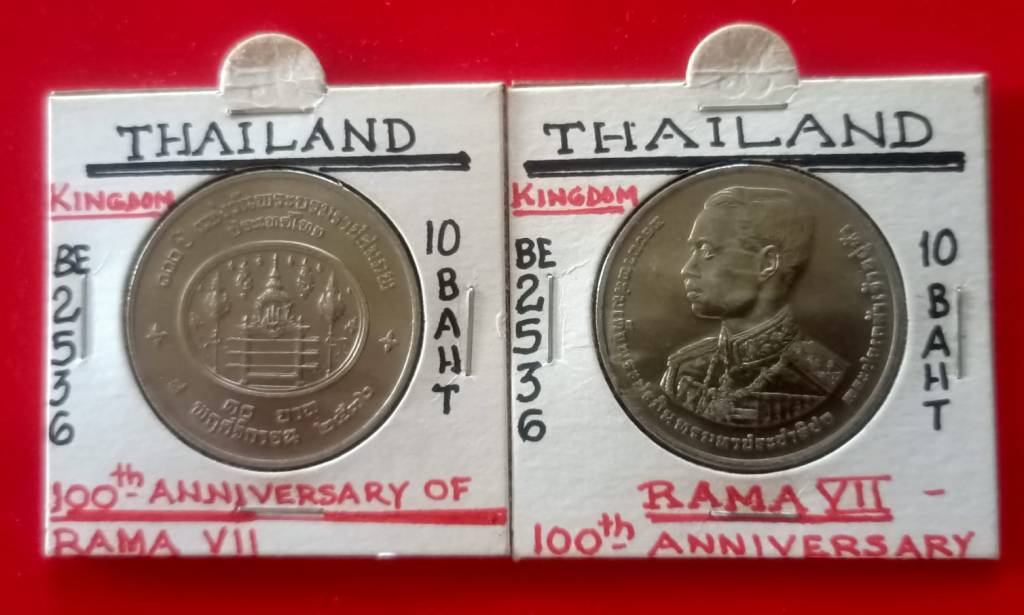
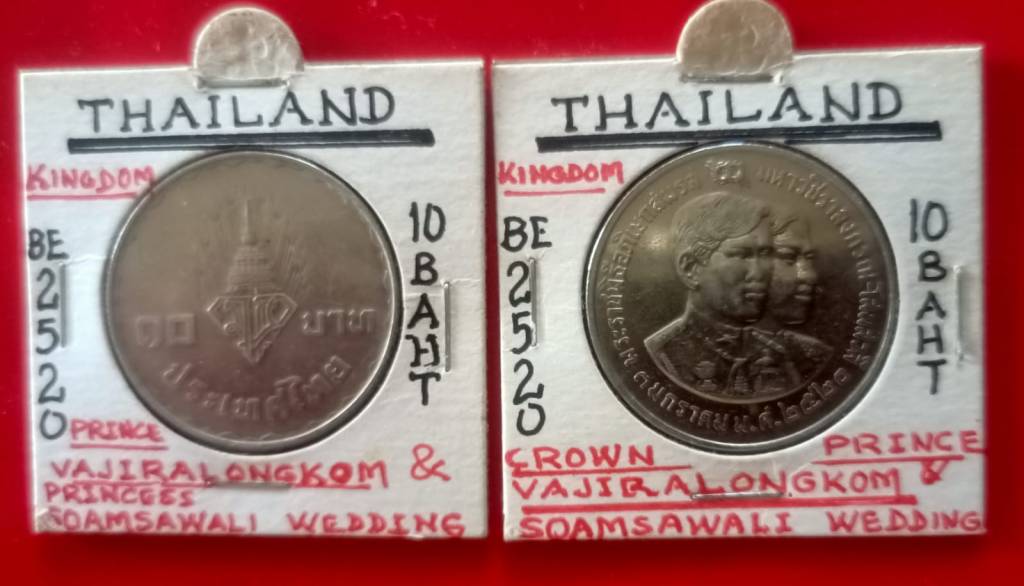
Today, I’m taking you on a journey into Thai royal history through eight stunning 10 Baht commemorative coins, straight from my dad’s treasure trove. Each coin is a mini time capsule—rich in detail, steeped in history, and a testament to Thailand’s deep-rooted traditions.
👑 Princess Chulabhorn’s Graduation (BE 2522) A nod to academic brilliance and royal responsibility—Princess Chulabhorn’s graduation coin is a reminder that learning never stops, even for royalty!
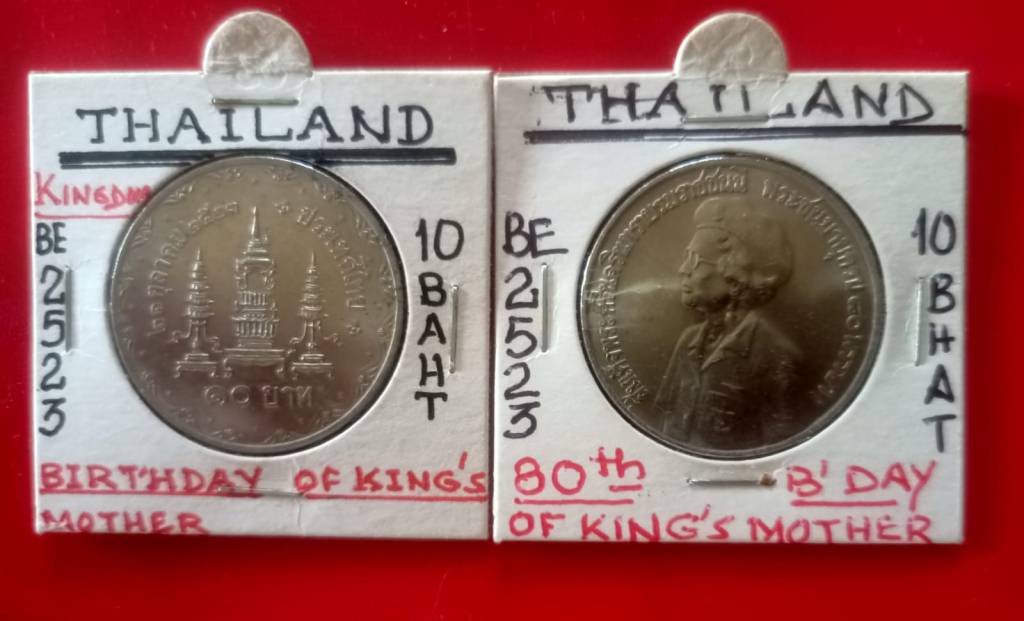
🎂 80th Birthday of the King’s Mother (BE 2523) This regal beauty honors the Queen Mother Srinagarindra’s 80th birthday. The intricate pagoda design and stately portrait exude timeless elegance.
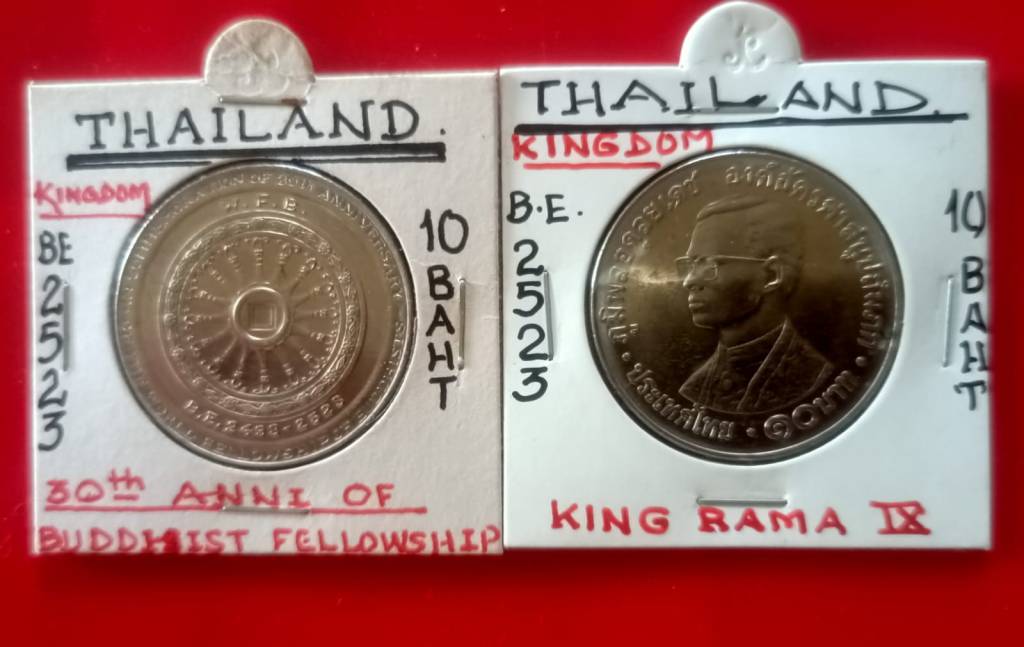
🪷 30th Anniversary of Buddhist Fellowship (BE 2523) The Buddhist Wheel of Dharma symbolizes harmony and spiritual unity, while King Rama IX on the reverse brings in a calming sense of national pride.
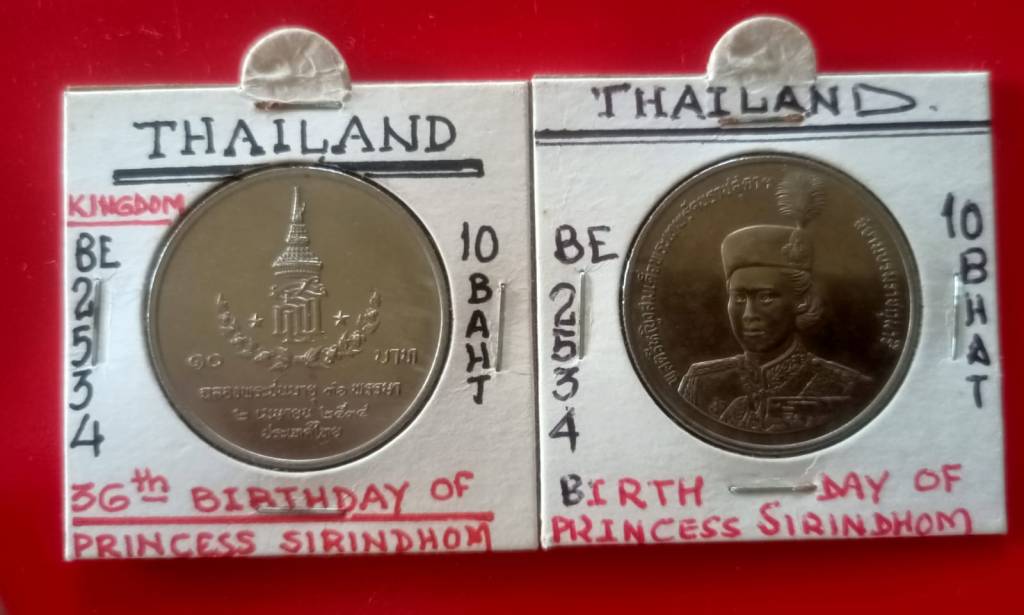
🎉 36th Birthday of Princess Sirindhorn (BE 2534) Known as the “Princess of Technology,” Sirindhorn’s 36th birthday coin is both elegant and full of promise—like the princess herself.
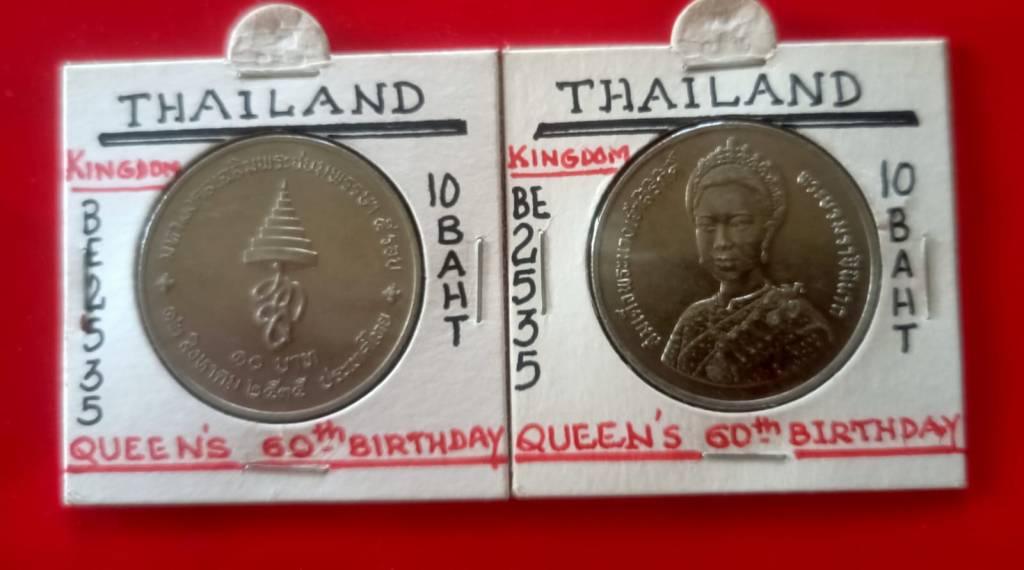
🎈 Queen’s 60th Birthday (BE 2535) A diamond milestone, immortalized in silver and bronze: Queen Sirikit’s 60th birthday coin is all about royal poise and grace.
🎓 Centennial of Thai Teacher Training (BE 2535) A tribute to educators—this coin celebrates 100 years of dedication and knowledge-sharing in Thailand’s teaching community.
🏛️ 100th Anniversary of Rama VII (BE 2536) King Rama VII’s centennial, etched in bronze and honor, pays tribute to a monarch who helped modernize Thailand.
💍 Wedding of Crown Prince Vajiralongkorn & Princess Soamsawali (BE 2520) A love story immortalized in metal: this coin celebrates the wedding of the now King Rama X and Princess Soamsawali—an emblem of union and tradition.
Beyond their stunning designs, these coins are cultural snapshots—each one a testament to Thai pride, legacy, and artistic mastery. Holding them feels like holding a piece of history, and every flip tells a new story.
✨ Stay tuned for more treasures from my dad’s collection—because there’s always another story waiting to be told.✨